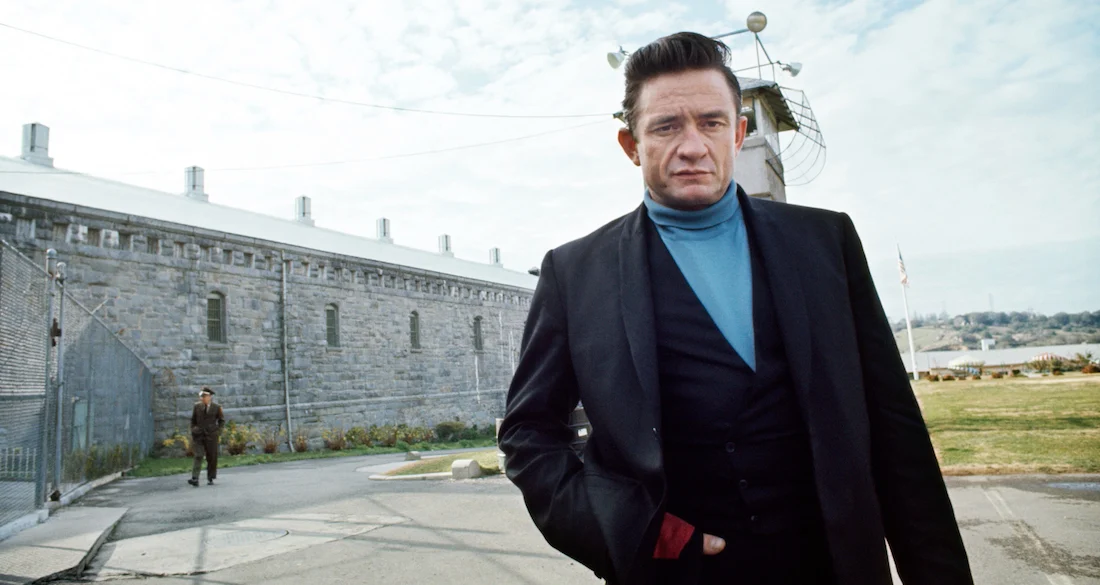
Johnny Cash's performance at Folsom Prison in California has become legendary due to the success of the recorded album and its portrayal by Joaquin Phoenix on the big screen.
At that time, Cash was nearing the end of his career; this represented a critical moment for him.
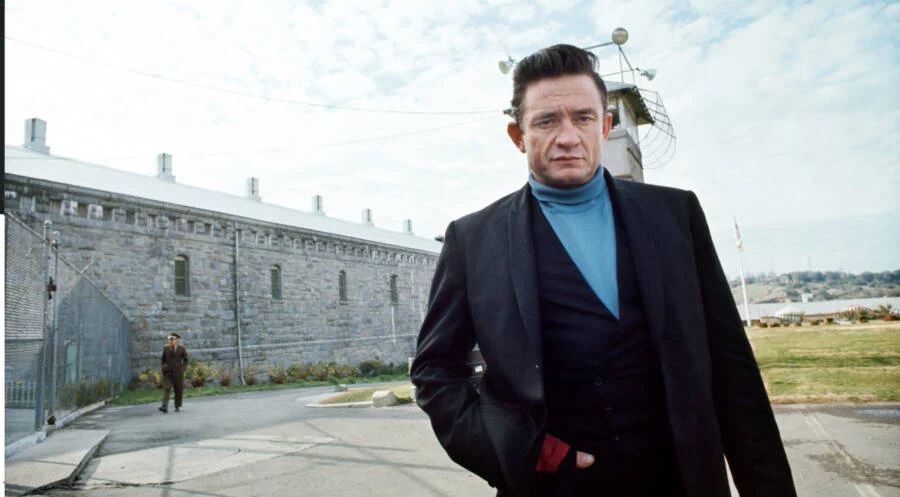
Jim Marshall ArchiveOne of Johnny Cash's band members forgot he had brought a gun into Folsom, while another forgot he was carrying marijuana. Fortunately, neither got into trouble.
Before the performance on January 13, 1968, the "Man in Black" had ruined his relationship with the press, the law, and his fans. Headlines damaging to his career, such as drug smuggling across the Mexican border, his relationship with June Carter, and his divorce from Vivian Cash, had upset some of his fans and fueled an increasing hatred towards journalists. Cash was on the decline.
Moreover, he hadn't released a hit song in years.
According to History magazine, the media hated the 35-year-old country artist at this point. Fortunately, his decision to perform for inmates and record it pulled Cash out of uncertainty.
At Folsom Prison became number one on Billboard's pop and country charts the following year, solidifying Cash as a "cool" icon and introducing the artist's talent to an entirely new audience. According to Bestor Cram, the director of the documentary Johnny Cash at Folsom Prison, the timing was perfectly synchronized.
"He was desperate to change his relationship with his own audience," Cram told The Washington Post, "he wanted to find himself among his inner battles; this actually overlapped with the stress the nation was experiencing."
Cash symbolized the anger, aimlessness, disappointment, and rage many Americans felt at the time — amidst the chaos of assassinations, Vietnam, and the civil rights movement — coming together with prison inmates was a brilliant way to emphasize this unspoken theme.
However, the road to Folsom was filled with problems, controversies, and metaphorical potholes; this almost prevented Johnny Cash from getting back on track.
Johnny Cash's Path to Folsom
The idea of Cash meeting with inmates came from Reverend Floyd Gressett. As one of his closest friends, the minister was counseling state inmates and asked the singer if he wanted to talk to these outcast men.
"John had a real feeling for the downtrodden and the inmates," said Marshall Grant, a member of the Tennessee Three, to Rolling Stone. "For someone like him. He came from a very humble beginning in Arkansas."
"Although he had acquired many things in life, his feelings toward these people were very pronounced. He was very real with that. And that brought him to the prisons. For many, it changed their lives because we went there to entertain them."
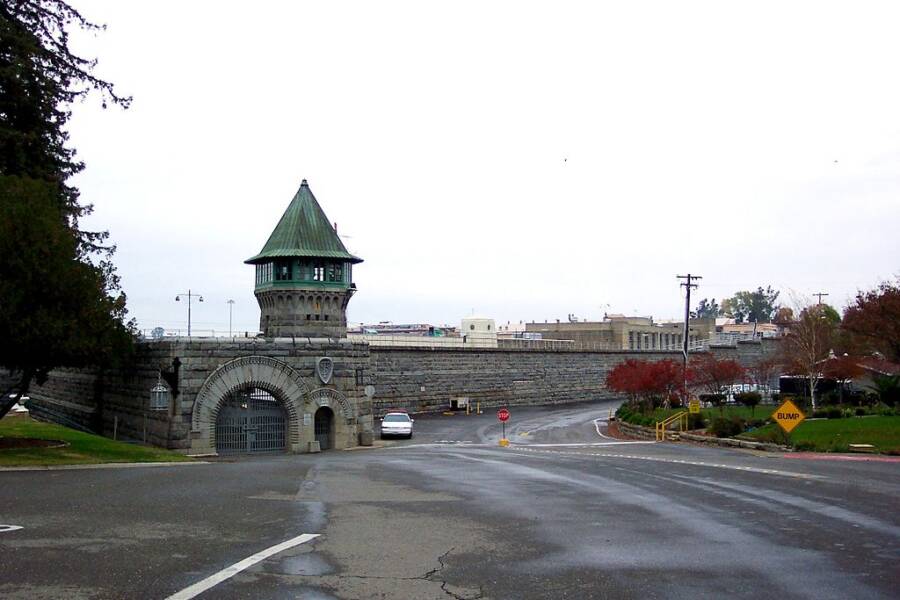
Wikimedia CommonsIn addition to Folsom Prison, Johnny Cash also performed at San Quentin, Tennessee State Prison, and Österåker Prison in Sweden (and recorded albums).
For many, it may be surprising to learn that the legendary At Folsom Prison album was not Cash's first time performing there. Reverend Gressett had planted the idea of connecting with these inmates in Cash's mind years earlier.
The singer was interested in the idea, wrote "Folsom Prison Blues" in 1953, and performed it there in November 1966 — exactly two years before recording the famous album.
Two years later, of course, he returned to record the album. However, Cash was so inspiring and drug-addicted in the mid-1960s that it was not easy to convince him to record anything.
"This was a way to get something out of him because we couldn't get him into the studio," Grant said. "And when we got him into the studio, he came completely unprepared... So, a conversation came up about making an album at Folsom Prison."
You Are Entering Folsom State Prison
Columbia Records was reluctant to pay for the recordings and ultimately had to be convinced. The album would be compiled from two live recordings, one in the morning and one in the afternoon.
The entire team — Johnny Cash, his band, assistants, and his then-girlfriend June Carter — settled into the local El Rancho motel that night. The governor at the time, Ronald Reagan, was in town for a fundraising event and decided to make a brief visit.
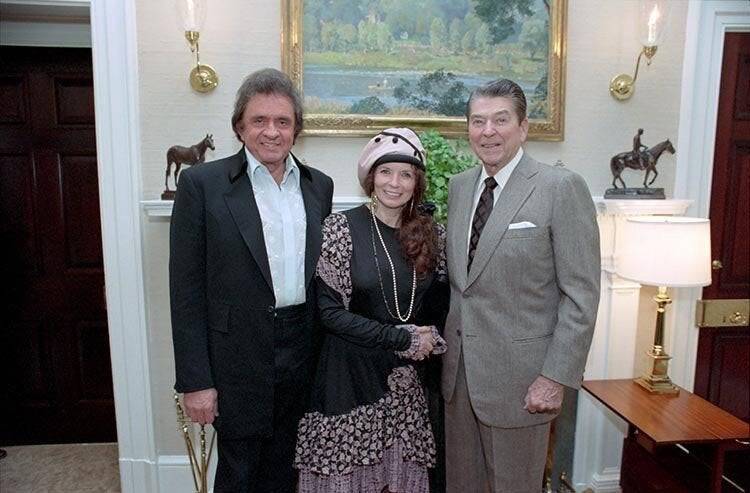
TwitterGovernor Reagan came to chat a day before Johnny Cash's performance at Folsom Prison. Years later, they reunited with the former president (as seen here).
That night, Gressett played a song called "Greystone Chapel" for his famous friend. This song was written by Glen Sherley, an inmate at Folsom Prison, and was about finding God in the prison chapel.
Cash loved the song so much that he wrote down the lyrics and worked late into the night to rehearse it with his band.
He promised to play the song as part of his set the next day — without Sherley's knowledge.
At Folsom Prison
"When we arrived at Folsom, it was very quiet and desolate, and you could only see a few inmates," Grant said. "Jim Marshall photographed John and June getting on and off the bus; we were all there, and it felt like a moving cell."
"And from the moment we left the motel, we were two or three miles away, there was a very gloomy atmosphere for everyone. It was hard to explain. There was no joy there at all."
Grant accidentally brought a gun into the prison. It was a real gun that Cash and his team would use as a joke on stage — when they pulled the trigger, it would make a loud bang and produce smoke from the barrel, making the audience laugh. That morning, he certainly did not think he was entering a maximum-security prison with a gun.
Fortunately, he calmly explained the situation to the guards and ensured that it was peacefully confiscated until the show was over, saying, "I don't want any trouble." Jim Marshall, one of the most prolific and important photographers in rock & roll history, forgot the marijuana in his camera bag. Fortunately, no one noticed.
Johnny Cash performs "Folsom Prison Blues" on January 13, 1968.
The stage was set up in the cafeteria behind the death row inmates. Writer Robert Hillburn was freelancing for The Los Angeles Times and had the chance to be there that day. The writer felt everything was falling into place — this was exactly what Cash needed to do.
"He really felt he was making the right decision; there was something the audience wanted," Hillburn said about Cash. "That day, he didn't just put on a show of his best hits; he crafted each song for that audience and their emotional needs."
Hillburn described the atmosphere on stage as lively and wild; a combination of the tension and desire the inmates felt to relax.
"There were guards with guns roaming the ramps above the audience," he said. "The tension was high."
Marshall couldn't help but notice how Cash held the inmates in the palm of his hand during this time.
"If Johnny had said, 'Let's get out of here,' they would have done it," he said. "They would have followed him. He had that kind of presence."
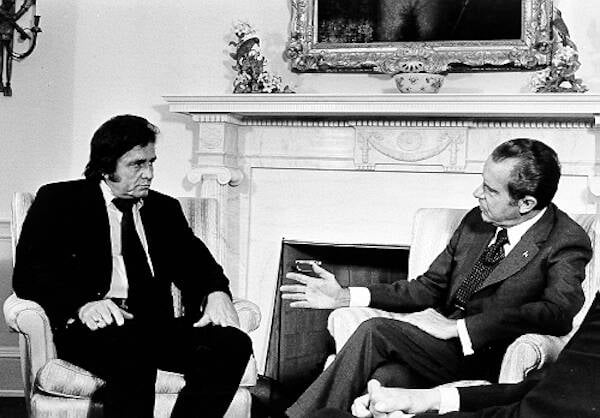
Wikimedia CommonsJohnny Cash met with President Nixon to discuss policy in support of basic prison reform. July 1972.
The show turned a room full of criminals into a hot, sweaty party; it was filled with smoke, excitement, and endorphins. Everyone was behaving quite well, but they were clearly happy. That day, many inmates probably experienced one of the best days of their lives.
However, before the show officially ended, Cash announced he would play another song written by Glen Sherley.
"He jumped out of his seat," said Gene Beley, a reporter for the Ventura Star-Free Press who was there that day. "I thought his eyes were going to pop out. I had never seen a man so happy in my life."
At Folsom Prison changed Sherley's life. Cash's performance of his song on stage and giving him the credit he needed in front of the other inmates provided him with a boost in confidence afterward. He recorded an album in prison, and when he was released, Cash welcomed him into the group.
Unfortunately, Sherley was fired when he threatened to kill a band member. He committed suicide a few years later. Johnny Cash covered the costs of his funeral.
The Legacy of the Man in Black
Although Johnny Cash had never spent more than a few nights in jail (usually for drunkenness), he turned "Folsom Prison Blues" into a slogan for inmates across the country — making him a beloved figure among people in prison. His image was shaped as a rebel who was always on the side of the oppressed.
But this was not just a show — Cash was extremely sensitive to the plight of incarcerated Americans. He particularly disliked the fact that first-time offenders were treated the same harsh way as career criminals and how ineffective the so-called rehabilitation in U.S. prisons was.
"The penal system was broken because it wasn't fixing anyone," said his friend and family historian Mark Stielper. "The population was mixed; kids and murderers. This was his issue; it really bothered him."
As a result, the show was not only a universally praised performance but also produced a hit album. Cash also "raised awareness in mainstream society about the necessity of prison reform," said Michael Streissguth, author of Johnny Cash: The Biography. "No one was working on this at his level."
"Even today when we listen to Johnny Cash, we know him as the friend of the inmates," Cram said. "He continues to question how our society continues to imprison people."


Comments
(9 Comments)