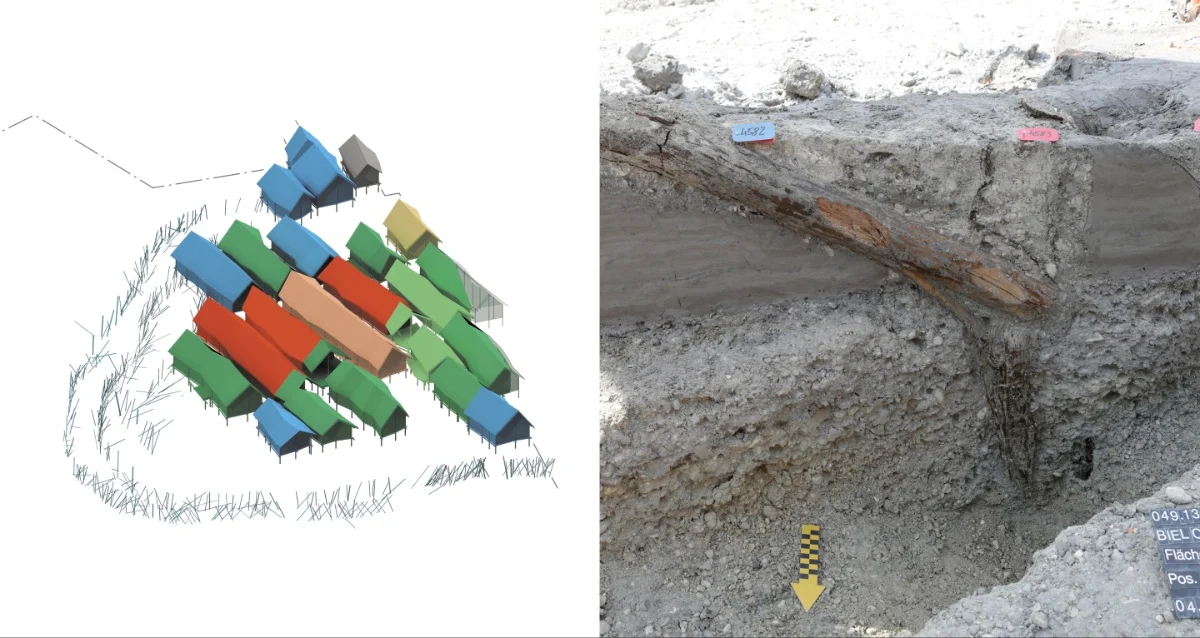
Bern Canton Archaeology Service, Khaled BordjiAlthough the prehistoric inhabitants of the village tried to rebuild after the storm, they ultimately preferred to abandon it.
A Neolithic village that existed peacefully for five years on the shores of Lake Biel saw its inhabitants build nearly two dozen houses, produce goods like ceramics and tools, and trade with surrounding settlements. However, about 5,860 years ago, this quiet life came to a sudden and violent end when the village was destroyed by a terrible storm.
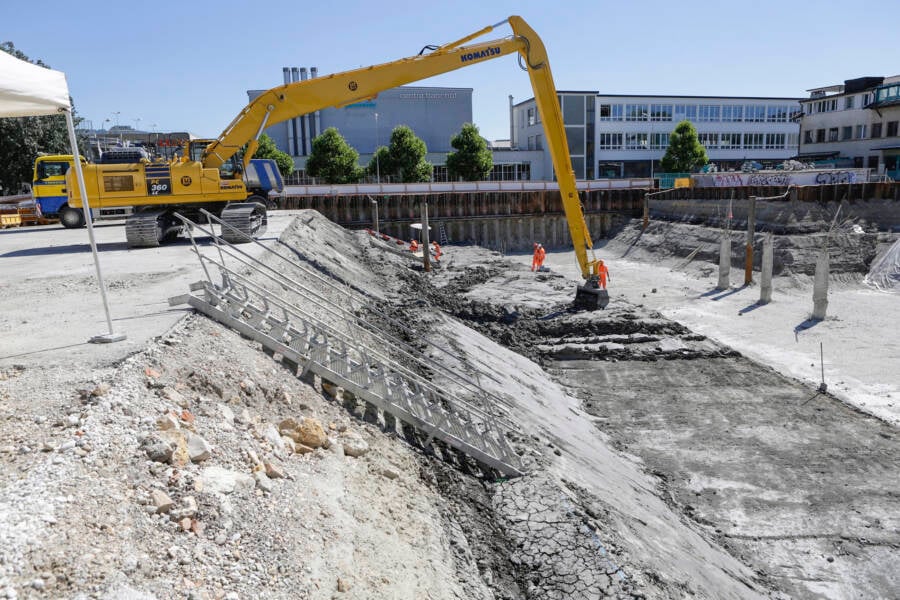
The remains of the village, eventually abandoned by its inhabitants, were gradually buried in the murkiness around Lake Biel. However, during the construction of a new university campus, archaeologists rediscovered the village and uncovered fascinating information about the people who once lived there.
Neolithic Village Destroyed by a Violent Storm in 3838 BC
According to a statement from the Bern Canton, the lost Neolithic village was uncovered during excavations in Biel prior to the construction of a new campus for Bern University of Applied Sciences. In these excavations, "in the heart of Biel," archaeologists found the remains of the village at a depth of about 15 feet.
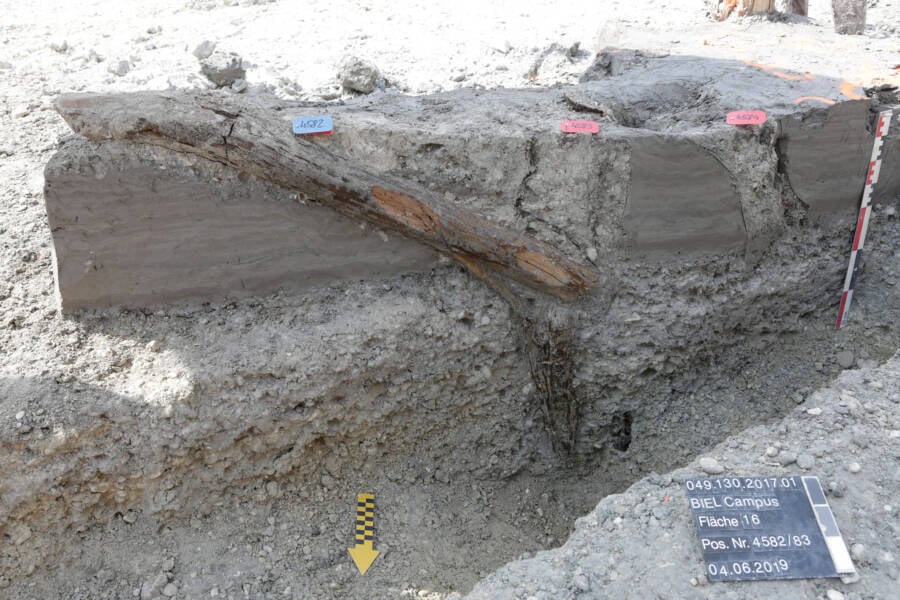
Bern Canton Archaeology Service, Stefan AebersoldA structural post found on the northern edge of the Neolithic village in Biel.
Archaeologists discovered 1,300 posts that once supported wooden houses, as well as 700 other well-preserved wooden pieces. They managed to reconstruct that the village once contained 23 houses. Using data obtained from tree rings, researchers determined that this Neolithic village existed for only five years, from 3842 BC to 3838 BC.
Ultimately, life in this village came to an abrupt and violent end in the summer of 3838 BC due to a devastating storm that ravaged the village. Archaeologists found evidence of a "violent western storm" that "uprooted several structures and caused significant damage." It appears that the village was nearly completely wiped out due to high winds and flooding.
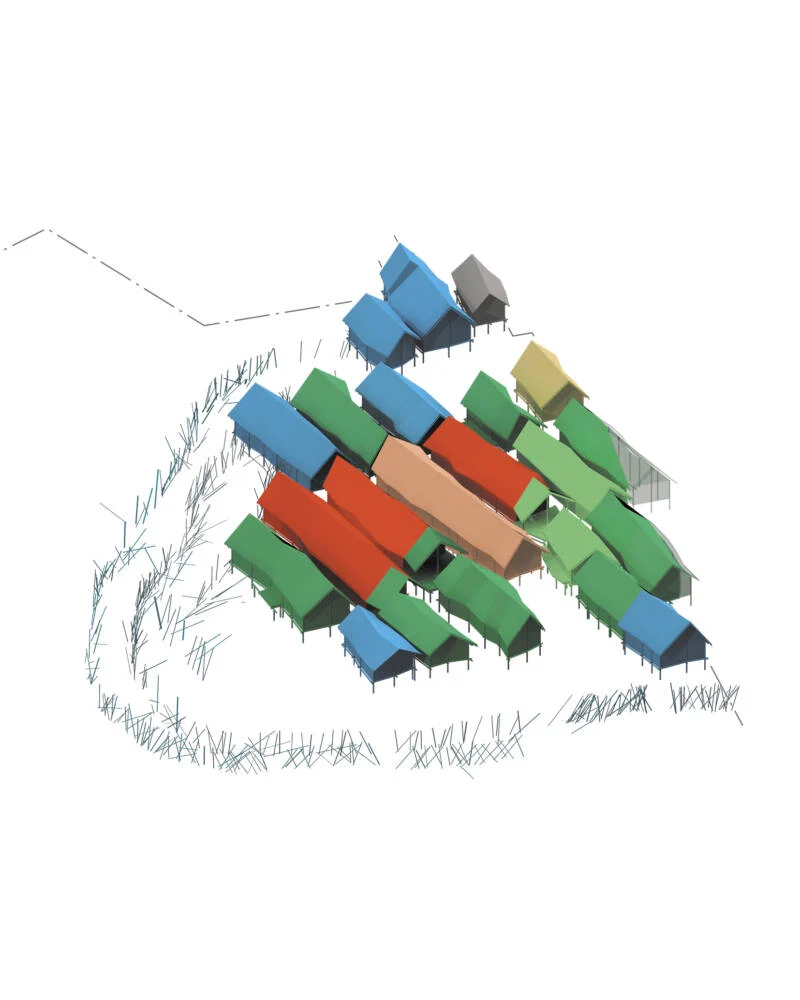
Bern Canton Archaeology Service, Andreas MartiThe layout of the Neolithic village existed along Lake Biel for only five years before being destroyed in 3838 BC.
In the aftermath of the disaster, the inhabitants seemingly attempted to rebuild their homes. Although they ultimately abandoned their efforts, they left behind many objects that shed light on their lives before the great storm.
Life in the Neolithic Village Located by Lake Biel in Switzerland
As noted by the Bern Canton, the remains of the village have provided much information about the daily lives of its Neolithic inhabitants. Among the remains of the wooden houses, archaeologists found ceramic vessels and tools made of stone, bone, and horn. They also discovered bone and plant remains, allowing researchers to reconstruct the dietary habits of the inhabitants and confirm that the villagers had a lifestyle similar to other contemporary settlements in the region.
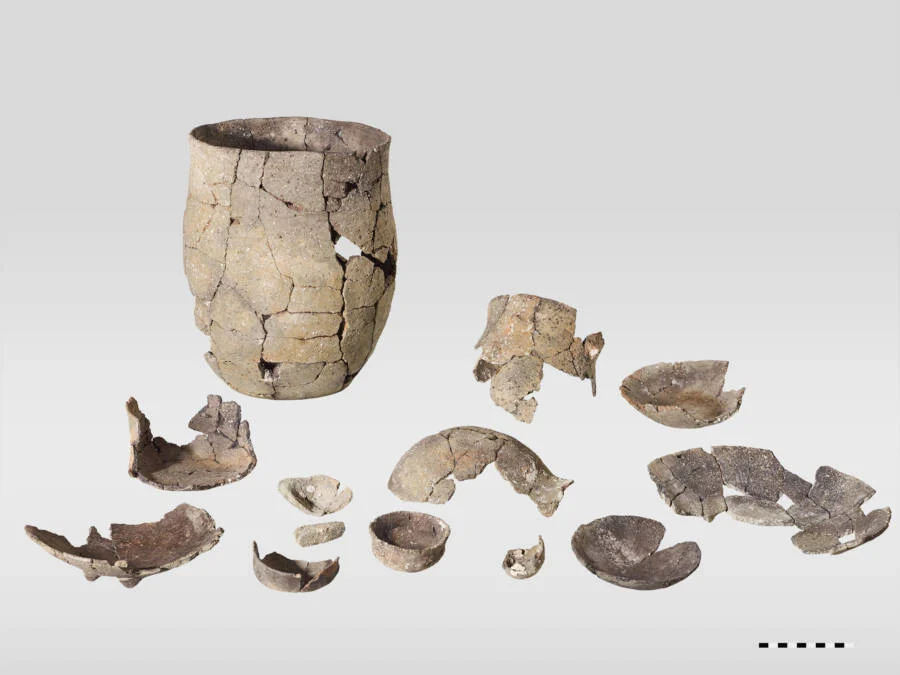
Bern Canton Archaeology Service, Daniel Marchand and Philippe JonerSome ceramic vessels found by archaeologists among the remains of the Neolithic village.
However, although most of the things used and consumed by the village came from local sources, archaeologists also found evidence that the inhabitants brought "goods and traditions" from distant places. They believe the village had connections with Central Switzerland, the Rhône Valley, Provence, Alsace, and "even the Paris Basin."
As a result, the terrible fate of this Neolithic village has provided a great opportunity for archaeologists. They have been able to obtain rare and valuable information about Neolithic life from these remains. This village is recorded as one of the oldest sites with a known settlement plan found to date and the oldest site in Lake Biel that has been reconstructed so precisely.
In this way, it is a village frozen in time. Although a devastating storm destroyed the village's structure and dispersed its inhabitants 5,900 years ago, it also preserved elements of Neolithic life as they were. The objects found among the remains, from wooden posts to ceramic vessels, offer new insights into the prehistoric people of this region like never before.

































Comments
(4 Comments)