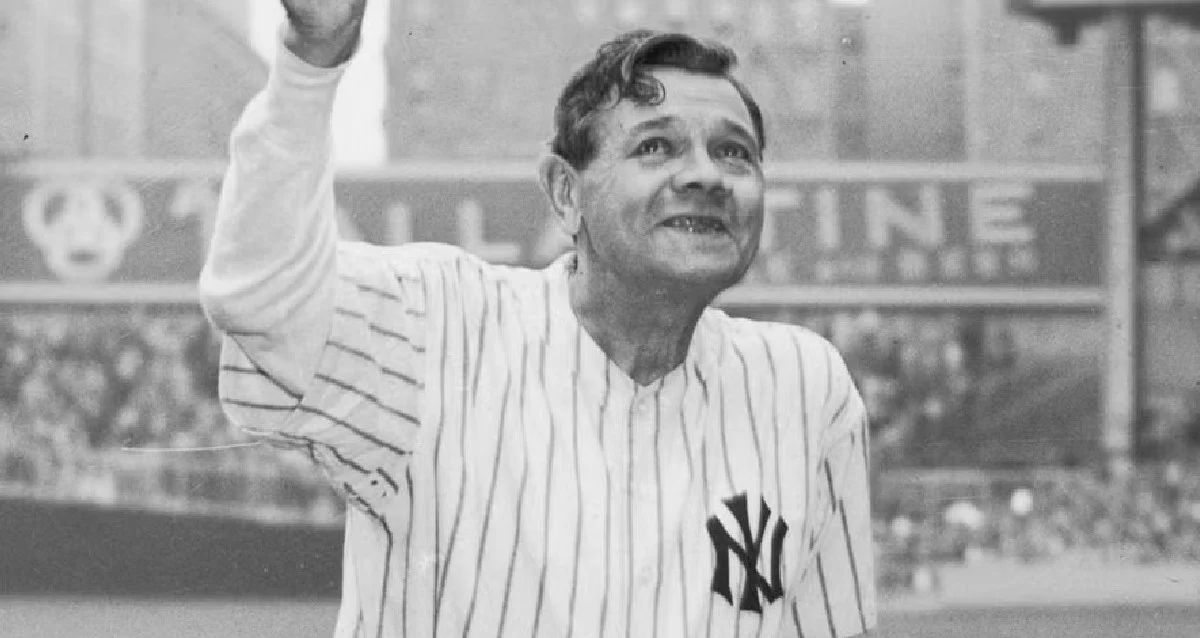
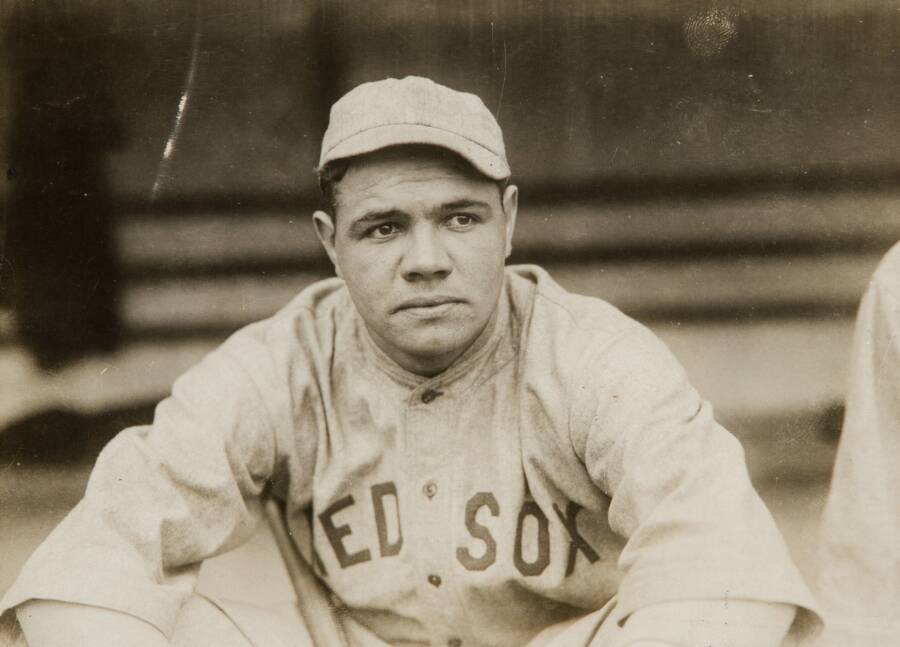
Public DomainBabe Ruth in 1919.
For two decades, Babe Ruth was at the pinnacle of baseball. He hit 40 or more home runs in 11 seasons, was the league's home run leader for 12 seasons, and became the all-time home run leader in baseball with 714 home runs. This record was broken 40 years later by Hank Aaron. Ruth seemed unstoppable. Therefore, the death of Babe Ruth at the age of 53 was a great shock.
Ruth began to feel unwell in 1946, and doctors soon identified the cause: the baseball star was suffering from nasopharyngeal carcinoma, a rare type of cancer affecting the tissues behind the nose and mouth. The hope of saving Ruth's life was slim, but the doctors were willing to try — and Ruth agreed to experimental treatments with new types of drugs.
These drugs became the pioneers of modern chemotherapy, and Ruth was one of the first to receive them. However, the doctors ultimately could not save his life. Babe Ruth passed away on August 16, 1948, at the age of 53, mourned by thousands of fans at Yankee Stadium.
The Legendary Career of the 'Great Bambino'
Born George Herman Ruth on February 6, 1895, in Baltimore, Maryland, he developed a passion for baseball at a young age. While he was a student at St. Mary’s Industrial School, Ruth was introduced to baseball. He became such a strong player that his teachers invited Jack Dunn, the owner of the Baltimore Orioles, to watch him. Dunn was so impressed with Ruth that he offered him a contract. Ruth was only 19 years old and was known as “Jack’s newest baby.”
This nickname stuck. Before long, baseball fans across the country were familiar with Babe Ruth.
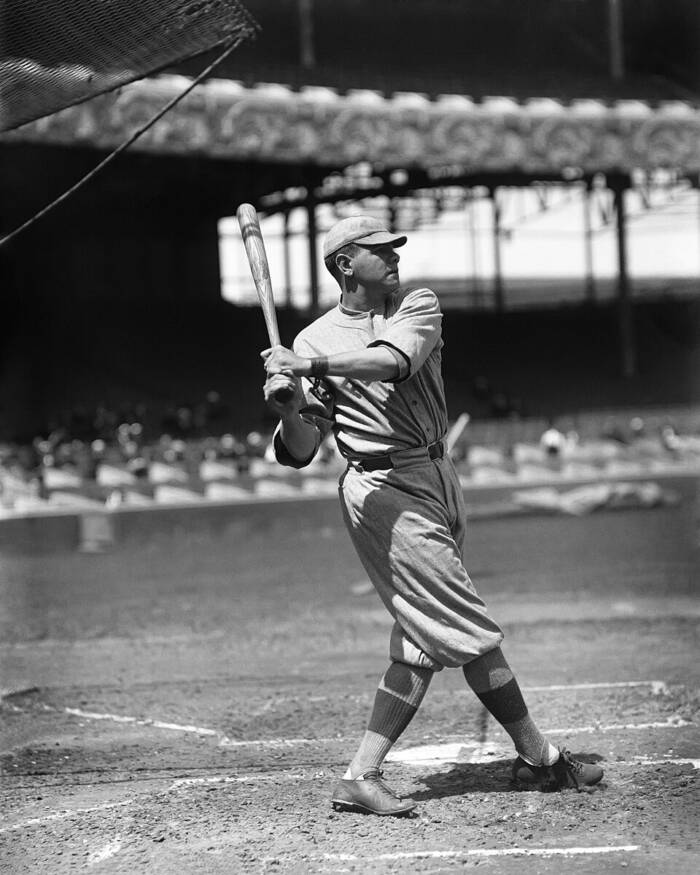
Public DomainBabe Ruth in 1916.
After starting his career in Baltimore, Ruth was soon sent to play for the Boston Red Sox. He led his team to three championships and broke the Major League Baseball single-season home run record by hitting 29 home runs in 1919. Shortly thereafter, he was sent to play for the New York Yankees. There, his talent truly shone — and Ruth quickly became a baseball legend.
In 1920, he hit 54 home runs, in 1921, 59 home runs, and in 1927, the “Great Bambino” broke the record for most home runs in a single season by hitting 60. This record would stand for the next three decades. Yankee Stadium, built in 1923, began to be referred to as “The House That Ruth Built.”
After an astonishing career, the Great Bambino retired from baseball in 1935. However, a decade later, Babe Ruth passed away at the age of 53.
Terminal Cancer Diagnosis — A Trial with Experimental Drugs
Babe Ruth had never paid much attention to his health. He was known for drinking soda and eating hot dogs during games, often combining them with cigars and whiskey for breakfast. In the 1920s, he underwent surgery for a bowel abscess and ulcers. However, in the 1940s, Ruth's health deteriorated.
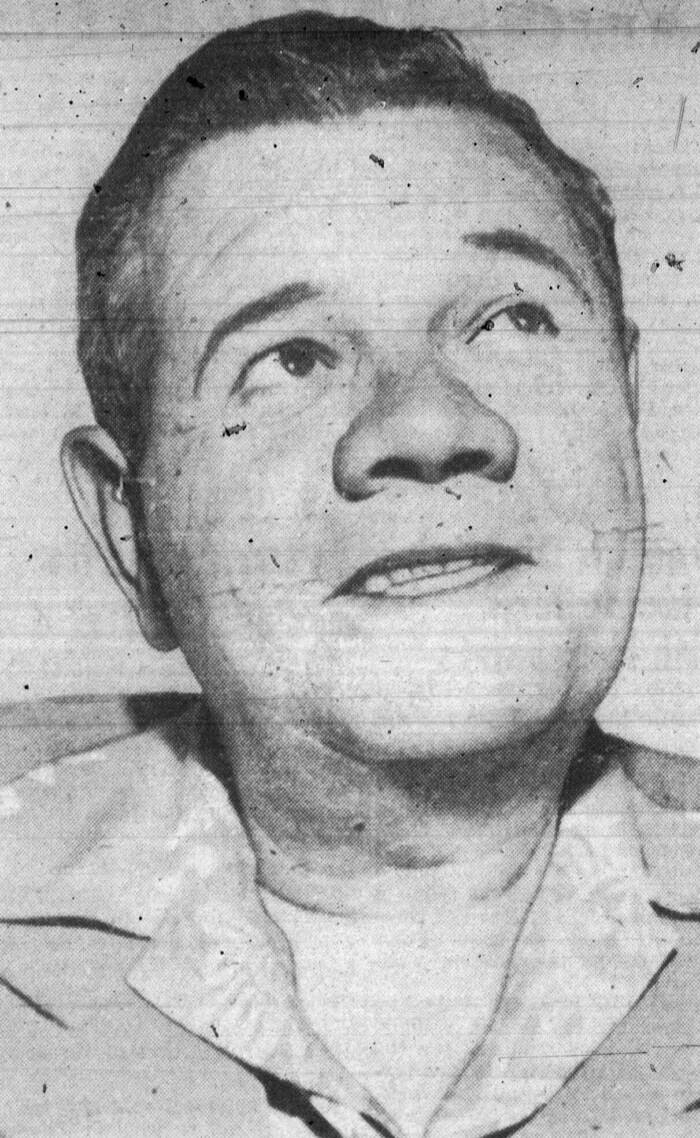
Public DomainBabe Ruth in 1947. At this point, the baseball legend had become very ill.
In 1946, Ruth noticed that his voice was becoming hoarse. Furthermore, he developed a terrible pain behind his left eye. Doctors determined that there was a large tumor at the base of his skull and realized that the baseball legend was suffering from a rare cancer called nasopharyngeal carcinoma. This type of cancer affects the tissues at the back of the nose and throat and was terminal at that time.
It is unknown whether Ruth knew that his cancer was terminal, as doctors often shielded patients from distressing news at that time, but he knew he was in bad shape. Ruth became almost unable to speak and once described the sound of his voice as “like someone swallowing ashes.” He underwent radiation and surgery, which caused him to lose weight — and did little to alleviate his symptoms.
The public was aware that Ruth had recovered from an operation, and MLB commissioner Happy Chandler organized a “Babe Ruth Day.” During this event, “fans, players, and the game's management… [came together] to pay tribute and pray for his swift recovery.” Despite still being very ill, Ruth attended Babe Ruth Day at Yankee Stadium on April 27, 1947. He addressed the crowd, clearly weakened, saying, “You know how bad my voice sounds. Well, that’s exactly how I feel.”
“There are many nice things being said about me. I’m glad I had the opportunity to thank everyone.” he added.
Meanwhile, Ruth's doctors were realizing that the radiation treatment was not working. Although hopes for recovery were slim, in June, they suggested he try an experimental drug called teropterin. Teropterin was a precursor to modern chemotherapy drugs and had only been tested on mice. However, Ruth agreed to the trial.
“If something is learned about this type of treatment, good or bad, I realized it would be beneficial for the medical profession and perhaps for many people like me,” he later wrote.
Initially, the treatment seemed to be working. Ruth's symptoms improved, he regained some of the weight he had lost, and he even felt well enough to attend the 25th anniversary of Yankee Stadium in June 1948. News began to spread in the scientific community that a cure for cancer had been found.
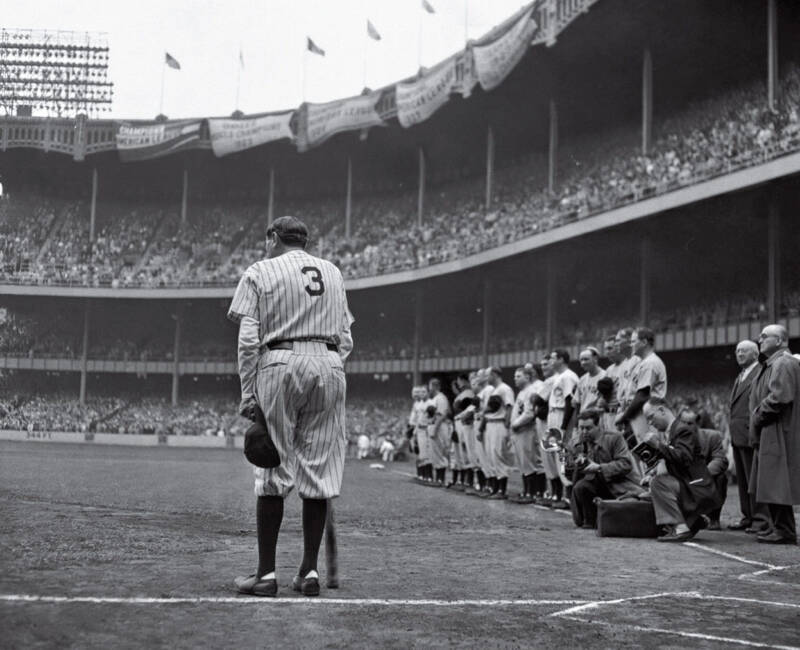
Public DomainA Pulitzer Prize-winning photo taken at Yankee Stadium on the day Babe Ruth died from cancer, June 1948.
However, unfortunately, the experimental drug treatment had only delayed Babe Ruth's death. He passed away two months later.
Babe Ruth's Death at 53 Years Old
Just days after his appearance at Yankee Stadium, Babe Ruth was admitted to Memorial Hospital in New York. Despite being discharged from the hospital several times, his condition continued to worsen, such as attending the premiere of the film The Babe Ruth Story, which depicted his life.
In August 1948, according to reports from UPI, Ruth's hospital was issuing daily health bulletins, stating that in his final days, the baseball legend was “still critical.” On the morning of Babe Ruth's death, his condition appeared to have improved, and the hospital reported that his fever had dropped and he was “holding his own.” However, as the day progressed, his condition worsened. At 5:00 PM, the hospital reported that Ruth was “more critical,” and at 6:00 PM, they announced that he was “rapidly deteriorating.”
With this news, hundreds of young fans began to gather outside the hospital. They were keeping vigil as the hospital released its final bulletin.
“Babe Ruth passed away at 8:01 PM tonight,” the final bulletin read. “The cause of death was cancer.”
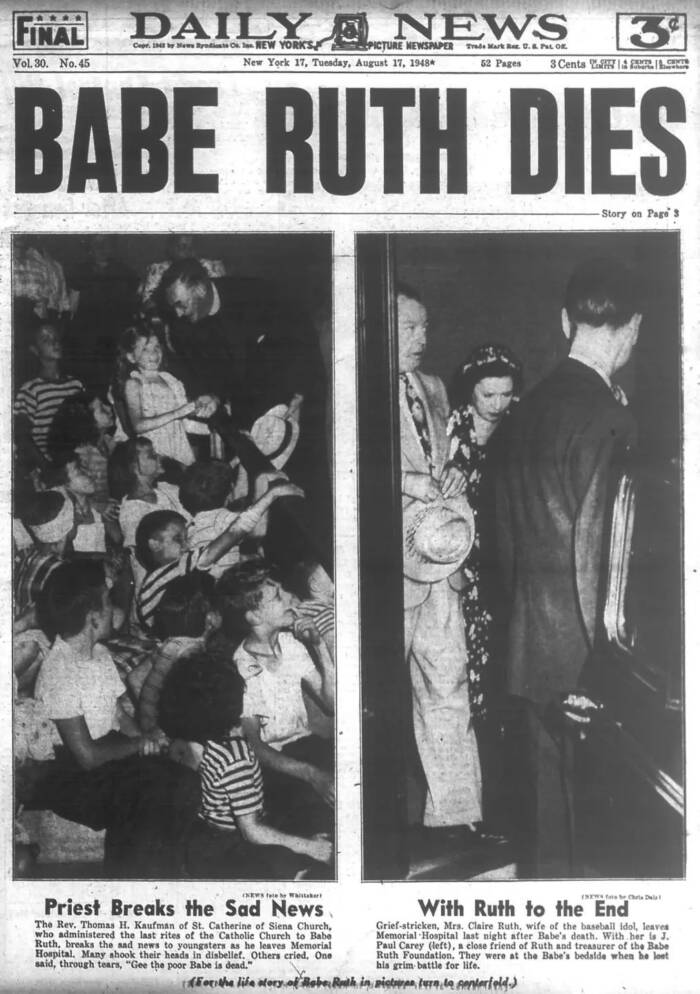
New York Daily NewsThe headline from New York Daily News announcing Babe Ruth's death.
A priest announced Babe Ruth's death to the crowd outside the hospital. A young fan was brought to tears.
“I am in deep shock, deep shock,” said MLB commissioner Happy Chandler. “His death will cause great sorrow. He was one of my personal friends. I am very sad that we have lost him.”
However, the Great Bambino would return to Yankee Stadium one last time.
What Happened After Babe Ruth's Death
Babe Ruth's death shook baseball. The city of New York began to mourn for their favorite player. Following his death, his body was displayed at Yankee Stadium for two days, allowing fans to pay their last respects.
“Babe Ruth is returning to Yankee Stadium today,” UPI reported the day after Babe Ruth's death. “There, thousands of fans will have the chance to pass by the open casket of the famous home run hitter who died of cancer last night and pay their final silent farewell.”
Indeed, up to 100,000 fans flocked to the stadium to bid farewell to Ruth. Later, tens of thousands of fans also filled the outside of St. Patrick's Cathedral, where Ruth's official funeral was held. After the memorial service at Yankee Stadium and the funeral at St. Patrick's, Babe Ruth was buried at Gate of Heaven Cemetery in Westchester County, New York.
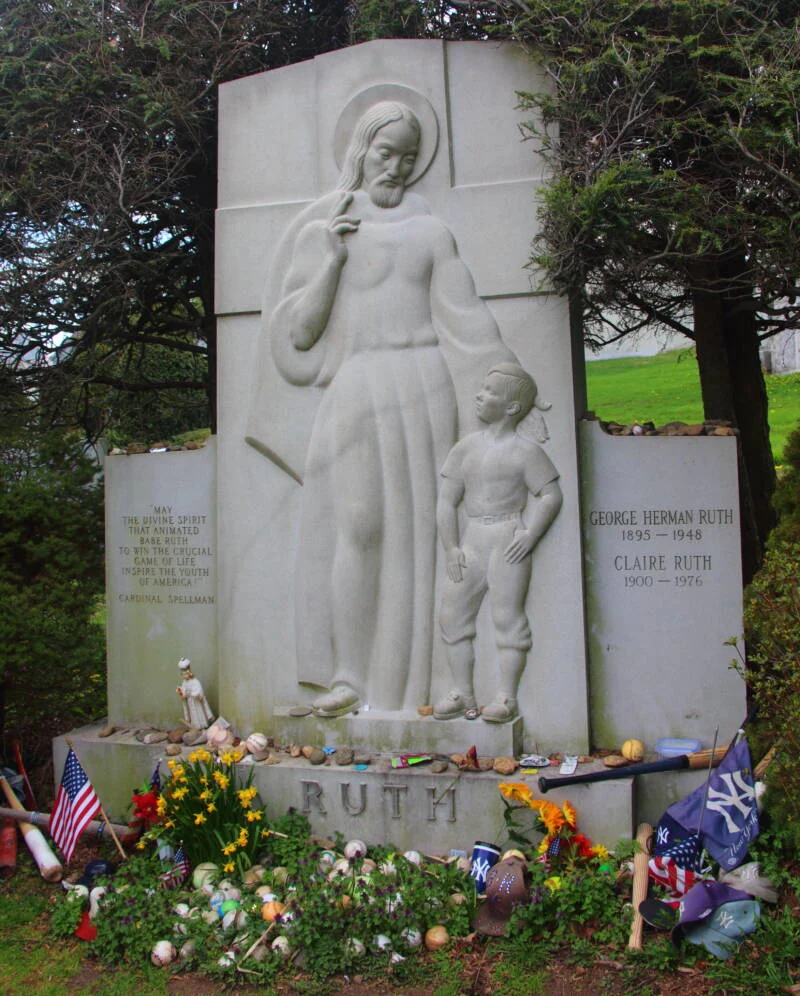
Wikimedia CommonsBabe Ruth's grave is located at Gate of Heaven Cemetery in Hawthorne, New York.
However, in the years since Babe Ruth's death, the baseball legend has not been forgotten. With both his talent and charisma, he continues to be one of the most famous players in MLB history.
“He was famous not for hitting more home runs than others, but for hitting them higher, better, farther, with more dramatic timing and with more flamboyant grace,” sportswriter Red Smith once noted.






Comments
(6 Comments)