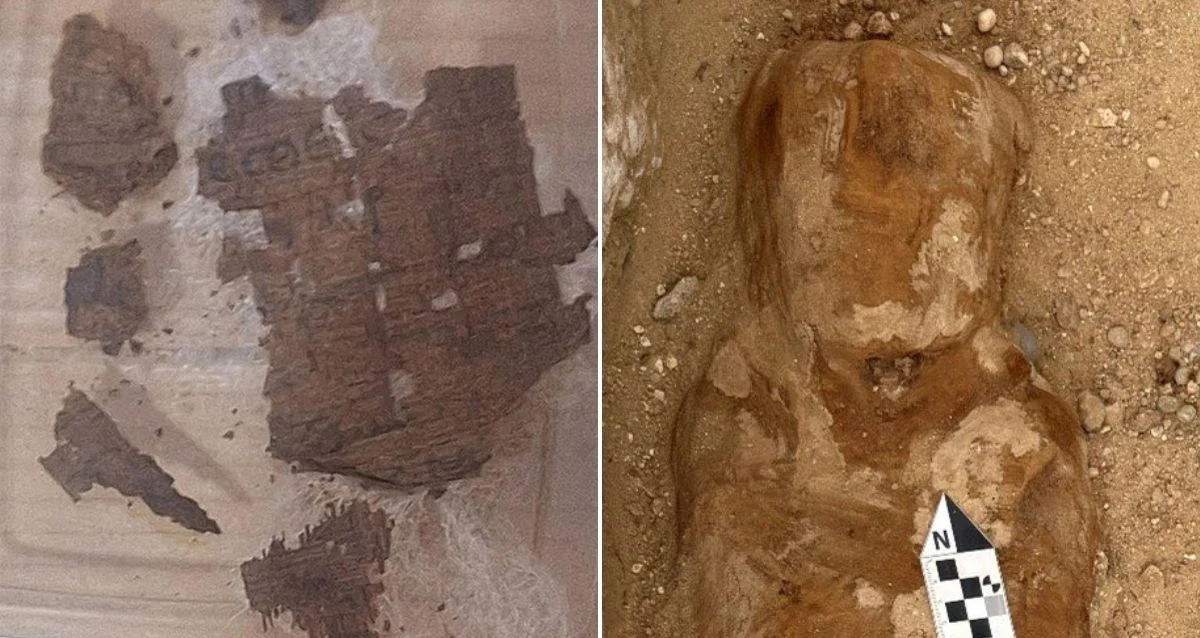
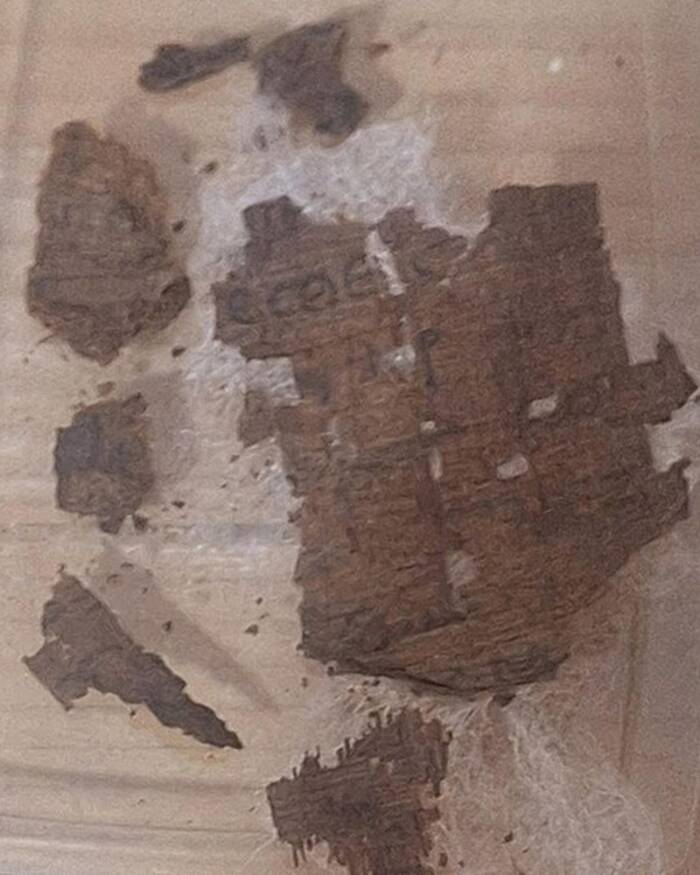
Ignasi-Xavier Adiego/University of BarcelonaThe newly discovered papyrus contains a text from Homer's epic poem Iliad about the Trojan War.
In late 2025, scholars from the Oxyrhynchus Archaeological Mission discovered a series of mummies in an ancient funeral complex near the city of Al-Bahnasa in Egypt. Some remains included intricate wrappings and sarcophagi adorned with gold foil, but one mummy contained something even more remarkable: a piece of papyrus containing a passage from Homer's Iliad.
Previously, papyri listing magical spells or rituals had been found with ancient mummies, but this is the first instance where a Greek literary text has been discovered beneath the wrappings of an Egyptian corpse. While the significance of the Iliad passage remains uncertain, this rare find offers new insights into the evolution of the mummification process in Egypt during the Greek and Roman periods.
Finding a Papyrus from Homer's Iliad Inside a 1,600-Year-Old Egyptian Mummy
Since 1992, experts from the Institute of Ancient Near Eastern Studies at the University of Barcelona have been researching Egypt's ancient history through the Oxyrhynchus Archaeological Mission. In late 2025, archaeologists involved in the project began examining a series of tombs in the necropolis of Al-Bahnasa, where Oxyrhynchus was once located.
The excavations revealed three limestone chambers containing mummies from Egypt's Roman period. This era began with Octavian's defeat of Cleopatra and Mark Antony in 30 B.C. and lasted until around A.D. 642.
Inside the tombs, archaeologists found wrappings adorned with intricate geometric patterns and gold tongues placed in the mouths of the deceased. Maite Mascort, one of the project leaders, explained to the Catalan newspaper Diari ARA, "[Embalmers] would place this piece on the tongue, as gold does not decay, thus preserving it and making it easier for the dead to deny committing a series of sins during Osiris's judgment."
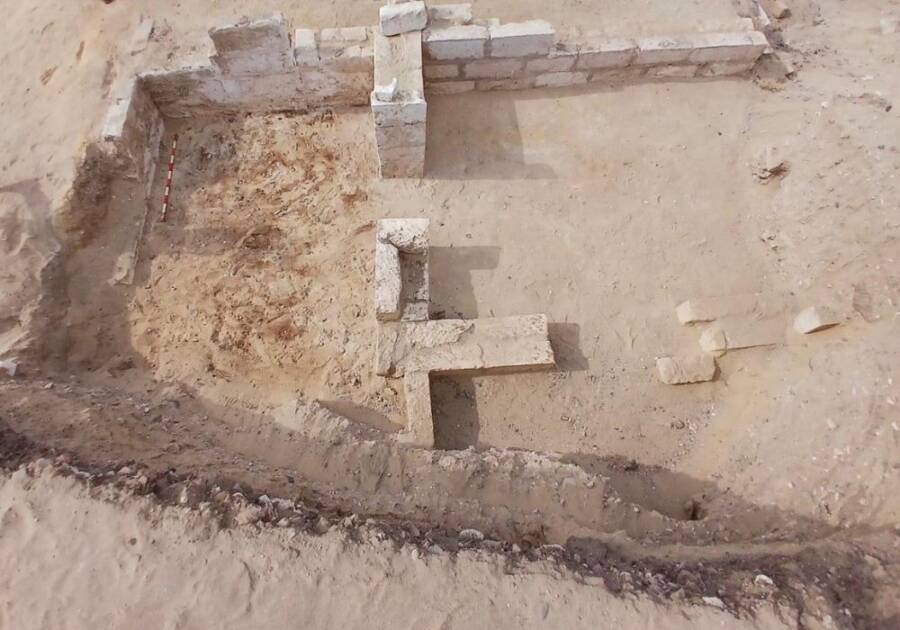
Ministry of Tourism and Antiquities of EgyptA view of the necropolis of Al-Bahnasa, where the mummies were uncovered in late 2025.
However, a mummy dating back 1,600 years contained something even stranger. A papyrus sealed with clay within the linen wrappings contained a text from Homer's Iliad. This is an epic poem from the 7th century B.C. detailing the Trojan War and the heroics of Achilles. The newly discovered passage is an excerpt from Book 2 of Homer's poem, listing the ships sent by the Greeks to fight against Troy.
Professor Ignasi-Xavier Adiego from the University of Barcelona, who is part of the Oxyrhynchus Archaeological Mission, stated, "This is not the first example of Greek papyri being included in the mummification process, but until now, their contents were essentially magical."
Adiego added, "Additionally, since the late 19th century, many papyri have been discovered in Oxyrhynchus, including significant Greek literary texts, but the real novelty is the finding of a literary papyrus in a funerary context."
So, why was a portion of the Iliad buried with this mummy?
How Did the Greeks and Romans Change the Ancient Egyptian Mummification Process?
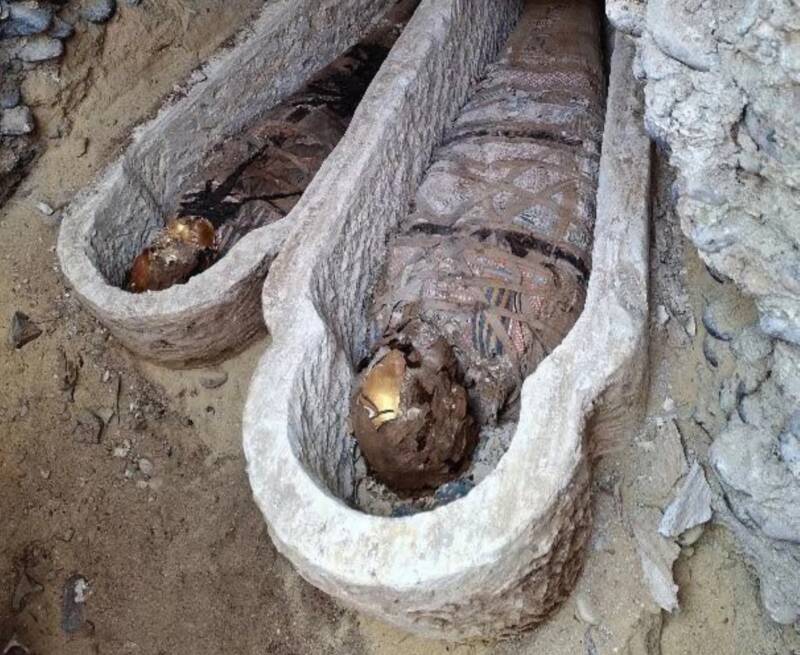
Ministry of Tourism and Antiquities of EgyptSome Egyptian mummies uncovered in the Oxyrhynchus necropolis.
Traditionally, ancient Egyptians would remove the organs of their dead during mummification and store them in canopic jars. However, when the Greeks and Romans took control of the region, they made some changes to this process.
During Egypt's Roman period, most organs were left inside the deceased, and the chest and abdominal cavities were filled with preservatives. Papyri containing magical texts were then sealed with clay and placed either in the abdominal cavity or between the wrappings.
The presence of the Iliad in the wrappings of this mummy from the Al-Bahnasa necropolis provides additional information about these evolving funerary practices. However, it remains unclear whether Homer's famous poem was intentionally placed there.
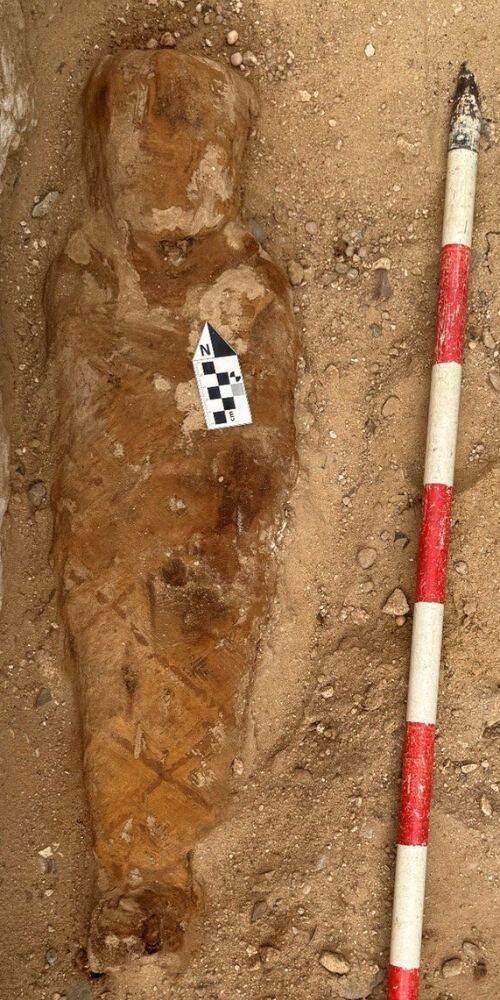
Ministry of Tourism and Antiquities of EgyptThe passage taken from the Iliad was found within the wrappings of this ancient mummy buried in the Al-Bahnasa necropolis.
Maite Mascort told Diari ARA, "A manuscript of the Iliad was used to write magical texts that followed the deceased." This means that a papyrus containing the epic poem may have simply been recycled for the rewriting of traditional spells.
The truth may become clearer as the analysis of the mummies continues. Mascort stated, "Many other papyri are still undergoing restoration," adding, "and we cannot rule out the possibility of another literary text emerging."
In conclusion, whether the Iliad was intentionally or accidentally buried with the mummy reflects the history of cultural change that took place in Egypt 1,600 years ago.
























Comments
(7 Comments)