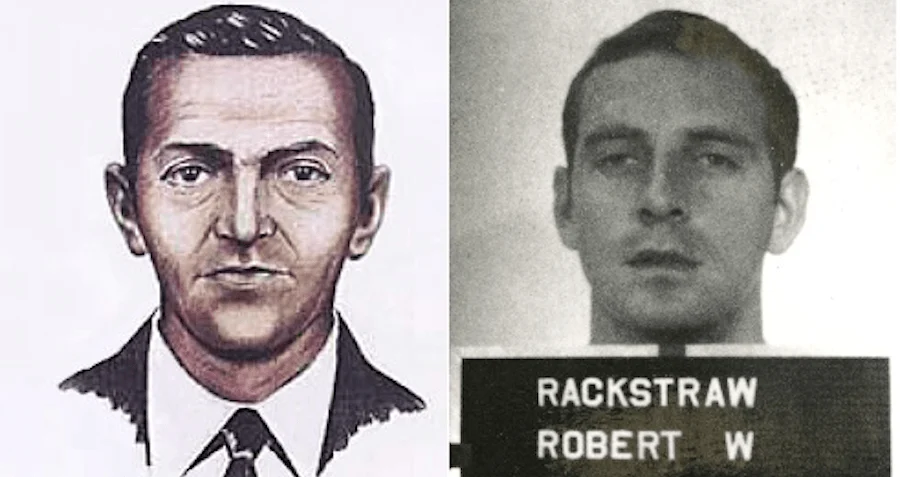
In 1971, a businessman hijacked a plane from Portland to Seattle, demanding $200,000 and a parachute. After a successful air robbery, this man, known by the alias D.B. Cooper, jumped from the plane and disappeared into the forests of the Pacific Northwest.
This crime, which has fascinated Americans for decades, remains unsolved to this day. However, some cold case researchers believe that Cooper was actually Robert Rackstraw, a former U.S. Army paratrooper.
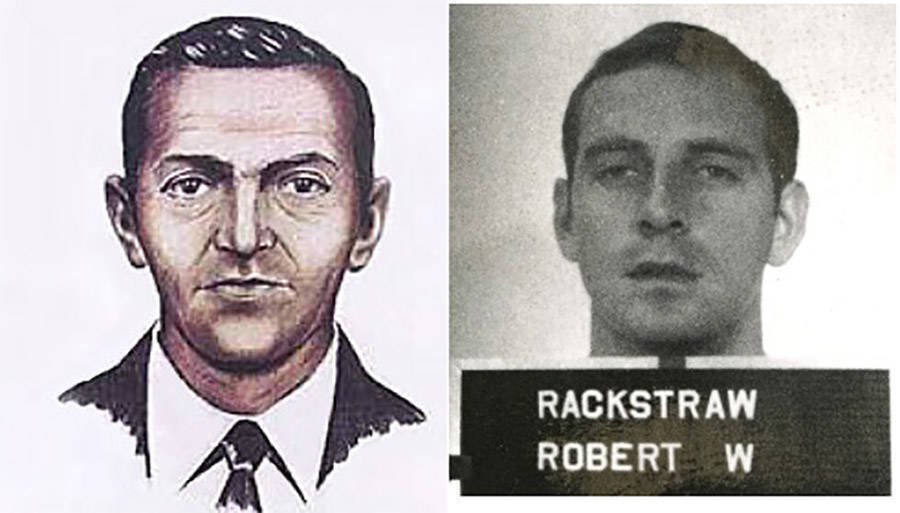
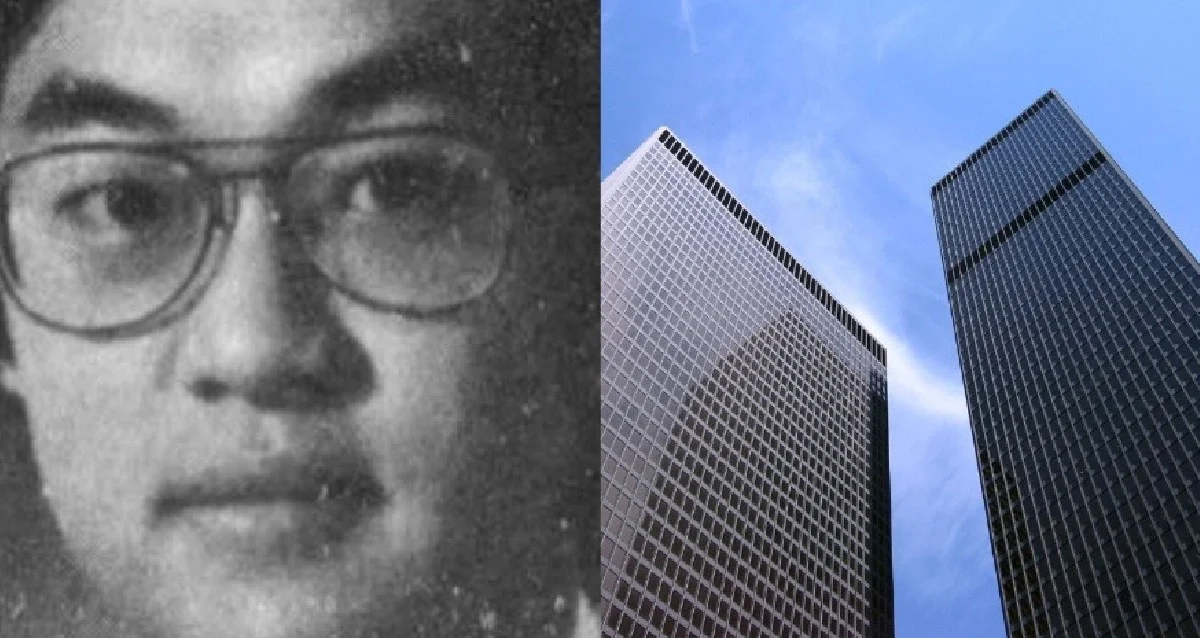
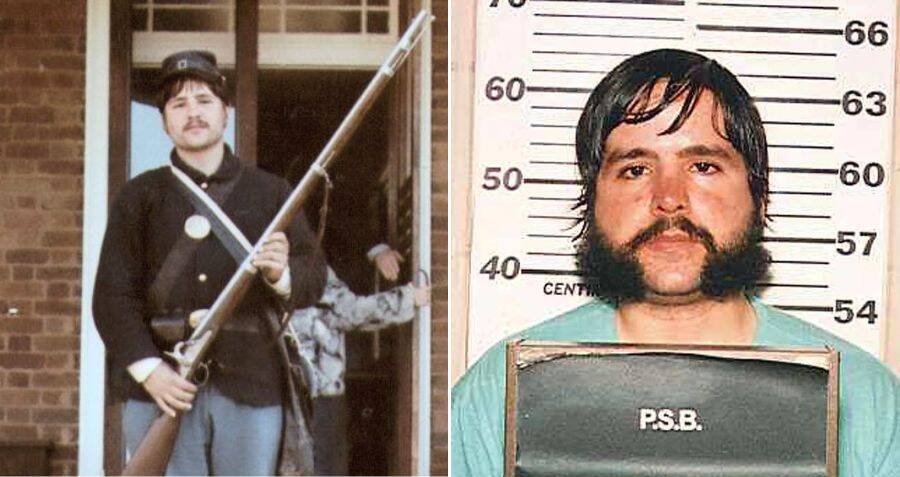
Wikimedia CommonsA sketch of hijacker D.B. Cooper and a 1970 mugshot of Robert Rackstraw.
Despite never admitting to being the hijacker, Rackstraw frequently responded to questions about it with a smile and a wink. Even after his death in 2019, many continue to see him as the prime suspect in the D.B. Cooper case.
Who Was Robert Rackstraw?
Born in 1943 in Columbus, Ohio, Robert Rackstraw led a life reminiscent of an action novel. After dropping out of high school, he became a U.S. Army paratrooper and explosives expert during the Vietnam War.
His service in 1970 earned him several air medals; however, Rackstraw was discharged from the army the following year.
Among other misdeeds, he lied about graduating from high school. This was a pattern of behavior that continued for decades.
A friend said that Rackstraw had "charisma enough to burn" and a "guilty mind." A prosecutor who tried Rackstraw for fraud and theft described him as "a great con artist." "You'd always buy a used car from him."
Despite his bad behavior, Rackstraw consistently managed to evade the law. At one point, he was accused of murdering his stepfather but was ultimately acquitted. "I was acquitted of everything, as far as I remember," Robert Rackstraw told the Washington Post.
However, shortly after his acquittal, Rackstraw's clean period came to an end. In 1978, he was charged with stealing an airplane and forging checks, serving nearly two years in prison.
The Inside Story of the Unsolved D.B. Cooper Hijacking Incident
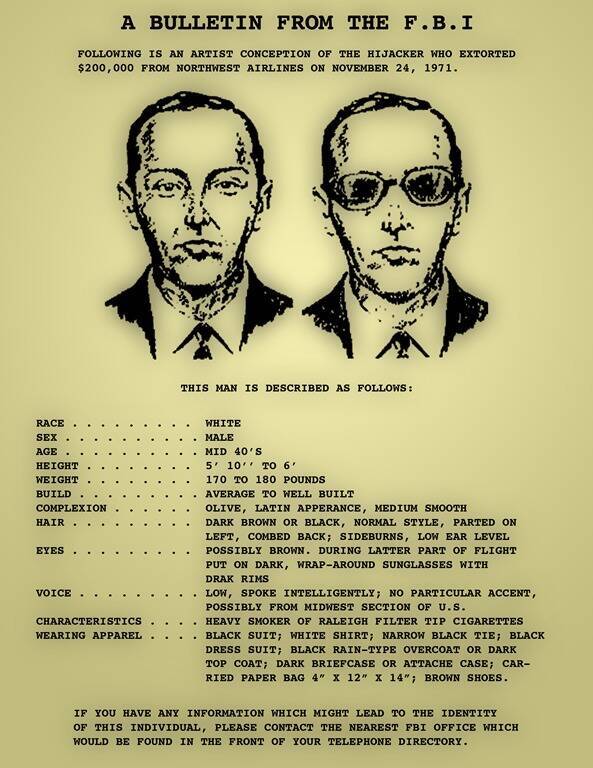
Wikimedia CommonsThe FBI officially closed its investigation into the D.B. Cooper case in 2016.
The D.B. Cooper hijacking incident remains one of the strangest aviation mysteries in American history. On November 24, 1971, a well-dressed man boarded Northwest Orient Airlines Flight 305 from Portland to Seattle. Shortly after takeoff, he told a flight attendant that he had a bomb.
Initially identifying himself as Dan Cooper, this hijacker was later mistakenly referred to as D.B. Cooper by the media, calmly made several demands.
"I want $200,000 by 5:00 PM," he told a flight attendant. "In cash. Put it in a backpack. I want two rear parachutes and two front parachutes. When we land, have a fuel truck ready. No funny business, or I'll do my job."
When the plane landed in Seattle, Cooper released the passengers. With his money and parachutes, he initially ordered the pilot to fly to Mexico City but later agreed to a refueling stop in Reno, Nevada.
And then, somewhere over the forests of the Pacific Northwest, Cooper vanished. He disappeared with a parachute and the money.
Was Robert Rackstraw Really D.B. Cooper?
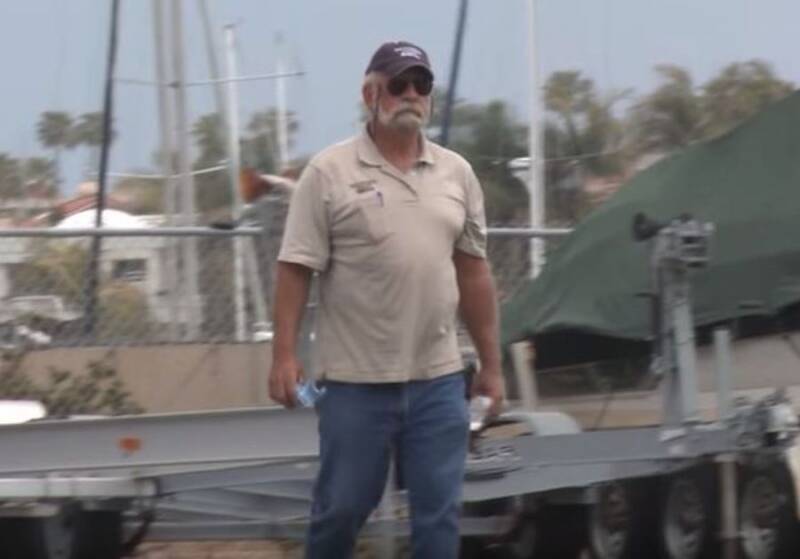
YouTubeRobert Rackstraw in his later years.
After the hijacking, the FBI launched a massive search to uncover D.B. Cooper's identity. Agents interviewed thousands of people, including Rackstraw. Initially, Rackstraw was often overlooked as a suspect because he was considered too young. Witnesses believed Cooper was between 35 and 45 years old, while Rackstraw was only 28 at the time.
However, years later, a research team of 40 people, including producer Tom Colbert and former FBI agents, gathered enough information to suggest that Rackstraw was behind the hijacking. They even aired a mini-series titled D.B. Cooper: Case Closed? on the History Channel in 2016, reevaluating Rackstraw as a suspect.
One thing is certain, Rackstraw had the skills and courage required to carry out a hijacking. He had worked with explosives and parachutes during his military service. Furthermore, he bore a resemblance to the sketches of Cooper.
Colbert's team also obtained two letters in which Cooper wrote a series of codes. According to Rick Sherwood, a former Vietnam War codebreaker who deciphered the codes, one letter states: "And please tell the incompetent police officers that D.B. Cooper is not my real name. I am 1st Lieutenant Robert Rackstraw, D.B. Cooper is not my real name."
After reviewing all the evidence, Colbert was convinced. "Rackstraw was a narcissistic sociopath who never thought he would get caught," he said. "He was trying to prove he was smarter than everyone else. But he couldn't compete with the 1,500 years of brainpower on our team. We beat him."
Response to the Allegations
Robert Rackstraw remained quite cautious until his death in 2019. To an interrogator, he smiled and said, "I'm afraid of heights."
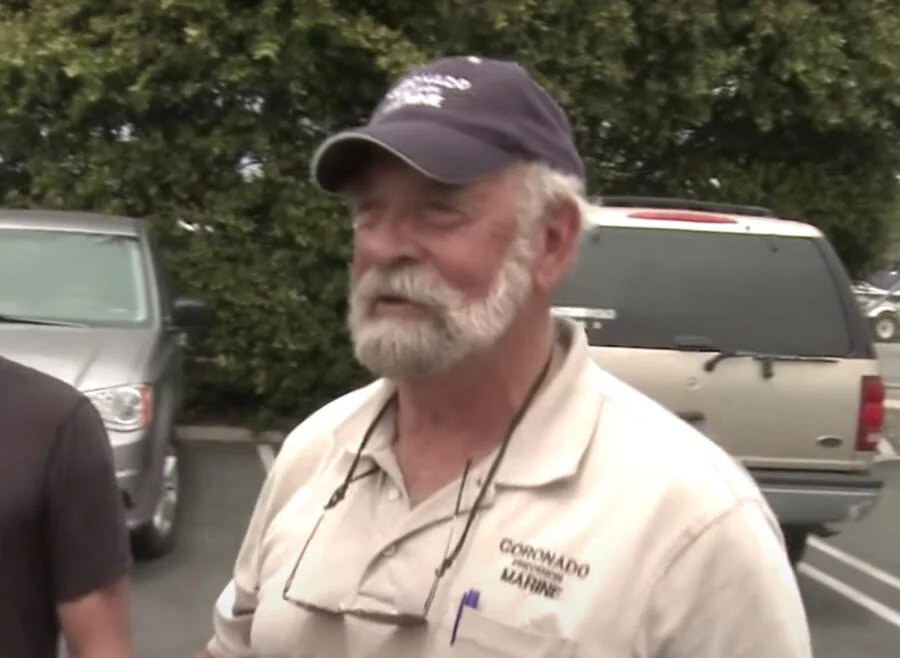
YouTubeRobert Rackstraw giving an interview about the D.B. Cooper allegations shortly before his death in 2019.
Rackstraw admitted to Colbert that he had claimed to be D.B. Cooper in the past — even calling news stations to say so — but ultimately said it was just a joke. Still, Rackstraw mysteriously added, "The problem is, I don't remember most of it."
Colbert believes that Rackstraw collaborated with the CIA, which caused the FBI to back off and hinder Colbert's investigation. He says the FBI "bushwhacked" him. In the end, Rackstraw simply said, "I was just a disabled veteran."
Rackstraw passed away on July 9, 2019, due to "long-term heart issues." If he was indeed D.B. Cooper, Robert Rackstraw took that secret to the grave.
Author: [Author Name]


Comments
(7 Comments)