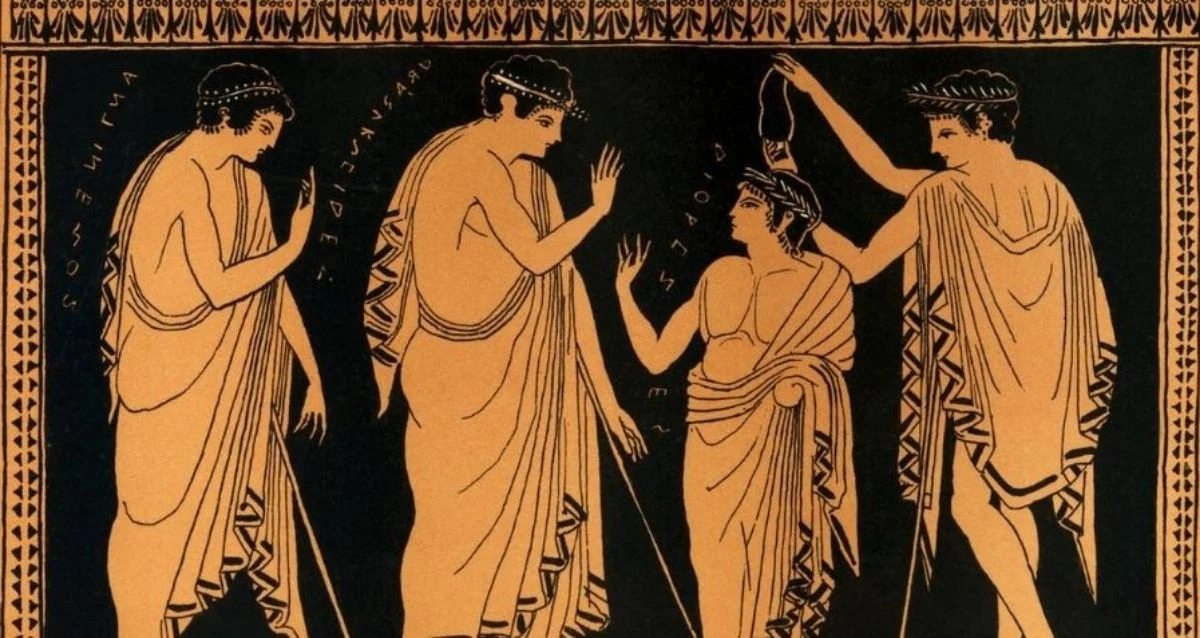
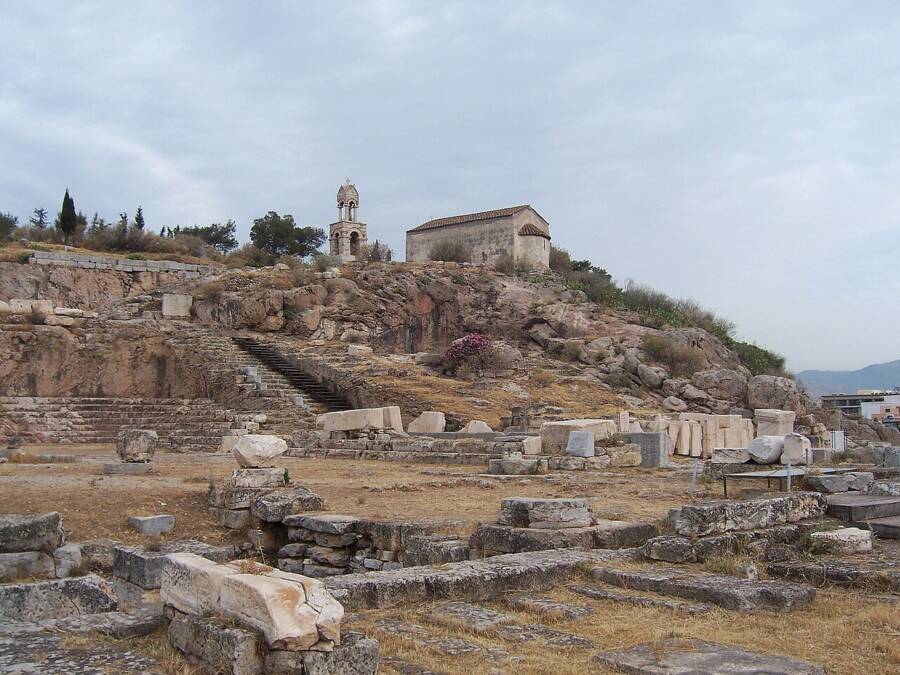
Carole Raddato/Wikimedia CommonsThe ancient city of Eleusis is the place where the Eleusinian Mysteries took place for a thousand and five hundred years.
Ancient Greece was a country filled with gods, myths, altars, and temples. These elements continue to inspire books, films, and modern culture even today. However, the most interesting ritual is also the one we know the least about: the Eleusinian Mysteries, a dark ceremony held annually.
This nine-day ritual began in Athens and ended in the ancient city of Eleusis, attracting thousands of worshippers every autumn. Participants fasted, offered sacrifices, held a 14-mile-long procession, and drank a mysterious beverage called kykeon, which was thought to have hallucinogenic effects.
However, the true heart of the ritual was so secret that anyone who explained what happened inside could be sentenced to death. Therefore, researchers have long been curious about the full story of the Eleusinian Mysteries; however, many truths have been lost over time.
What we know about the Eleusinian Mysteries encompasses everything from how they began to what happened to participants and in the secret ceremony.
The Inspiration of Demeter and Persephone for the Eleusinian Mysteries
The story of the Eleusinian Mysteries begins with Demeter, the goddess of agriculture and harvest. In mythology, Demeter is a nurturing goddess who oversees the fertility of crops and thus the survival of humanity. Initially, under her protection, the Earth experienced eternal spring and summer.
However, this situation changed when Demeter's daughter Persephone was abducted by Hades, the Greek god of the Underworld. In her grief, Demeter wandered for nine days; during this time, crops withered, and people began to starve. Eventually, she reached Eleusis and managed to convince Zeus to persuade Hades to return Persephone.
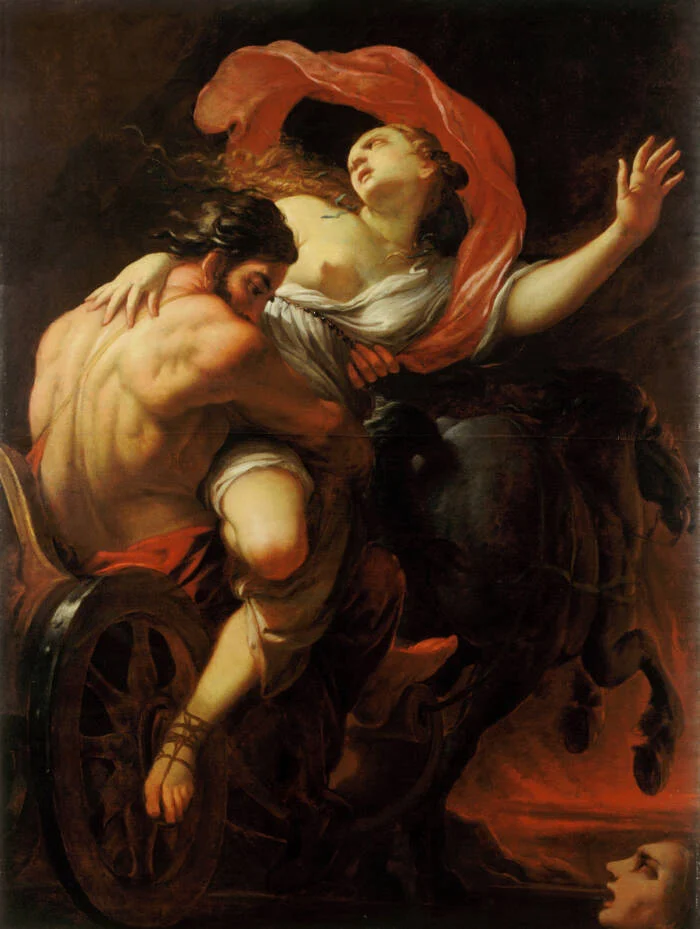
Public DomainA 17th-century painting depicting Hades abducting Persephone.
However, Hades tricked Persephone into eating a pomegranate seed. This meant she could only spend part of the year with her mother; she would spend the rest of her time in the Underworld. Each year, when Persephone was with Hades, Demeter mourned and neglected her duties, leading to the infertility of winter. When Persephone returned, Demeter's joy also returned; thus, the fertility of spring and summer was born.
This myth, based on the cycles of life and death, loss and return, creation and rebirth, ultimately inspired the ritual known as the Eleusinian Mysteries.
The Nine-Day Ritual of Fasting, Sacrifice, and Psychedelics
There is much that is unknown about the Eleusinian Mysteries. However, we know when the ritual took place, how it progressed, and who participated.
Every spring, “Lesser Mysteries” were held at a stream outside Athens. Following these purification rituals, the main ceremony took place in the month of Boedromion, in September or October. Everyone could participate — men, women, children, and even slaves — but there were two barriers to participation: participants had to understand the Greek language and could not have been charged with murder.
Due to the openness of the ceremony, the Eleusinian Mysteries attracted thousands of people every year. It is believed that famous Greeks like Socrates and Plato, as well as powerful Romans like emperors Augustus and Hadrian, also participated.
Initiates began their journey by offering sacrifices, taking ritual baths, and fasting for five days in Athens. On the fifth day, they began their 14-mile journey from Athens to Eleusis; this journey was said to take place along the Sacred Way, which Demeter walked in search of Persephone. The participants were guided by priestesses carrying chests filled with mysterious sacred objects.
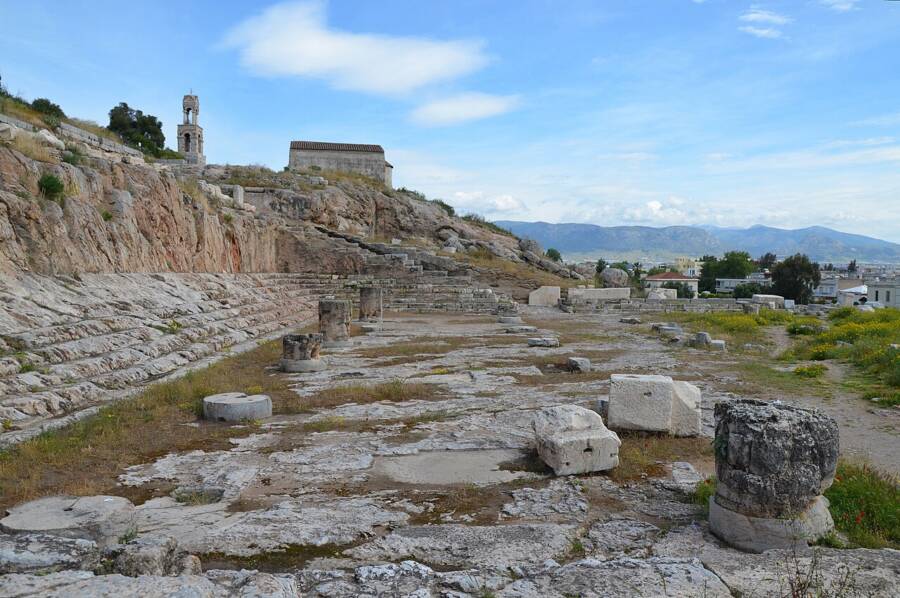
Carole Raddato/Wikimedia CommonsThe ruins of the Telesterion, where the climax of the Eleusinian Mysteries took place.
Upon reaching Eleusis, the participants would pass by the Plutoneion, thought to be the entrance to the Underworld where Persephone emerged every spring. They then drank a beverage called kykeon. This drink was made from barley and mint, but it is also thought to have contained ergot fungus, known for its hallucinogenic effects. Indeed, traces of ergot have been found in ceremonial vases, and a recent study has shown that ancient people knew how to eliminate the toxicity of the fungus.
From here, the Eleusinian Mysteries participants must have entered the Telesterion, a massive sacred area that could comfortably accommodate thousands of people. In the center of the hall was the Anaktoron, a smaller structure built over an ancient site. Only the Eleusinian high priests or hierophants were allowed to enter.
However, from this point on, historical records go silent. What happened in the Telesterion could not be explained. Those who did were sentenced to death.
Only three words provide a clue about what happened during the Eleusinian Mysteries: dromena, deiknumena, legomena, meaning "the things done, the things shown, the things said." What was done, shown, or said in the Telesterion is unknown; however, it has been suggested that it could have been something truly horrific, such as rape or murder, as a reference to the story of Persephone and Hades.
Whatever happened, it is said that participants left the Eleusinian Mysteries with a new fearlessness in the face of death.
The End of the Eleusinian Mysteries
The Eleusinian Mysteries were practiced for over a thousand years, with a history dating back to 1500 BC; however, they came to an end in the 4th century AD. The rise of Christianity brought a new hatred towards pagan rituals, and Roman Emperor Theodosius I closed the sacred site in Eleusis in 392. A few years later, Christians led by King Alaric of the Goths looted and destroyed what remained of the Mysteries in Eleusis.
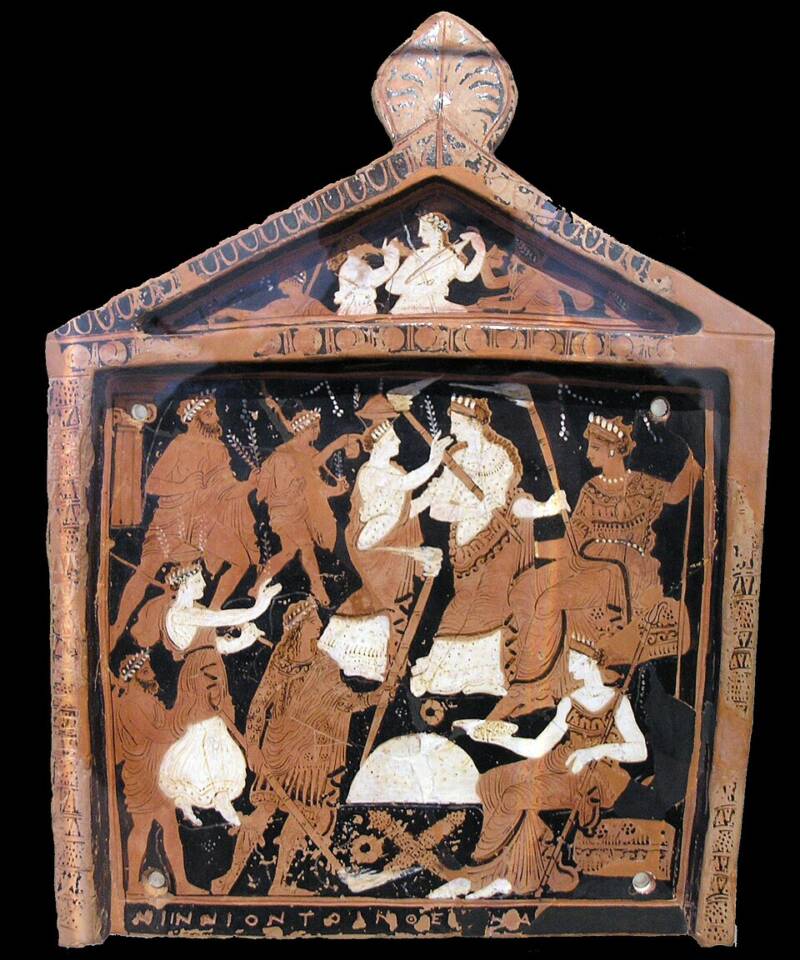
Public DomainA 4th-century BC altar plate containing elements of the Eleusinian Mysteries.
Today, Eleusis is in ruins. However, traces of the secret rituals that once took place here remain. Broken columns stand in the area where the Telesterion was located, and visitors can still pass by the Plutoneion.
The Eleusinian Mysteries have long since ended, but what they taught their participants was that death is merely a phase of life — nothing to be feared, but a part of a larger and more comprehensive cycle.
Cicero wrote in the 1st century AD in his work De Legibus: "For among the many perfect and truly divine institutions that Athens has offered to humanity, none is better, in my opinion, than these mysteries... [Indeed] we have learned from them the beginnings of life, and we have gained not only the power to live happily but also the power to die with better hope."





Comments
(9 Comments)