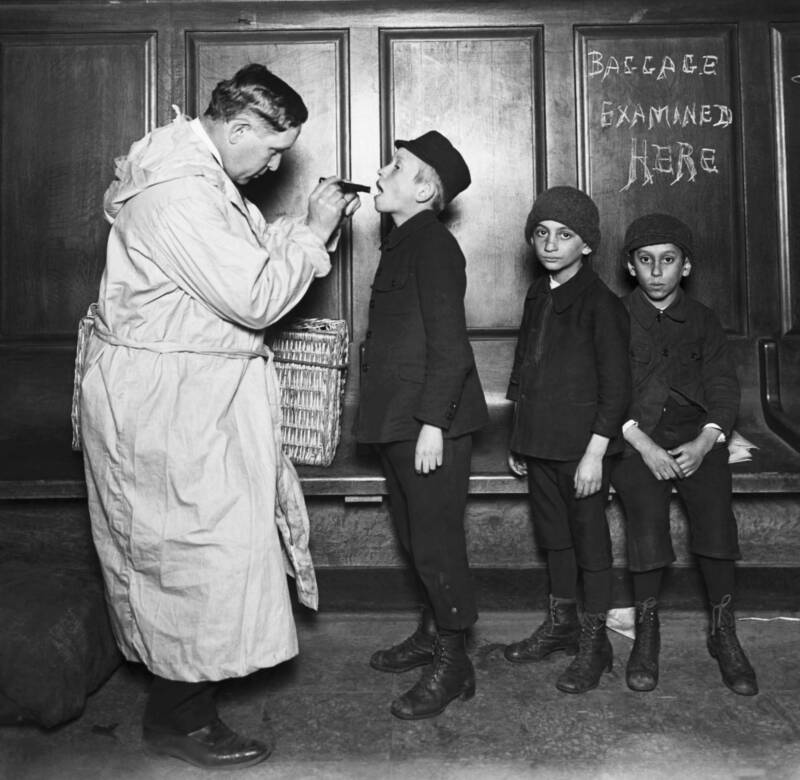
Wikimedia CommonsDoctors examining children at Ellis Island.
Between 1892 and 1954, approximately 12 million immigrants passed through Ellis Island in New York Harbor. However, the medical examination upon arrival could determine their fate, and many had to spend time at the Ellis Island Hospital.
Those arriving in America sick or injured were pulled from the examination line, and thousands were sent to the hospital for treatment. However, some were found not healthy enough to continue to America or were unable to afford hospital expenses. Thus, Ellis Island Hospital could be a place of both heartbreak and healing.
Here is the full story of the Ellis Island Hospital, which once processed thousands of immigrants, now standing abandoned.
Medical Examination at Ellis Island
The medical examinations began as soon as immigrants arrived at Ellis Island. According to a PBS report in 2014, immigrants had to carry their bags from the dock they arrived at to the main building. If someone stopped to catch their breath, inspectors pulled them from the line and checked them for heart disease.
In 1892, only six doctors examined 200,000 immigrants arriving at Ellis Island. A decade later, eight doctors examined 500,000 immigrants, and in 1905, 16 doctors reviewed 900,000 immigrants.
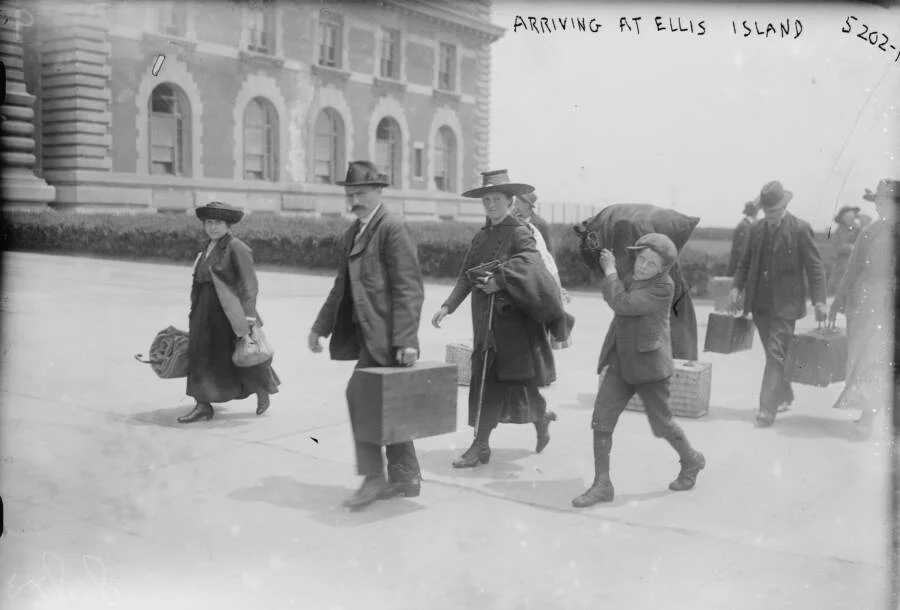
Library of CongressImmigrants arriving at Ellis Island in 1915. As soon as they arrived, doctors began examinations for signs of illness.
Later, as immigrants passed through the Great Hall, doctors scanned the line. They looked for signs of limping, poor posture, or muscle weakness, as well as facial deformities or goiter.
Immigrants were also subjected to a series of tests. A vision test aimed to identify those with vision problems. Nail and skin examinations searched for ringworm or other fungal infections. A stethoscope detected heart and lung issues. And anyone who could not follow instructions – including immigrants who spoke little or no English – underwent a mental examination.
Finally, a doctor checked eyelids for signs of trachoma; this infection could blind three out of four people. This was sometimes done using a button hook to check the inner eyelid. Other doctors flipped the eyelid with their fingers.
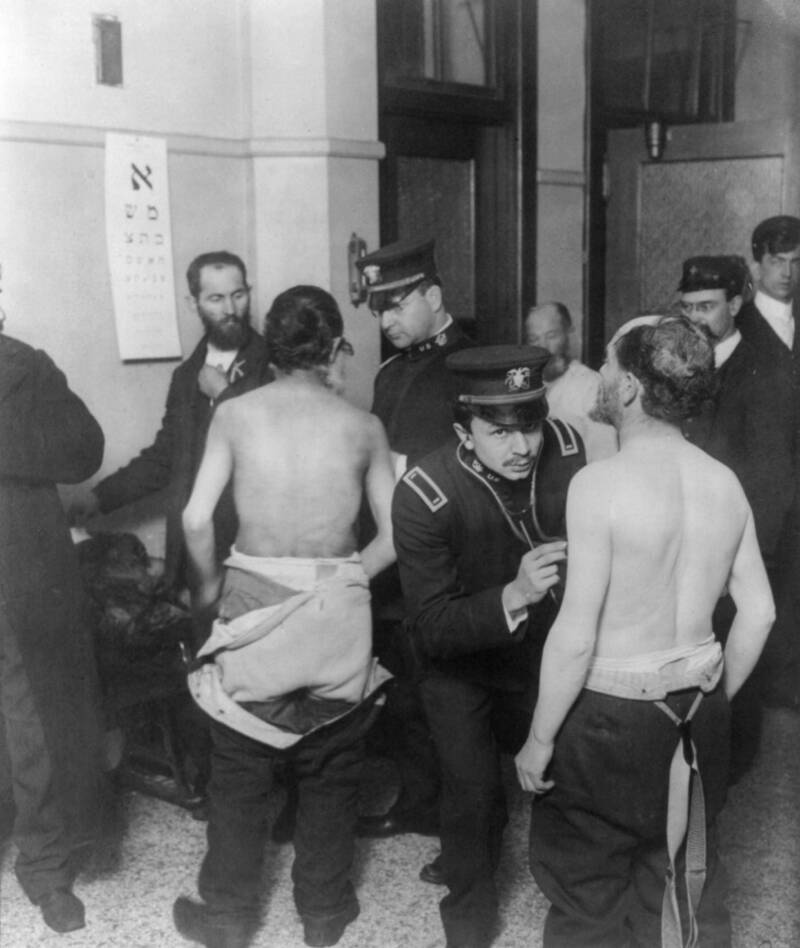
Library of CongressMedical inspectors searched for signs of mental or physical issues.
Those with illnesses were marked with chalk (“C” indicated a suspected eye condition, “S” meant dementia, and “X” indicated insanity). According to a 2008 article in the AMA Journal of Ethics, about 15 to 20 percent of these individuals were subjected to further examination.
Later, some sick immigrants were sent to Ellis Island Hospital for treatment. However, not all of them were. Those determined to have serious mental or physical disabilities were deported. Those who could not afford treatment were only admitted to the hospital if their families and friends could pay a bond.
Life at Ellis Island Hospital
Ellis Island Hospital opened at the same time as Ellis Island, but both the main immigrant processing building and the original hospital burned down in 1897. Subsequently, a new hospital was built, which opened in 1902.
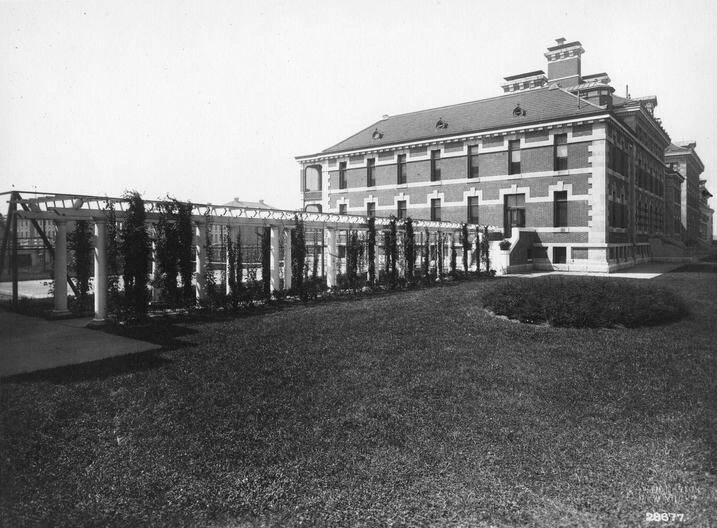
New York Public LibraryThe Ellis Island Hospital that opened in 1902 transformed from a single building into a complex of 23 buildings.
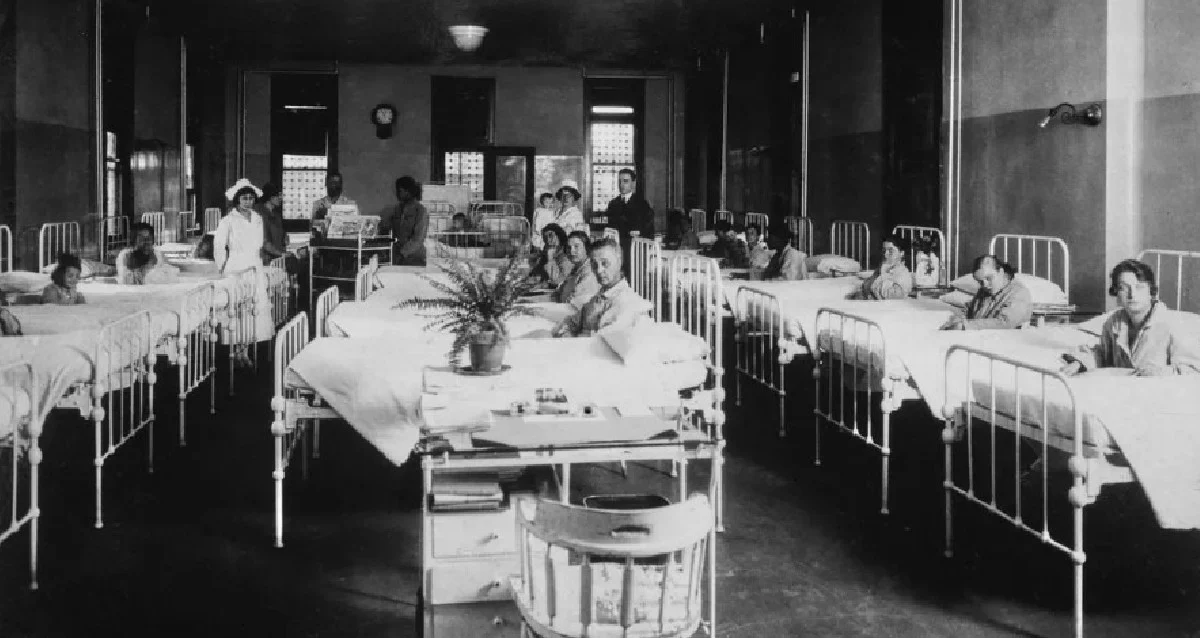
By 1911, the hospital had 23 buildings. In addition to the main hospital, there were an infectious disease hospital, a psychiatric unit, a morgue, administrative buildings, and staff housing. The hospital had a capacity of 750 beds and treated patients for various diseases such as measles, diphtheria, tuberculosis, trachoma, scarlet fever, and more. It also treated broken bones, delivered nearly 400 babies, and witnessed the deaths of approximately 4,000 immigrants.
Nurses at Ellis Island Hospital worked six days a week in 11-hour shifts. Nurses and single doctors often lived on the hospital grounds, which were frequently bustling with the activity of a small village. According to CNN in 2016, kitchen staff cooked 1,500 meals a day, and laundry staff cleaned 3,000 hospital linens daily.
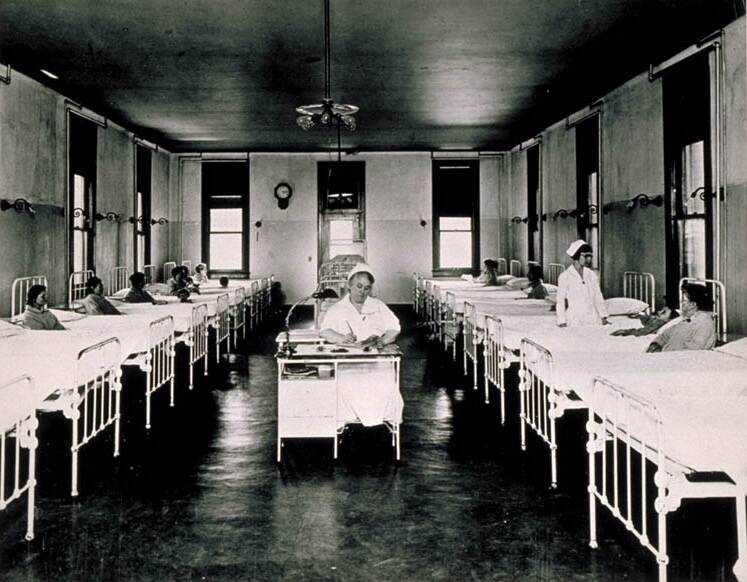
National Park ServiceMost nurses at Ellis Island Hospital lived on the island where they worked long hours.
So, what was Ellis Island Hospital like for immigrants? For many, it was a mix of fear and hope. Only 1 percent of sick immigrants were sent back, but these deportation stories were well known among those who passed through Ellis Island. Moreover, many immigrants, especially children, had to endure a difficult separation from their families.
“I was very scared and very sad because I couldn’t be with my mother,” Polish immigrant Flora Greenwald, who stayed at Ellis Island Hospital in 1922, expressed in the documentary Forgotten Ellis Island. In the same documentary, German immigrant John Henry Wilberding, who stayed in 1928, said, “For those who experienced it, this was one of the most precious gifts you were given because when you were sick, you couldn’t do anything about it. But there was a place here that saved you.”
According to the Statue of Liberty and Ellis Island Foundation, immigration to Ellis Island peaked in 1907, processing one million immigrants. However, anti-immigrant sentiments were also on the rise.
Closure of Ellis Island Hospital and Its Current State
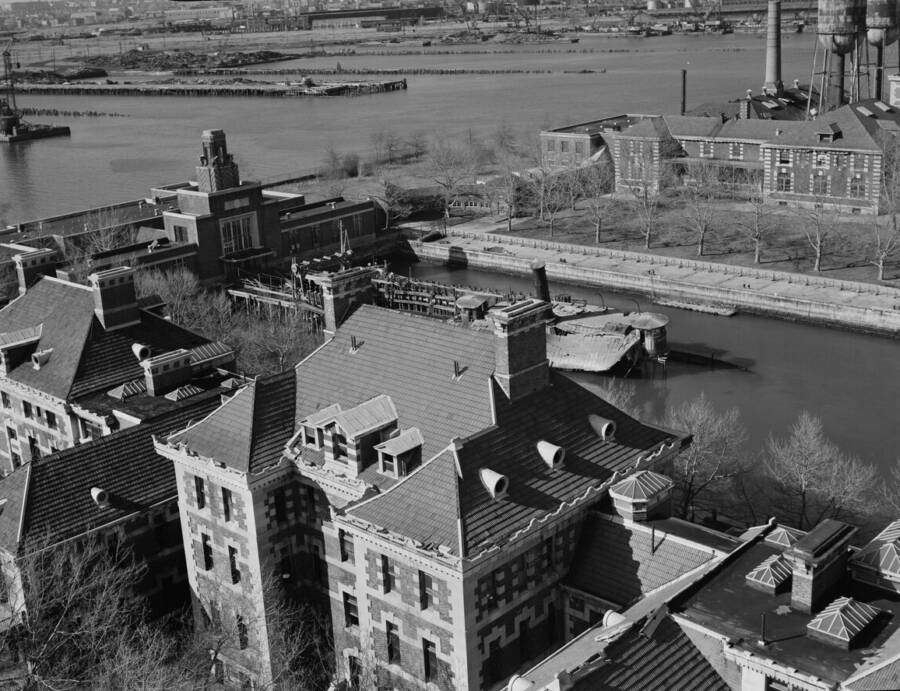
Public DomainAn aerial view of Ellis Island Hospital around 1933.
As soon as Ellis Island opened, anti-immigrant, nativist sentiment began to spread in the United States. Many laws, such as the Chinese Exclusion Act, the Foreign Contract Labor Act, and the National Origins Act, were enacted along with quota laws that limited immigration from certain countries, which reduced immigration to America. During World War I, immigration to the country decreased even further.
After the war, the opening of embassies worldwide rendered Ellis Island unnecessary. Although the facility continued to operate, the only immigrants passing through Ellis Island were refugees, those with issues with their documents, or those suffering from infectious diseases.
Later, in the 1950s, Ellis Island and Ellis Island Hospital closed forever. However, both structures still stand today. The main Ellis Island building opened as the Ellis Island National Immigration Museum in 1990, while Ellis Island Hospital remains abandoned.
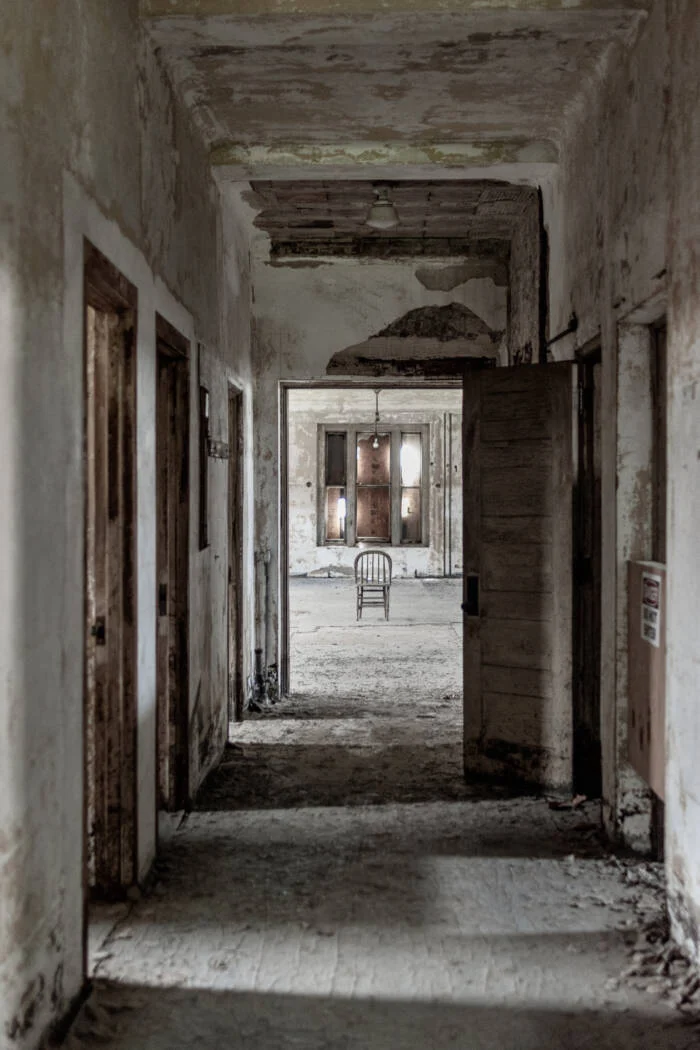
Wikimedia CommonsEllis Island Hospital, closed in 1951, is now abandoned.
However, despite being closed to the public for 60 years, visitors can now explore Ellis Island Hospital through "preservation helmet" tours. With a guide, they can walk through the hospital buildings where 276,000 patients were treated between 1892 and 1951.
The facility is empty, but old photographs of the hospital show what it looked like at its peak. However, it is easy to imagine what it felt like to be a patient at Ellis Island Hospital; New York City and the United States sparkle just beyond the water.

























Comments
(4 Comments)