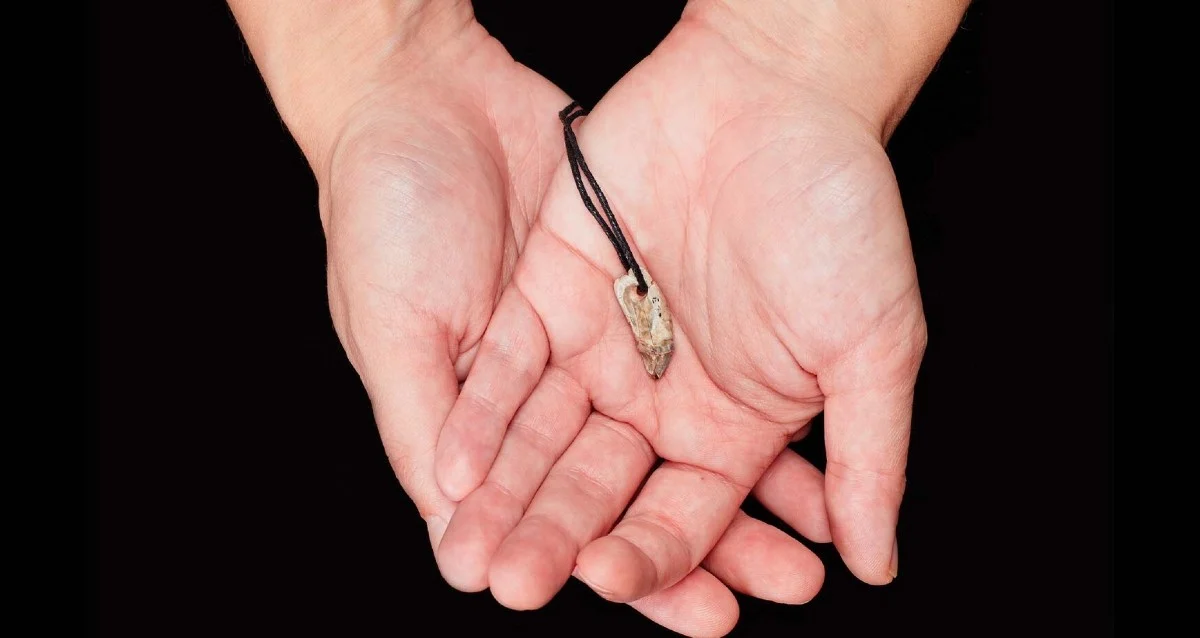
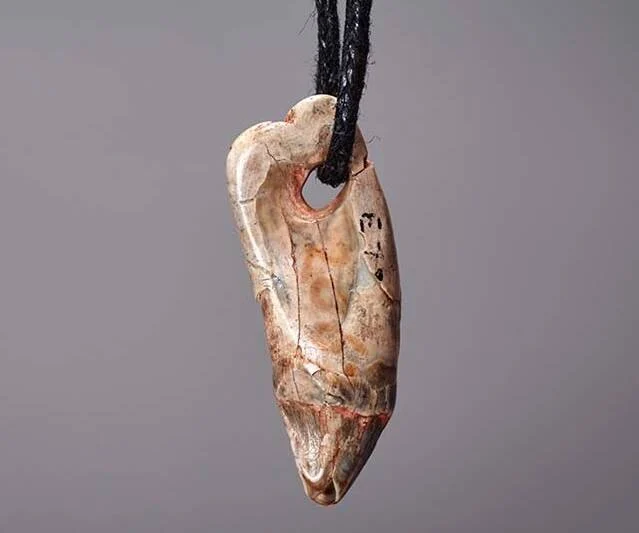
Trustees of the Natural History MuseumThe seal tooth necklace is expertly crafted, indicating that its owner found it very valuable.
In 1867, archaeologists in Devon, England, discovered a necklace in a cave used thousands of years ago by Homo sapiens and Neanderthals. This necklace was overlooked for nearly two centuries after its discovery, but researchers have recently revisited it. They found that the necklace was made from a gray seal tooth, not from a badger, wolf, or beaver tooth as previously thought, dating back 15,000 years.
During the Late Upper Paleolithic period, someone collected this tooth and worked skillfully to carve it into a form that could be worn as a necklace. Then, either the same person or someone else wore the tooth for a long time until it became smooth over time and was eventually left in the cave where it was found.
Prehistoric Seal Tooth Necklace Found in England
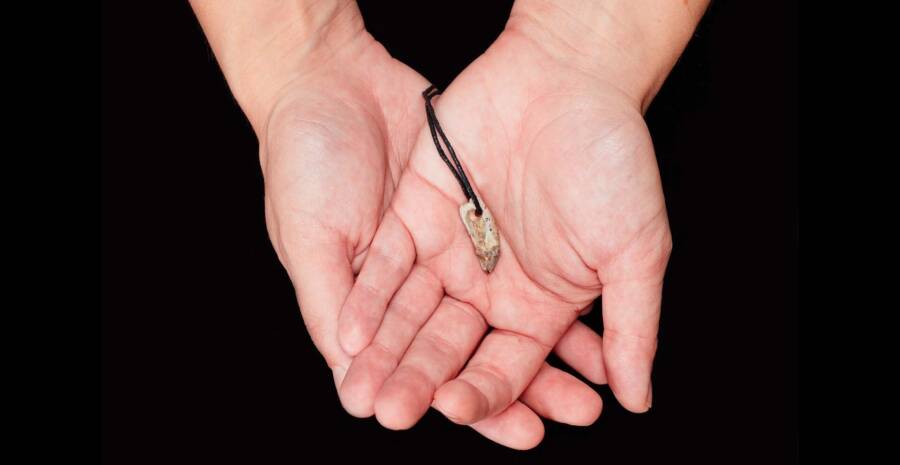
Trustees of the Natural History MuseumThe seal tooth necklace was made approximately 15,000 years ago.
According to new research published in Quaternary Science Reviews, this intriguing artifact was discovered in excavations at Kents Cavern in southwest England, where Homo sapiens and Neanderthals lived for tens of thousands of years.
After being overlooked for 160 years, researchers revealed that the necklace was made about 15,000 years ago. They also found that it came from the jaw of a gray seal, not a land animal.
It is unknown whether the seal was killed or died of natural causes, but researchers know the subsequent process. A prehistoric human, likely using a heavy object, removed one of the seal's teeth. Then, someone gently scraped the root, drilled the tooth with a flint, and passed a piece of string through the hole.
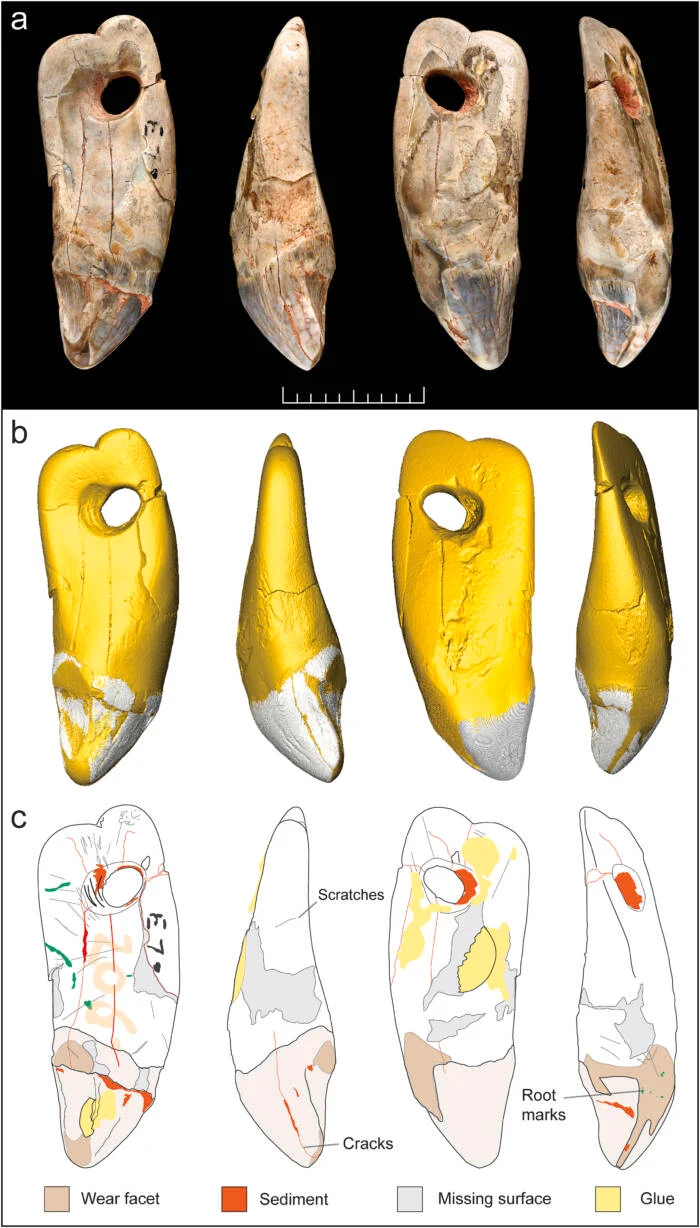
Trustees of the Natural History MuseumNew analysis of the necklace shows that it was made from the tooth of a 12-year-old gray seal.
At that point, someone wore the seal tooth as a necklace or bracelet. According to researchers, it is likely that the owner wore it for a long time.
“We think the necklace was probably worn for many years because it became smooth due to wear and repeated polishing,” said Silvia Bello, a co-author of the study and an expert in human evolution at the Natural History Museum in London, in a museum statement. “Long-term use may also explain the oval shape of the round hole, as the string wore down over time inside the tooth.”
Bello added: “Although it has been lovingly used, the necklace is still in quite good condition. This suggests that the owner may have accidentally lost it when coming into the cave, rather than having discarded it intentionally.”
However, while it is unknown who made this seal tooth necklace or why it was left or lost in Kents Cavern, the object offers intriguing insights into the lives of prehistoric people living in the British Isles.
The Importance of the Paleolithic Necklace Found in Kents Cavern
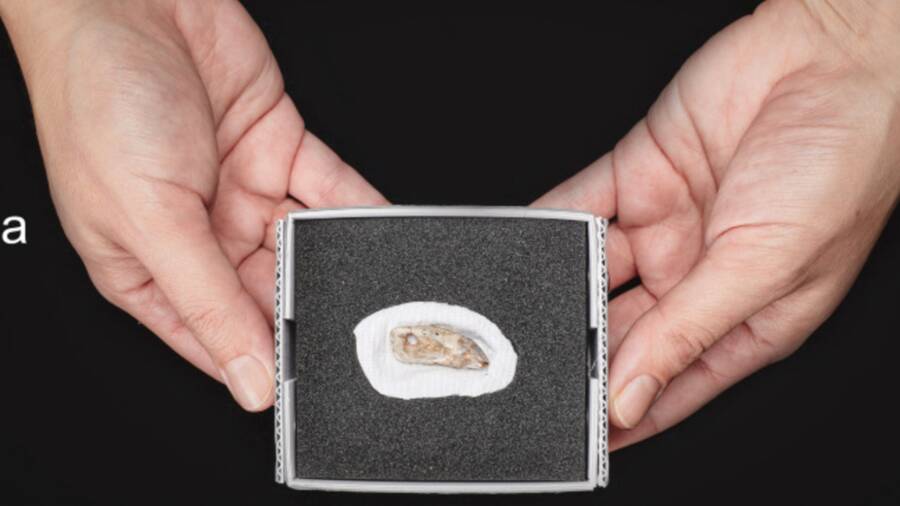
Trustees of the Natural History MuseumThe seal tooth necklace is still in good condition, indicating that the owner lost it rather than discarding it intentionally.
Today, the area where the seal tooth necklace was found is a tourist destination overlooking the English Channel. However, 15,000 years ago, sea levels were different, and Kents Cavern was about 80 miles from the coast.
This indicates that both the seal tooth necklace and its owner traveled a long distance. It may have been traded from someone living by the sea to someone living inland. However, it is also possible that prehistoric people in this region traveled long distances to follow migratory animals, perhaps serving as a food source.
Furthermore, the composition of the necklace indicates that the person who made it possessed a high level of skill. Drilling the hole into the tooth without breaking it required great expertise and experience.
Considering that only four such seal tooth necklaces have been found so far (none in the British Isles), researchers believe that this rare necklace would have been very valuable in the eyes of its owner. Perhaps it symbolized something to them, but the possible significance of the necklace has been lost over time.
“This is just speculation, but I think this seal tooth necklace may have had an official purpose - perhaps to show the social identity of its owner,” Bello said in the museum statement. “This may indicate that the person or the group they belonged to was familiar with the sea and perhaps lived close to the shore. We will never know for sure, but it offers an interesting glimpse into the past.”

































Comments
(2 Comments)