The collapse of the Soviet Union did not happen suddenly. The U.S.S.R. and the Communist Party experienced a slow and long death, marked by a decade-long economic collapse, political uprisings, and military failures. This process led to the gradual disappearance of one of the most powerful empires in human history.
The country lasted only 74 years. After the 1917 Russian Revolution, Vladimir Lenin came to power and helped establish the Soviet Socialist Republic. After Lenin's death in 1924, Joseph Stalin took control, ruling with an iron fist by eliminating anyone who opposed him.
When the Cold War began in the 1940s, the Soviet Union entered into a global power and nuclear dominance struggle with the United States. However, by the 1980s, it was clear that something needed to change.
Mikhail Gorbachev began to lead the U.S.S.R. in 1985 and implemented policies that granted more freedom to Soviet citizens, but it was too late to save the country. The economy was collapsing, and people were restless. Many regions began to declare independence, and a failed coup attempt in August 1991 became the spark that led to the total collapse of the Soviet Union.
The Beginning of the End for the Soviet Union
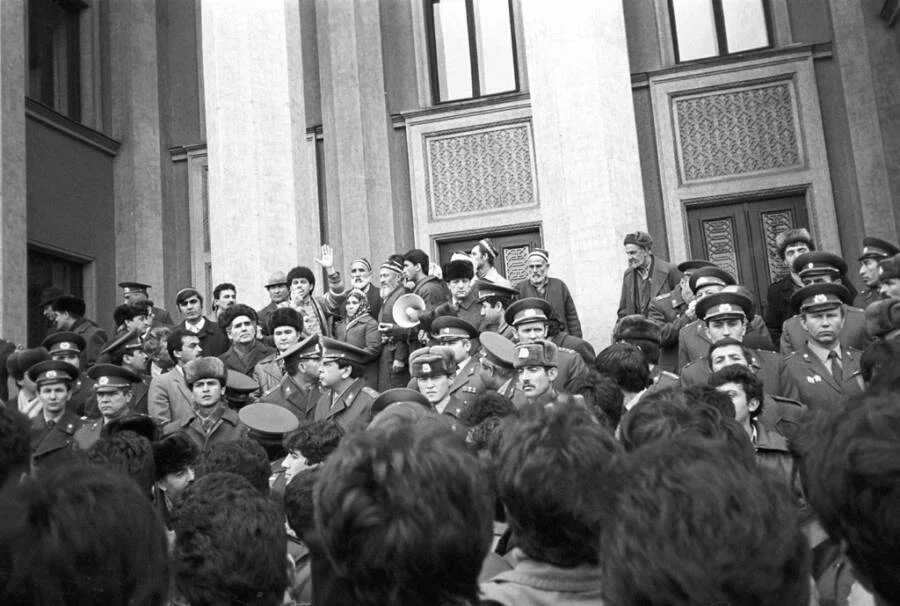
Ratushenko/RIA Novosti Archive/Wikimedia CommonsThe collapse of the U.S.S.R. began with uprisings in Soviet republics like Tajikistan. February 1990.
In 1985, Mikhail Gorbachev became the General Secretary of the Communist Party of the Soviet Union. In March 1990, he was appointed president of the U.S.S.R. He realized that the previous authoritarian regimes no longer served the country and introduced his own policies to appease citizens overwhelmed by Communism for generations.
Gorbachev implemented glasnost, meaning political openness; this ended most book bans, weakened the secret police's influence, and allowed newspapers to criticize the government. At the same time, the perestroika reform program restructured the economy. For the first time in decades, individuals were able to own businesses, and workers were allowed to strike for higher wages.
Gorbachev believed that perestroika would allow for innovations and eventually revive the collapsing economy, but some measures were half-hearted. The state continued to hold onto the means of production, preventing a real market economy from being established. This situation slowed the progress of policies, and the U.S.S.R. continued to face financial difficulties.
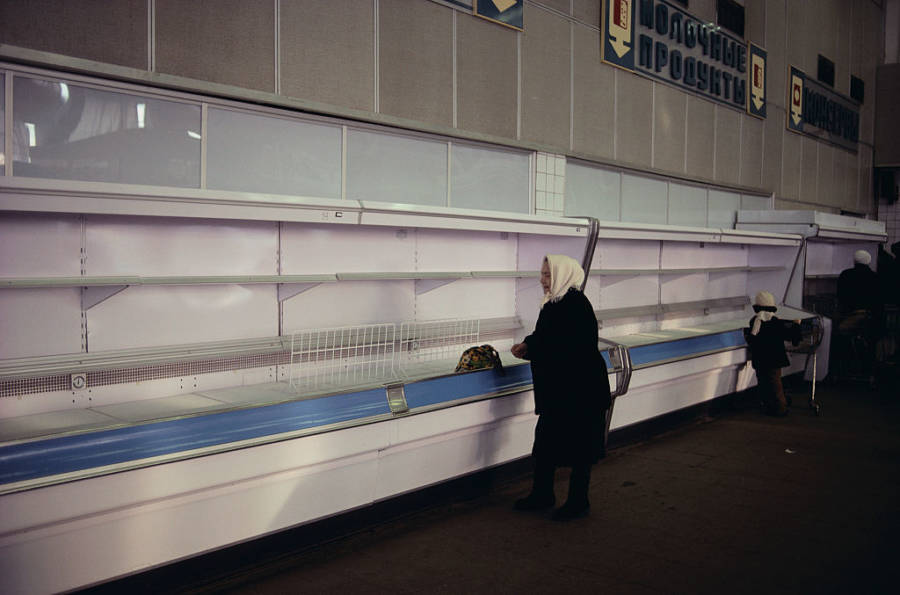
Food and supplies were so scarce that Soviet citizens had to wait in line for hours in front of their local stores, patiently waiting to grab the few products left on the shelves. People became restless, and regions on the periphery of the empire began to move for freedom.
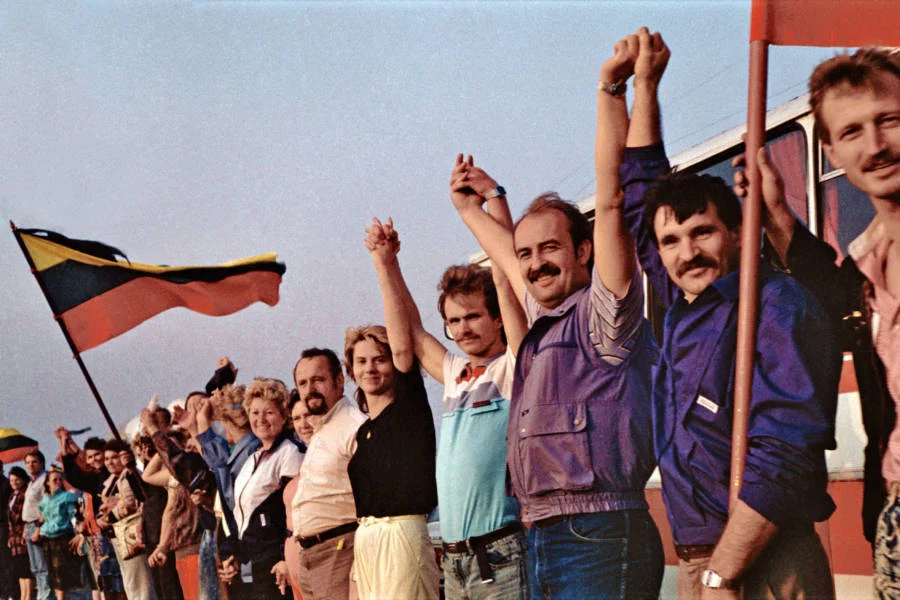
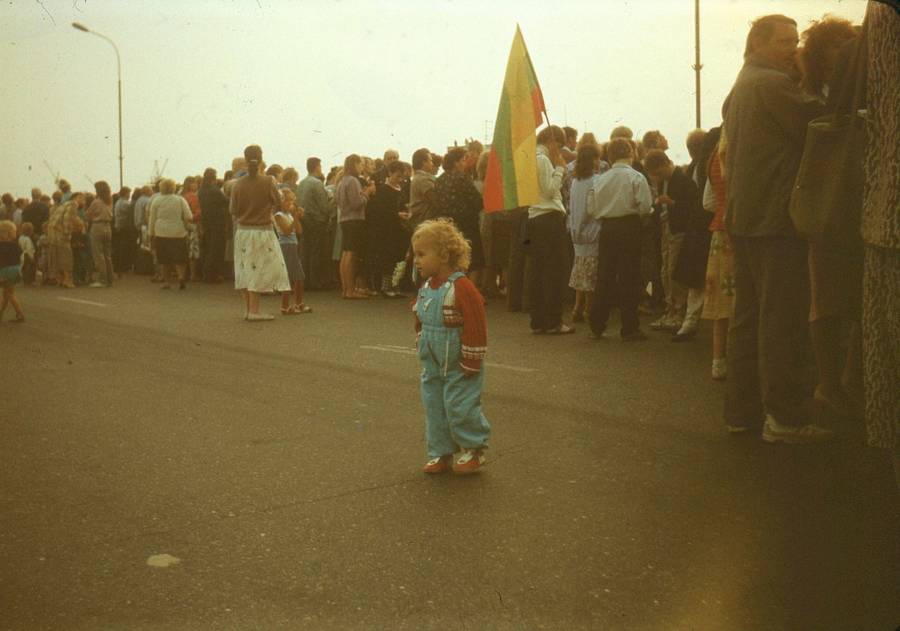
In 1988, Estonia declared its sovereignty. In 1990, Lithuania became the first state to officially separate from the U.S.S.R. This was quickly followed by Latvia and Georgia.
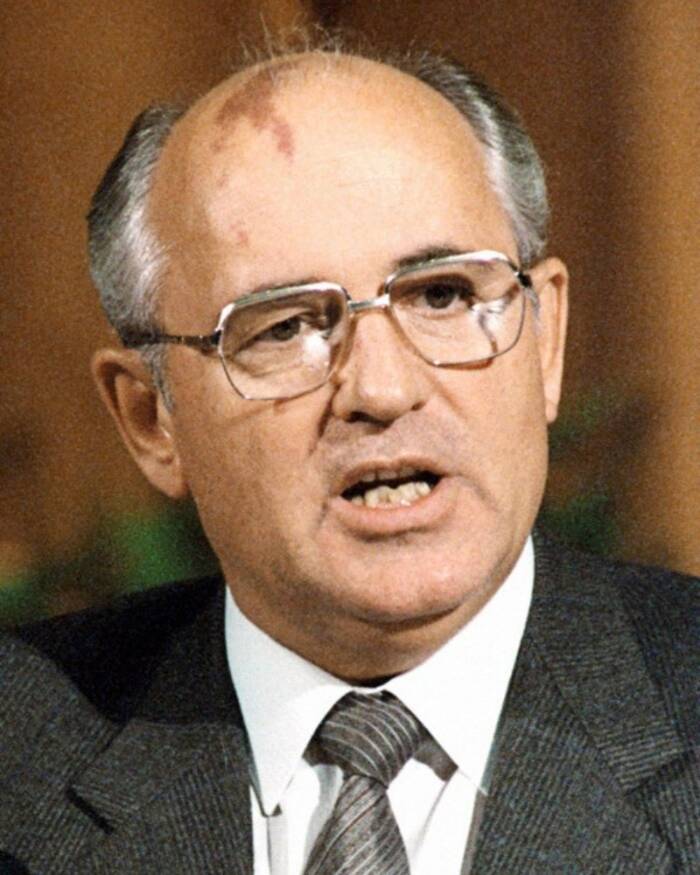
Yuryi Abramochkin/RIA Novosti Archive/Wikimedia CommonsMikhail Gorbachev speaking at a press conference in 1986.
In the same year, uprisings broke out in the capital of Soviet Tajikistan, Dushanbe. The presence of Armenian refugees in the region heightened the tensions caused by the ongoing reforms, and the Soviet government declared martial law to keep the situation under control.
The collapse of the Soviet Union had begun.
A Blow that Dismantled an Empire
On August 18, 1991, Communist leaders and KGB agents detained Mikhail Gorbachev at his vacation home in Crimea. They were disturbed by his new policies and the loss of control in Eastern European countries like Poland, East Germany, Hungary, and Romania. They wanted to re-establish the Communist Party's influence in the region and knew they had to overthrow Gorbachev to achieve this.
One of the coup leaders was Gorbachev's vice president, Gennady Yanayev. After Gorbachev was placed under house arrest, Yanayev declared himself the acting president and claimed that Gorbachev was ill and unable to perform his duties.
However, Gorbachev informed Moscow that Yanayev was lying. Thus, when tanks entered the city, they encountered protesters.
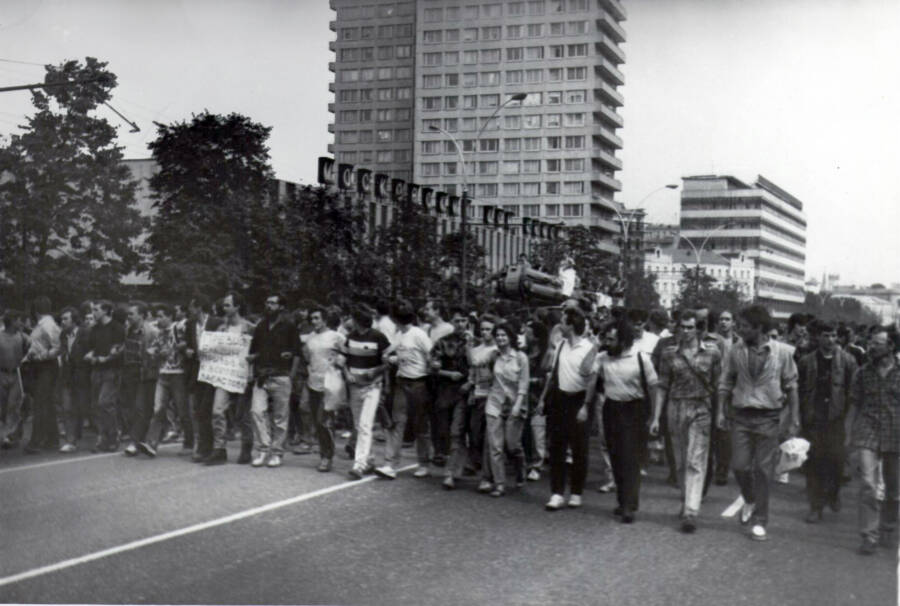
Ivan Simochkin/Wikimedia CommonsProtesters marching in Moscow on August 19, 1991.
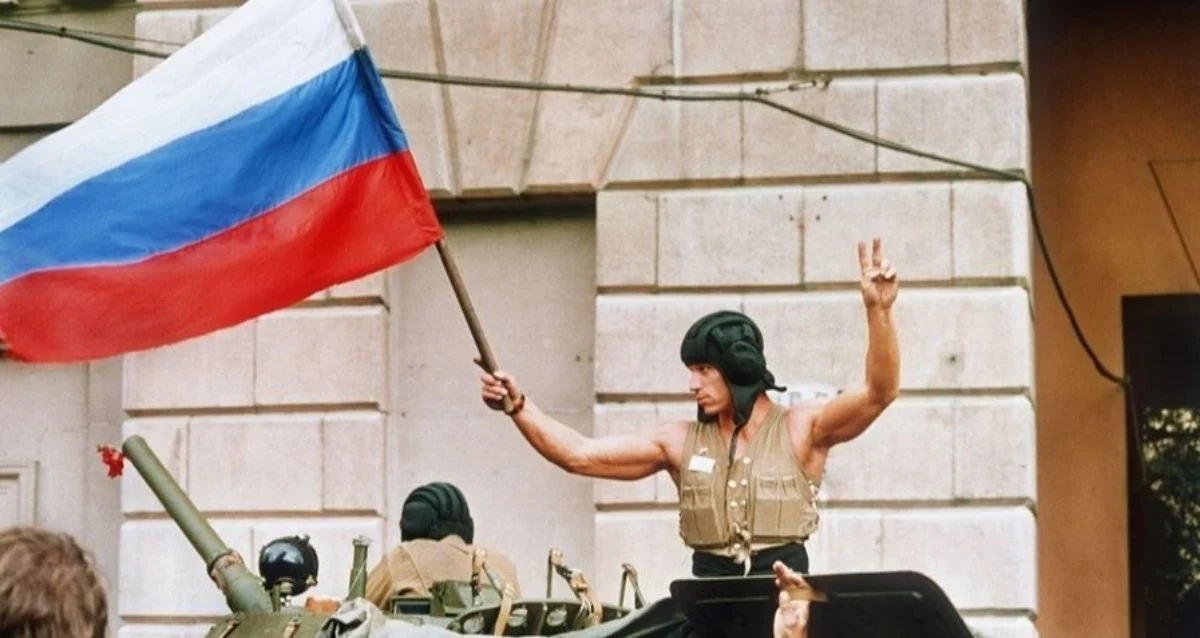
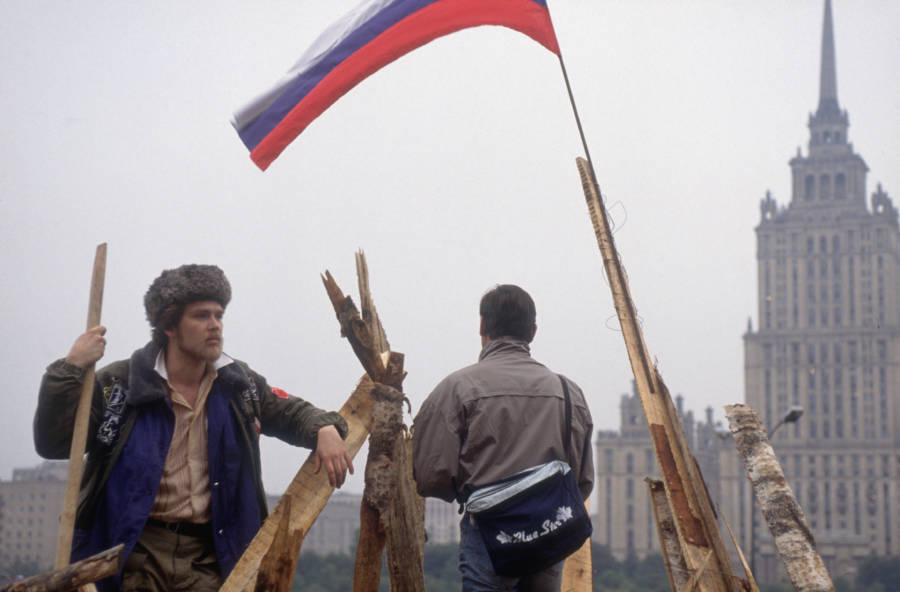
Soviet citizens barricaded the White House of Moscow, the main government building, and tried to persuade soldiers not to follow orders. Boris Yeltsin, the president of Russia, gave an impassioned speech on top of a tank in front of the White House.
Regardless of the reasons given for Gorbachev's removal, Yeltsin stated, "We are facing a right-wing, reactionary, anti-constitutional coup... The people of Russia are becoming the masters of their own destiny."
Yeltsin condemned the coup leaders, whom he referred to as putschists, stating, "We are absolutely certain that the people of our country will not allow the putschists to oppress them and act unlawfully. We call on the soldiers to fulfill their high civic duty and not to participate in the reactionary coup. Until these demands are met, we call for a universal, unlimited strike."
Within three days, it was clear that the coup had failed. The total collapse of the Soviet Union was inevitable.
Within the Official Collapse of the Soviet Union
Following the failed coup, countries began to rapidly separate from the U.S.S.R. By the end of August, Ukraine, Belarus, Moldova, Azerbaijan, and Kyrgyzstan declared their independence, and by November, only three Soviet states remained: Russia, Kazakhstan, and Uzbekistan.
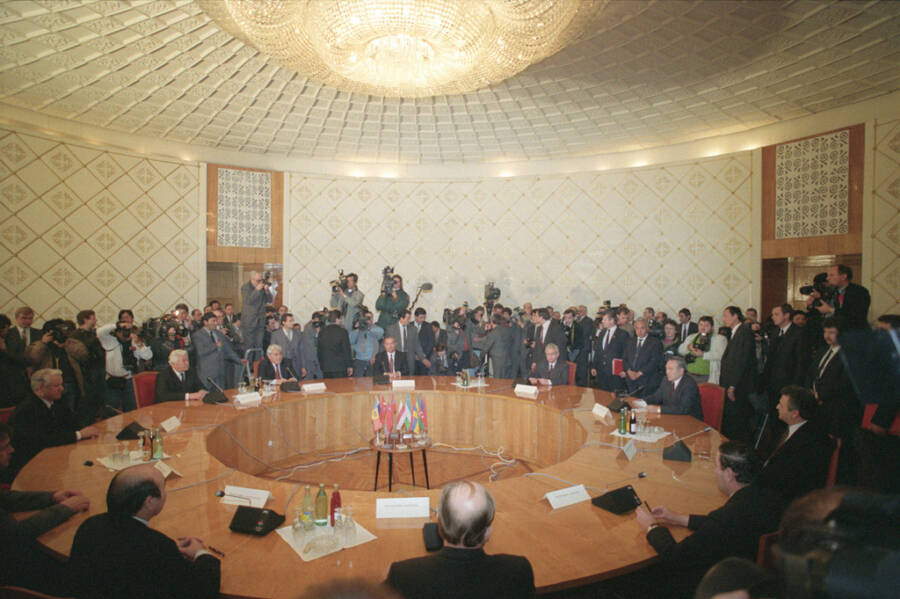
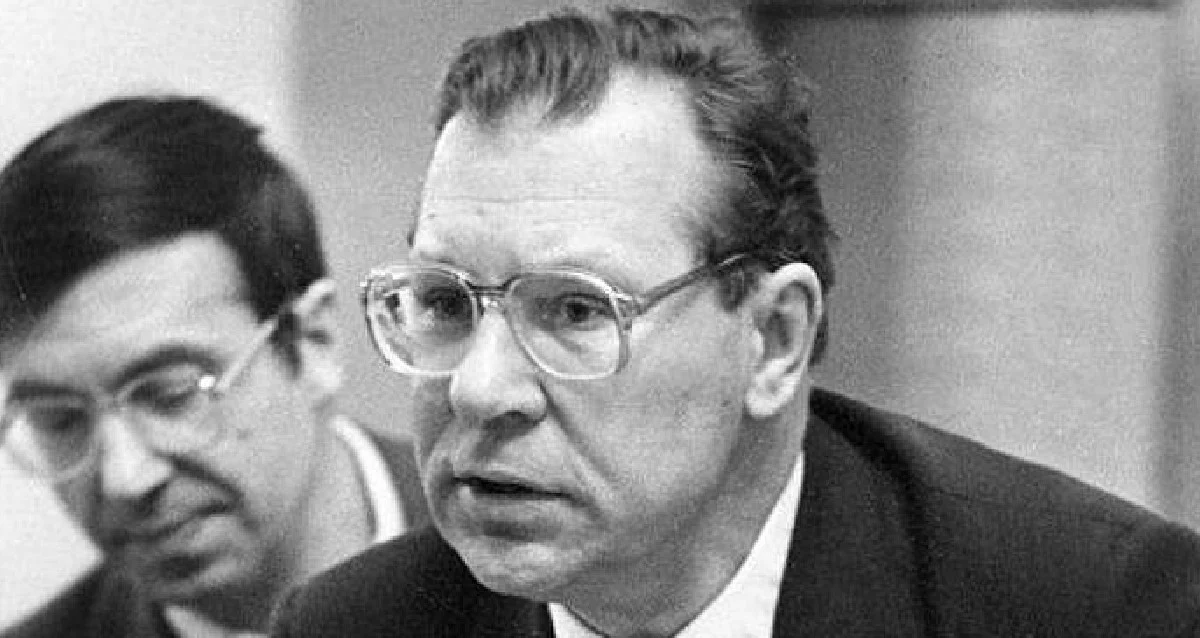
Yuriy Kuydin/RIA Novosti Archive/Wikimedia CommonsLeaders of 11 former Soviet republics come together to establish the Commonwealth of Independent States. December 19, 1991.
On December 25, 1991, Mikhail Gorbachev resigned from the presidency. In a televised address, he said to the world:
The process of renewal in the country and the radical changes in the world community have become far more complex than expected. However, we must give credit to what has been accomplished. This society has gained freedom, liberated itself politically and spiritually, and this is the greatest achievement we have not yet fully understood, as we have not yet learned how to use freedom.
Gorbachev concluded his speech with the words: "Some mistakes could definitely have been avoided, many things could have been done better, but I am sure that sooner or later our joint efforts will bear fruit, and our nations will live in prosperity and in a democratic society. I wish you all the best."
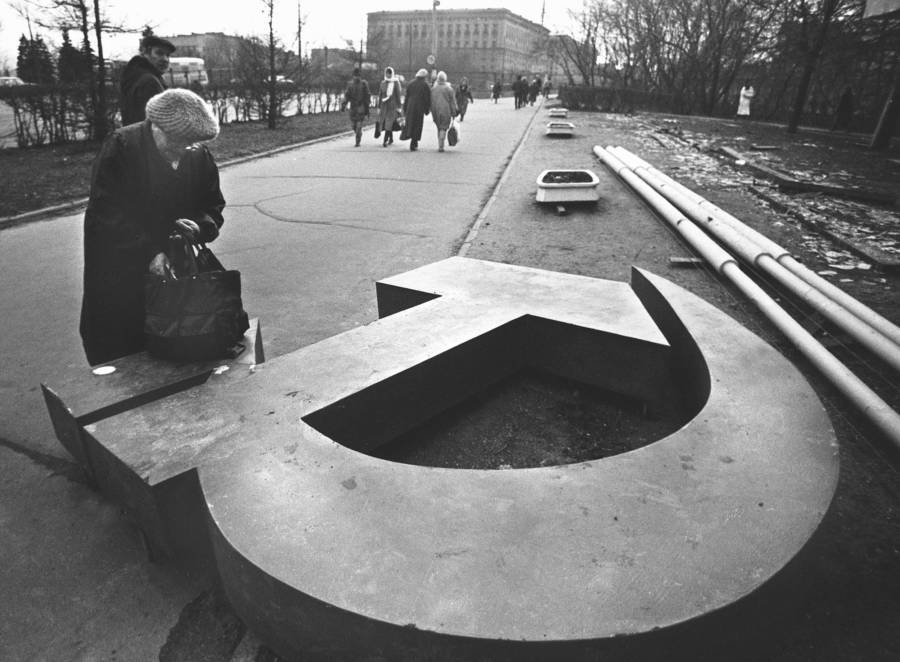
The collapse of the Soviet Union led to the establishment of the Commonwealth of Independent States, and the once-powerful empire was divided into 15 separate countries. Immediately after Gorbachev's resignation speech, the Soviet emblem flag was lowered for the last time at the Kremlin and replaced with the Russian tricolor flag.





Comments
(3 Comments)