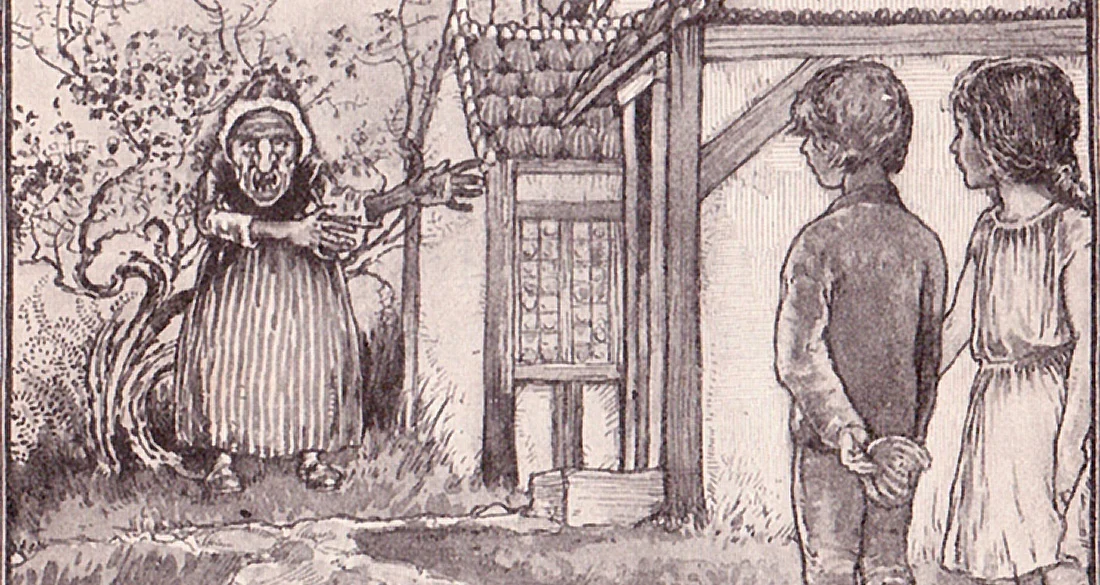
The tale of Hansel and Gretel has been translated into 160 languages since the Brothers Grimm published the German folk story in 1812.
Despite being a dark story, it contains elements such as child abandonment, attempted cannibalism, slavery, and murder. Unfortunately, the origins of the tale are just as frightening.
Most people know this story, but for those who do not, it begins with the tale of two children abandoned in the forest by their starving parents. The children, Hansel and Gretel, learn of their parents' plan and return home by following the stones Hansel had previously dropped. The mother, in some versions the stepmother, then convinces the father to abandon the children once again.
This time, Hansel leaves breadcrumbs to find his way back home, but the birds eat the crumbs, and the children become lost in the forest.
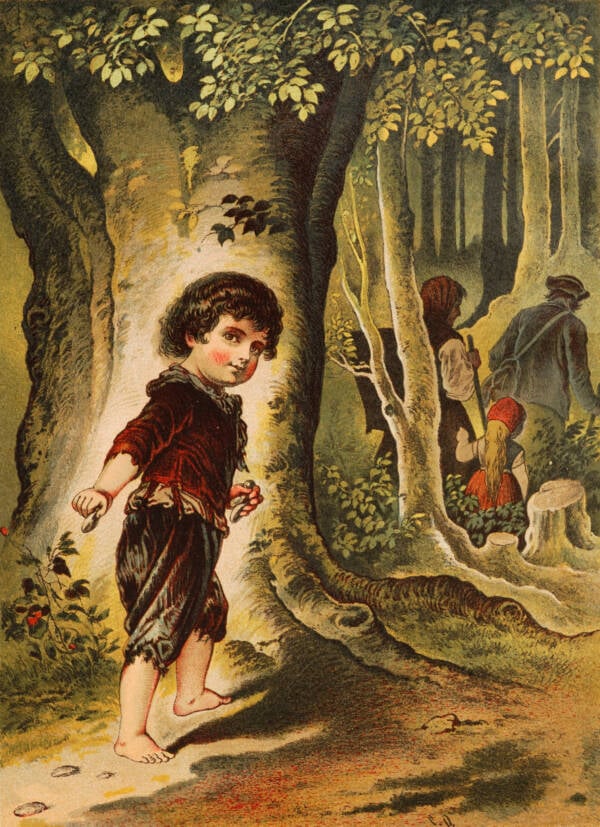
Wikimedia CommonsA depiction of the trail Hansel left to find his way home.
The starving duo comes across a gingerbread house that they begin to eat hungrily. However, they do not realize that the house is actually a trap set by a witch or ogre. The witch enslaves Gretel and forces Hansel to be overfed so she can eat him herself.
The duo manages to escape when Gretel pushes the witch into an oven. They return home with the witch's treasures and learn that their evil stepmother is no longer there and may be dead, allowing them to live happily ever after.
However, the true history behind the Hansel and Gretel tale is not as happy as this ending.
The Brothers Grimm
Modern readers recognize Hansel and Gretel from the works of German brothers Jacob and Wilhelm Grimm. The brothers were inseparably connected academics with a passion for collecting German folklore.
Between 1812 and 1857, the brothers published over 200 stories in seven different editions of their work known as Grimm's Fairy Tales.
Jacob and Wilhelm Grimm did not intend for their stories to be for children; rather, they aimed to preserve German folklore in a region occupied by France during the Napoleonic Wars.
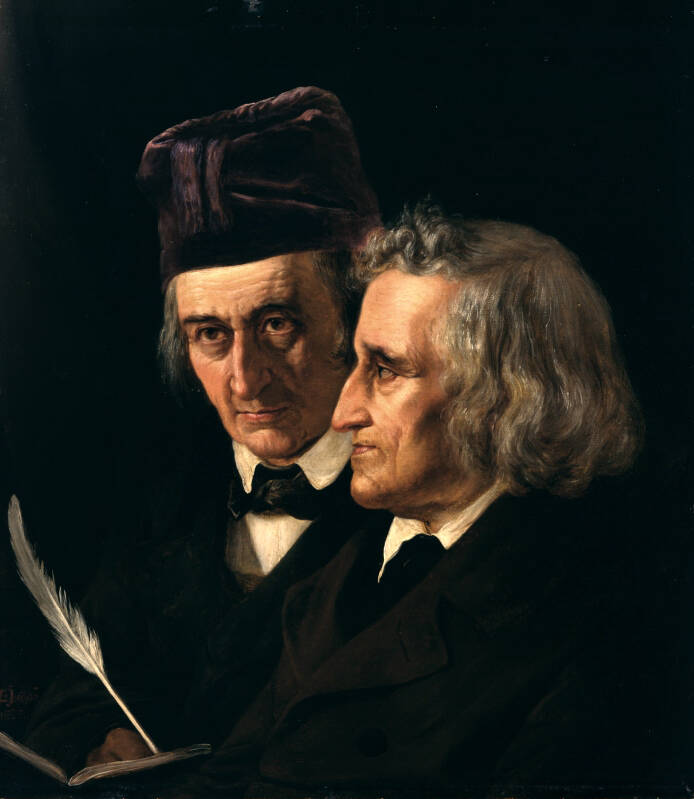
Wikimedia CommonsWilhelm Grimm, on the left, and Jacob Grimm in a painting by Elisabeth Jerichau-Baumann from 1855.
In fact, the first editions published by the Grimm brothers, titled Kinder und Hausmärchen or Children's and Household Tales, did not contain illustrations. They were filled with academic footnotes. The stories were dark and filled with murder.
Yet, these stories quickly gained popularity. Grimm's Fairy Tales had such universal appeal that over 120 different editions were published in the United States alone.
These stories featured a star-studded cast of recognizable characters such as Cinderella, Rapunzel, Rumpelstiltskin, Snow White, Little Red Riding Hood, and of course, Hansel and Gretel.
The True Story of Hansel and Gretel
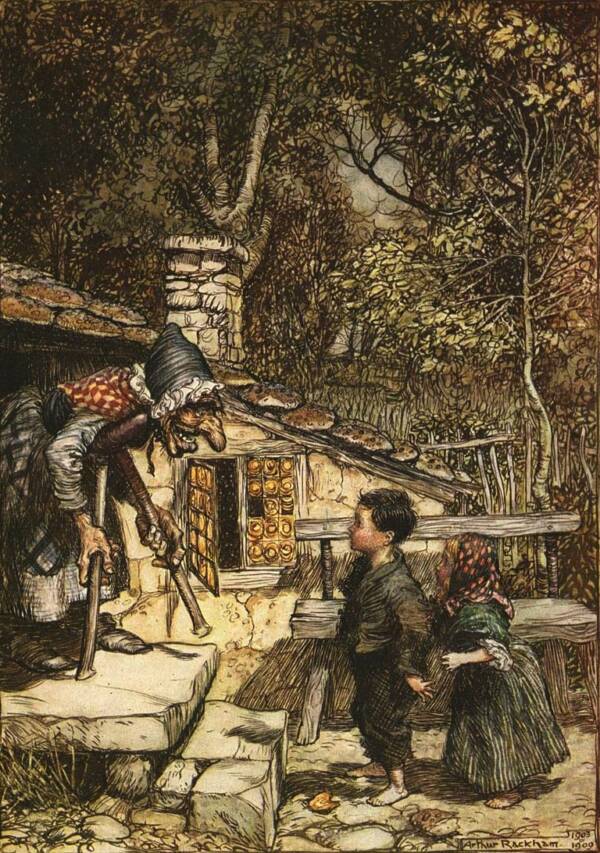
Wikimedia CommonsThe origins of Hansel and Gretel are much darker than the story itself.
The true story of Hansel and Gretel is based on a series of tales that emerged in the Baltic regions between 1314 and 1322. Volcanic activity in Southeast Asia and New Zealand initiated a prolonged period of climate change that led to crop failures and widespread famine worldwide.
The situation in Europe was particularly dire, as food supplies were already scarce. When the Great Famine struck, the consequences were devastating. One scholar estimates that the Great Famine affected an area of 400,000 square miles in Europe, impacting 30 million people, with death rates reaching as high as 25% in some regions.
During this time, elderly people voluntarily chose to starve to death so that the young could survive. Others abandoned their children or committed infanticide. Cannibalism has also been documented. William Rosen refers to an Estonian chronicle in his book The Third Horseman, which states that in 1315, "mothers ate their children."
An Irish chronicler also wrote that the famine was so severe that people "perished from hunger to the extent that they dug up the bodies of the dead from graves, took the flesh from their skulls, and ate it; women ate their children out of hunger."
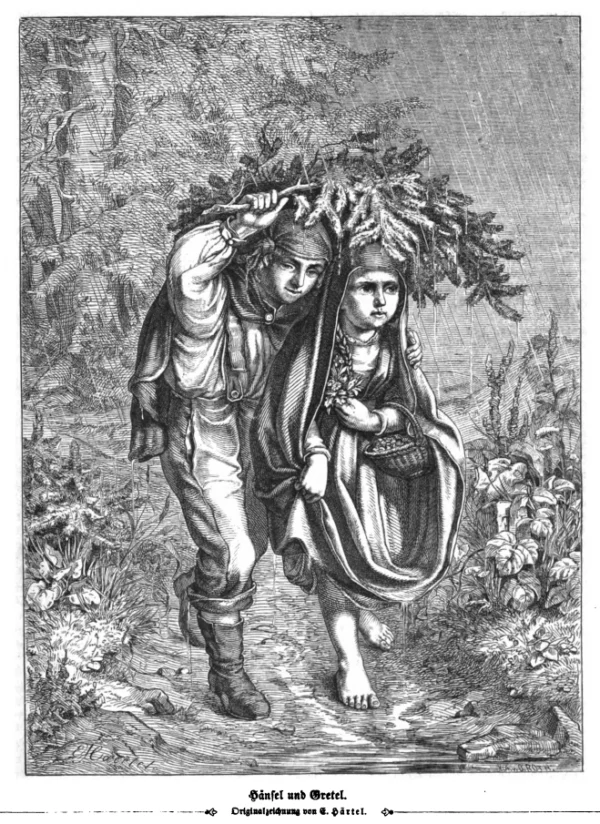
Wikimedia CommonsA depiction from 1868 showing Hansel and Gretel carefully walking in the forest.
And it is from this dark chaos that the story of Hansel and Gretel was born.
Prior warning tales before Hansel and Gretel directly relate to themes of abandonment and survival. Almost all of these stories used the forest as a setting for danger, magic, and death.
One such tale comes from the Italian fairy tale collector Giambattista Basile. His work Pentamerone, published in the 17th century, contains many stories. In his version, titled Nennillo and Nennella, a cruel stepmother forces her husband to abandon their two children in the forest. The father tries to leave an oat trail for the children to follow, but a donkey eats it.
However, the most horrifying of these early tales is the Romanian story The Little Boy and the Evil Stepmother. In this tale, two children are abandoned and follow an ash trail back home. But when they return home, the stepmother kills the little boy and forces his sister to prepare his body for a family meal.
The frightened girl obeys but hides the boy's heart inside a tree. Unbeknownst to the father, as he eats his son, the girl refuses to join in. After the meal, the sister takes her brother's bones and places them inside the tree with his heart. The next day, a cuckoo comes out and sings: "Cuckoo! My sister cooked me, my father ate me, but now I am a cuckoo and safe from my stepmother."
The frightened stepmother throws a piece of salt at the bird, but it only falls on her head and kills her instantly.
An Evolving Tale and New Interpretations
The direct source of the Hansel and Gretel story is Henriette Dorothea Wild, a neighbor of the Grimm brothers. She narrated many stories for the brothers' first edition. She eventually married Wilhelm.
The original versions of Hansel and Gretel by the Grimm brothers have changed over time. Perhaps the brothers realized that their stories were being read by children, and thus they cleaned up the tales a bit in the final edition they published.
In the early versions, the mother abandons her biological children, while in the 1857 edition, she transforms into the archetype of the evil stepmother. The father's role is also softened in the 1857 edition; he shows more remorse for his actions.
Meanwhile, the story of Hansel and Gretel continues to evolve. Today, there are versions designed for preschool children that do not address themes of child abandonment, such as the story by children's author Mercer Mayer.
In 2020, Orion Pictures' adaptation titled Gretel and Hansel: A Horrible Fairy Tale focuses on the siblings encountering a witch while searching for food in the forest and trying to help their parents.
It seems that the true story of Hansel and Gretel may be even darker than this latest version.





















Comments
(8 Comments)