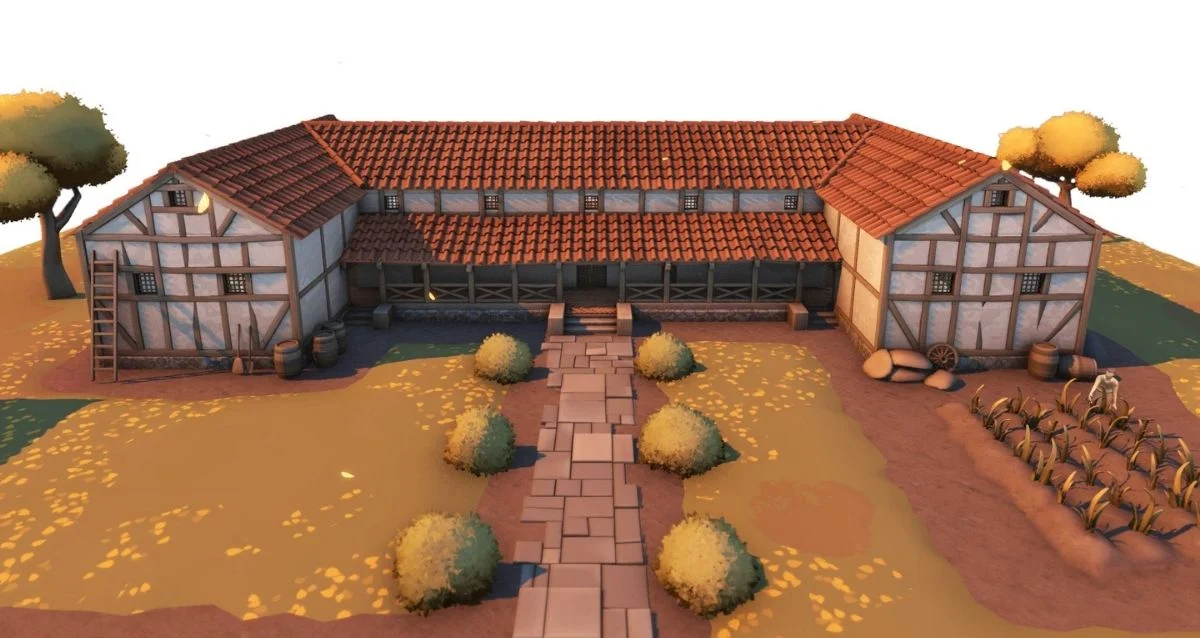
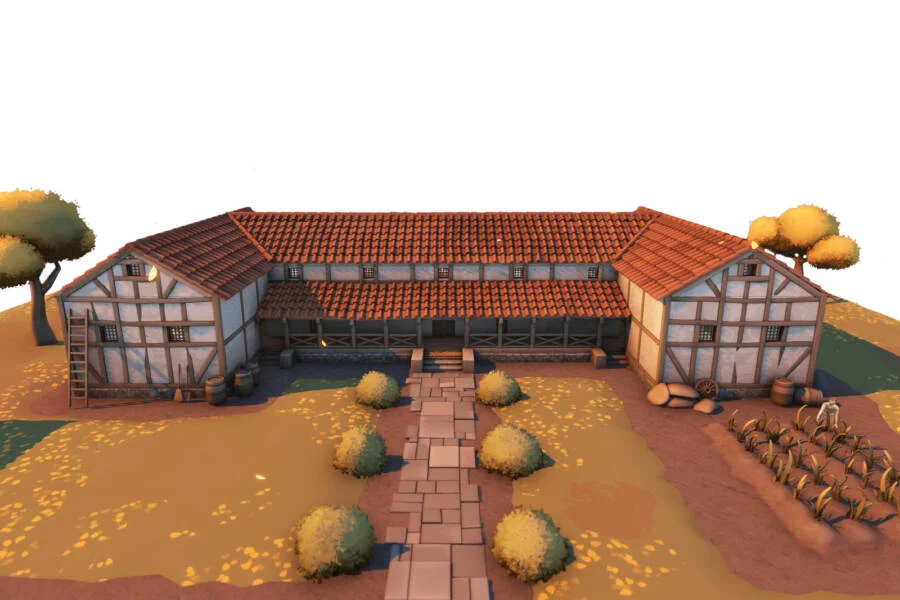
RWEThe virtual recreation of the Roman villa found near Dereham.
In 2021, archaeologists were commissioned to assist with the installation of a cable line for a new wind farm in eastern England. Since historical records did not indicate anything significant in the area, they did not expect to find much; however, they were pleased to be proven wrong.
A magnetometry survey revealed an anomaly beneath the ground, prompting researchers to excavate a small area where they discovered a collection of ancient roof tiles. Before long, they realized they had uncovered a Roman villa dating back approximately 2,000 years, along with remarkable artifacts that provided new insights into life in Roman Britain.
Discovery of an Ancient Roman Villa in Norfolk
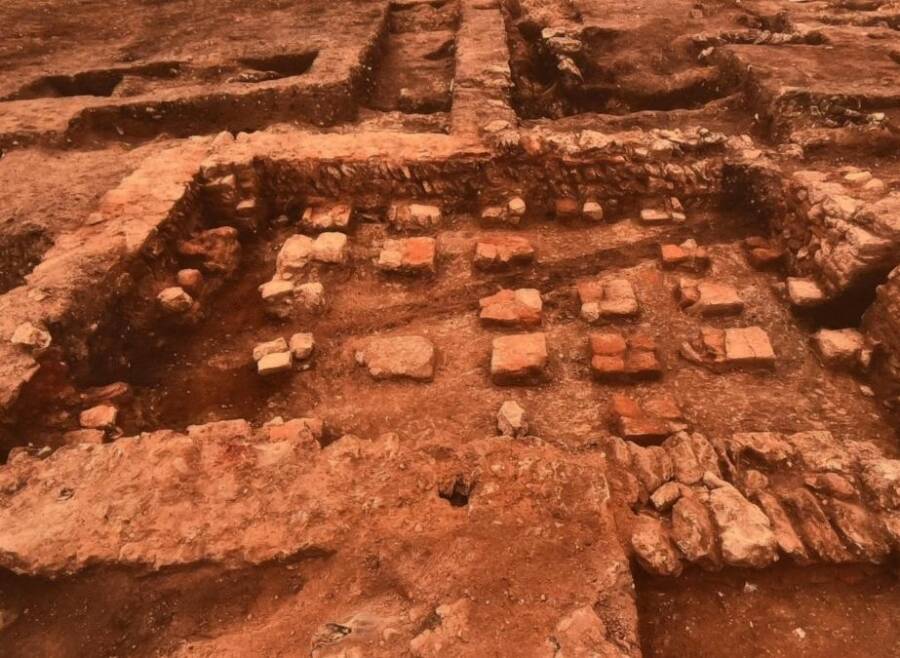
Denise BradleyWhile examining the villa's grounds, archaeologists found roof tiles, the bones of cats and dogs believed to have been kept as pets, and a snake figure referred to as “Norfolk Nessie,” named after the Loch Ness Monster.
As part of the construction of a new wind farm off the coast of England, energy company RWE planned to lay a 40-mile cable to transport electricity generated by offshore turbines to the National Grid. Since they needed to excavate a large trench network for the project, archaeologists were commissioned to examine the route and ensure that heavy machinery did not damage historical artifacts.
Archaeologists reviewed maps and other records but found no evidence of significant structures in the area. However, a magnetometry survey near the town of Dereham in Norfolk revealed signs of debris beneath the surface. To check if this was something significant, archaeologists conducted a quick investigation and made an incredible discovery.
“There was definitely something significant there, as they were constantly finding a large number of roof tiles,” said Jessica Lowther from Headland Archaeology, as reported by Eastern Daily Press. “Using ground radar, they found that this was actually the site of a Roman villa.”
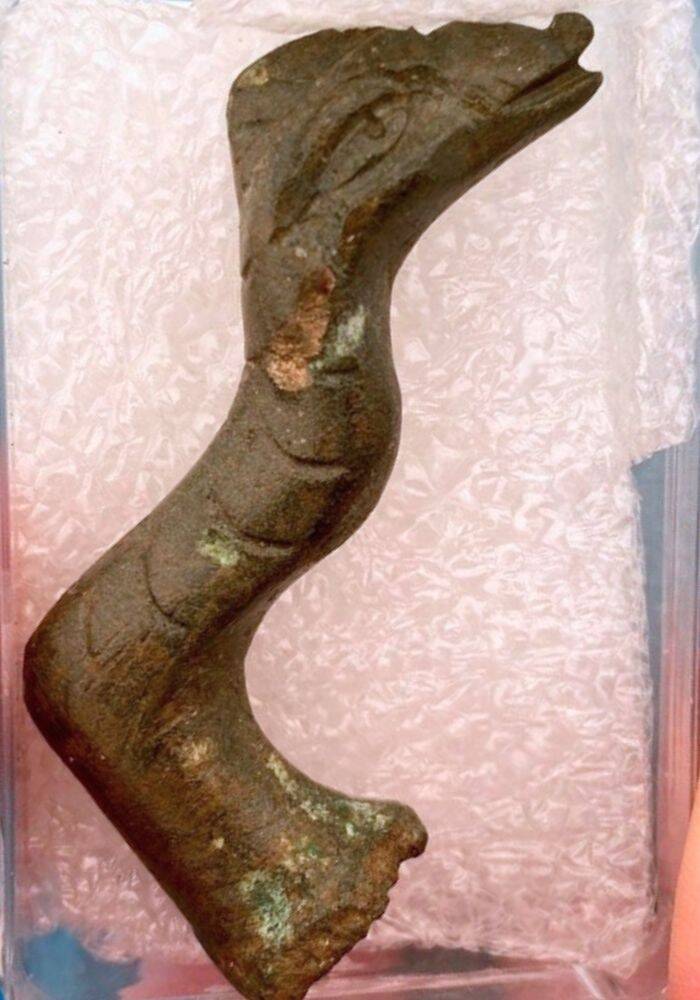
Headland Archaeology/FacebookThe bronze handle found in an ancient vessel at the site of the Roman villa in Norfolk was named “Norfolk Nessie.”
The large house is believed to have been built between the first and third centuries when the Roman Empire controlled Britain. In addition to the main residence, the property included a bathhouse and several other outbuildings.
“There is a lot of evidence related to food cultivation and processing,” said Lowther, “so we think it was quite a large agricultural estate. The bones of cats and dogs were found, indicating that these animals were kept to control pests.”
Archaeologists also found many ancient artifacts, ranging from hairpins and a brooch to a silver ring, a piece of a military belt, and a decorative bronze chair leg shaped like a lion's head and paw.
Perhaps the most interesting discovery was the handle of a bronze vessel depicting a mysterious creature. Due to its snake-like structure and greenish color, researchers named it “Norfolk Nessie” in honor of the legendary Loch Ness Monster.
However, this historic villa was not the only unexpected finding for archaeologists.
6,000 Years of History Along the Cable Route in Eastern England
Excavations in other sections of the cable route revealed more artifacts dating back long before the Roman period.
Archaeologists discovered several prehistoric sites in a Neolithic pit created between 4000 and 2500 B.C., as well as a barrow containing cremation remains belonging to some of Britain's Copper Age inhabitants. They also found stone tools, ceramics, and a coin minted during the time of Queen Boudica, the leader of the Celtic Iceni tribe, who led a rebellion against the Romans in 60 B.C.
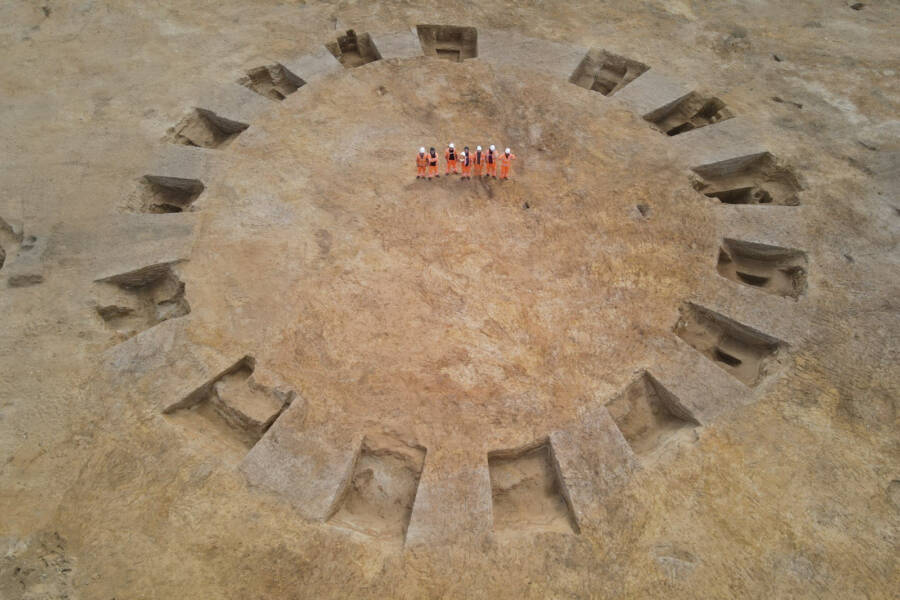
RWEArchaeologists stand above a prehistoric barrow where Neolithic people left cremation remains.
Among the discoveries from the Medieval period are a piece of a jug and even two lost villages. Whimpwell and Stinton are mentioned in the Domesday Book, listing English estates from the 11th century, but they had long been abandoned, and their locations have largely been lost throughout history.
Many of these artifacts were displayed at two public events held in March 2026, where local residents had the opportunity to learn about Norfolk's long history and even participate in a virtual tour of the Roman villa.
RWE project director Jon Darling stated in a company announcement, “We are very excited to be able to share these discoveries with the local community. This archaeological campaign has uncovered an extraordinary story about how this landscape has changed over time; from prehistoric activities to the Roman villa estate and beyond.”
After carefully documenting the villa, archaeologists reburied the site to protect it for future research that could reveal more about life in Roman Britain.
































Comments
(2 Comments)