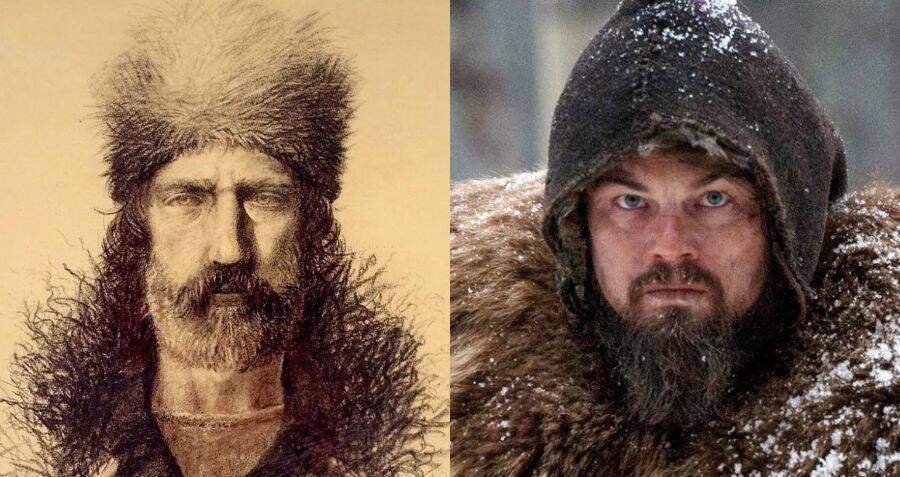
The two men assigned to watch over Hugh Glass knew it was a hopeless effort. After he had faced a grizzly bear alone, they did not expect the fur trader to last even five minutes – let alone five days. But there he was, lying by the Grand River, still breathing.
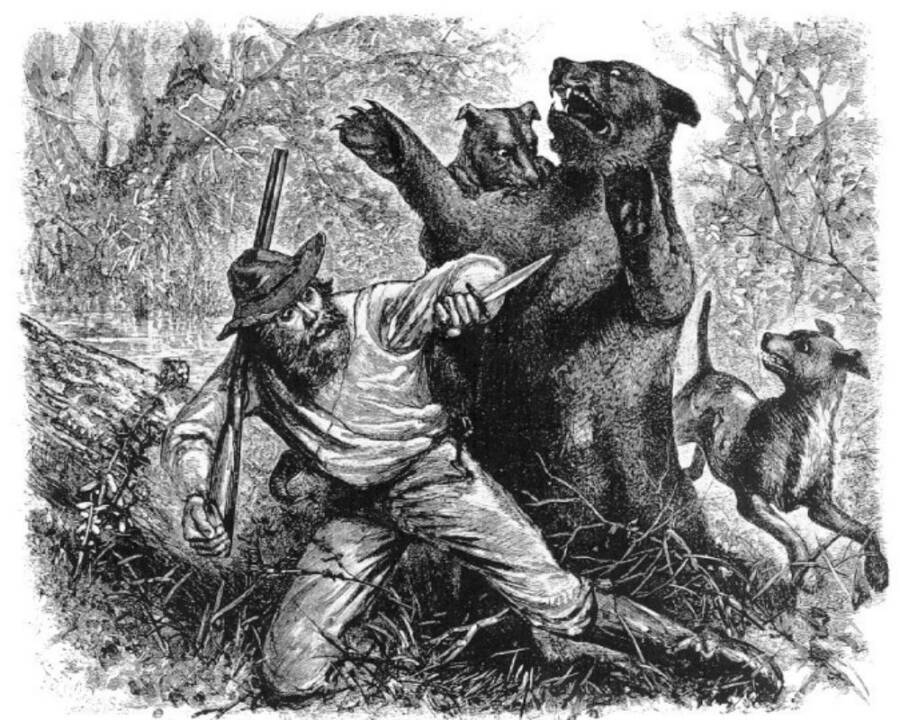
Wikimedia CommonsA newspaper illustration depicting Hugh Glass’s struggle with the grizzly bear that attacked him.
Aside from the rise and fall of his chest with each labored breath, the only sign of life from Glass was the occasional movement of his eyes. He looked around from time to time, but it was impossible to know if he recognized the other men or if he needed anything.
As he lay dying, the men began to grow increasingly paranoid; they knew they were approaching the lands of the Arikara tribe. They did not want to risk the life of someone who was slowly dying.
Eventually, fearing for their own safety, the men abandoned Hugh Glass to die; they took his gun, knife, tomahawk, and fire-starting kit with them – after all, a dead man has no need for tools.
Of course, Hugh Glass was not dead yet. And he would not die for a long time.
Pirates and Pawnees: The Early Life of Hugh Glass
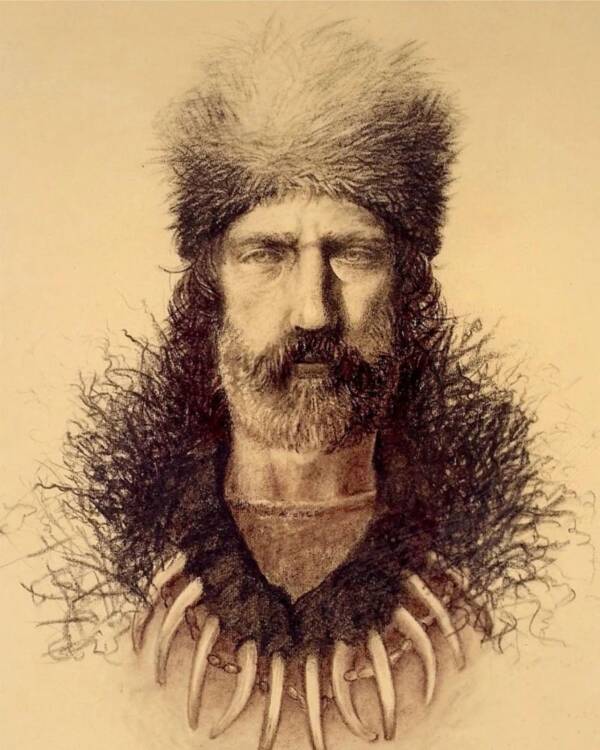
Public DomainA sketch of Hugh Glass dated circa 1830.
Long before being abandoned by the Grand River, Hugh Glass was a force to be reckoned with. According to the Mountain Man Museum, he was likely born around 1783 to Irish immigrant parents in Pennsylvania. Little is known about his early life, but those who knew him say he was working as a sailor by 1817.
The memoirs of another fur trader who worked with Hugh Glass, George C. Yount, are considered reliable. According to Yount, Glass claimed that the ship he was on was captured by the infamous pirate Jean Lafitte around 1820. Glass was faced with the choice of joining Lafitte or dying – and he chose a life of piracy.
After serving under Lafitte for a year or two, he escaped to the shores of what is now Galveston, Texas. Upon arrival, he was captured by the Pawnee tribe and lived with them for several years. Some stories even claim he married a Pawnee woman.
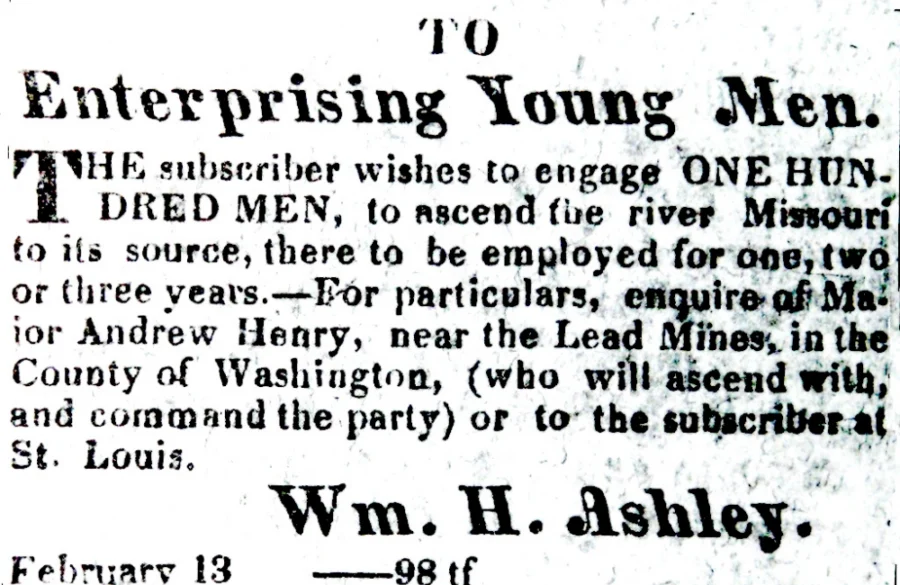
Wikimedia CommonsA newspaper advertisement that led to Hugh Glass joining “Ashley’s Hundred.”
Then, in 1822, Glass learned of a fur trading venture.
According to the South Dakota Tourism Office, a newspaper advertisement placed by General William Henry Ashley called for 100 men to explore uncharted territories and trap animals for their furs, “up the Missouri River.” Glass eagerly signed up to be one of “Ashley’s Hundred” – a decision that would etch his name into history.
The Grizzly Bear Attack that Inspired ‘The Revenant’
Throughout 1822 and 1823, Ashley’s Hundred made their way up the Missouri River, hunting and trading fur. Along the way, they had a violent encounter with members of the Arikara tribe. Several traders were killed, including a man named John Gardiner. Glass wrote a letter to convey the sad news to Gardiner’s family:
I have a painful duty to perform, to inform you that your son was killed by the Indians on the morning of June 2... We traded with them as friends but after a heavy rain and storm, they came upon us without light, and many were wounded. I was shot in the leg. Master Ashley must remain in these parts to see that the traitors are properly punished.
Several months later, in August of 1823, Glass had his infamous encounter with the grizzly bear. While hunting with about 15 men, Glass accidentally surprised the bear and her two cubs. The animal attacked, knocking Glass to the ground and injuring him.
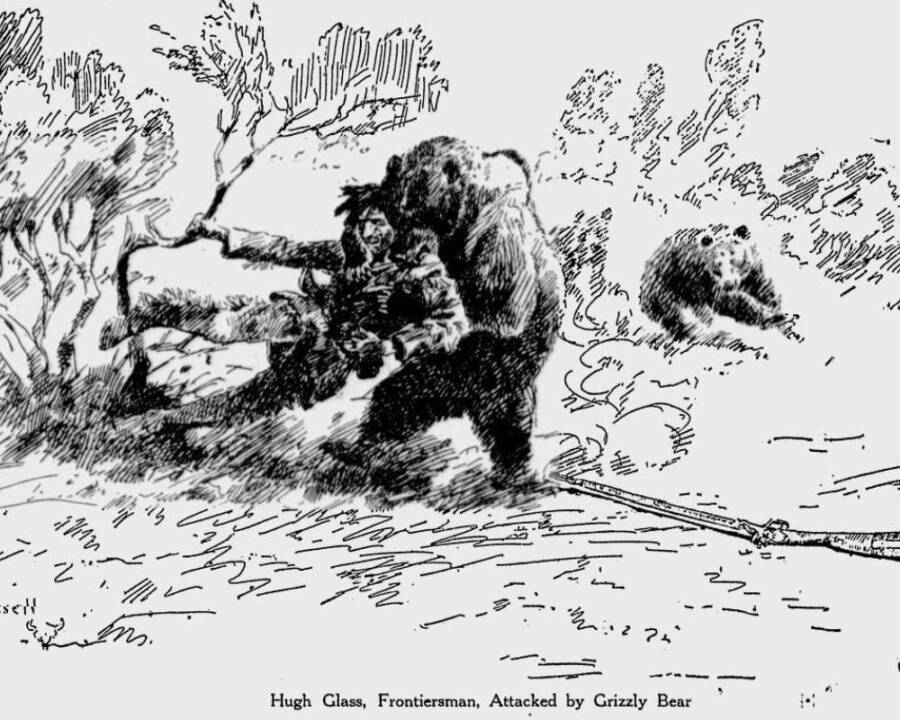
Wikimedia CommonsA 1922 newspaper illustration depicting Hugh Glass being mauled by a grizzly bear.
Some versions of the story state that Hugh Glass drove the bear off by himself, while others tell that his friends helped him. In either case, Glass barely survived the ordeal. Among his injuries were a broken leg, a torn scalp, a gaping throat wound, and deep lacerations exposing his ribs.
None of the party believed Glass would live more than a few hours; still, they decided to tie him to a makeshift litter and carry him with them. The critically injured man surprised them all by surviving the night and the next day.
However, they noticed that the added weight was slowing them down – in a region they wanted to pass through as quickly as possible.
They were still in Arikara territory and wanted to reach their destination quickly to avoid another attack. According to Encyclopedia Britannica, the group still predicted that Glass would die soon, so they decided to leave two men with him; these men would return to bury his body.
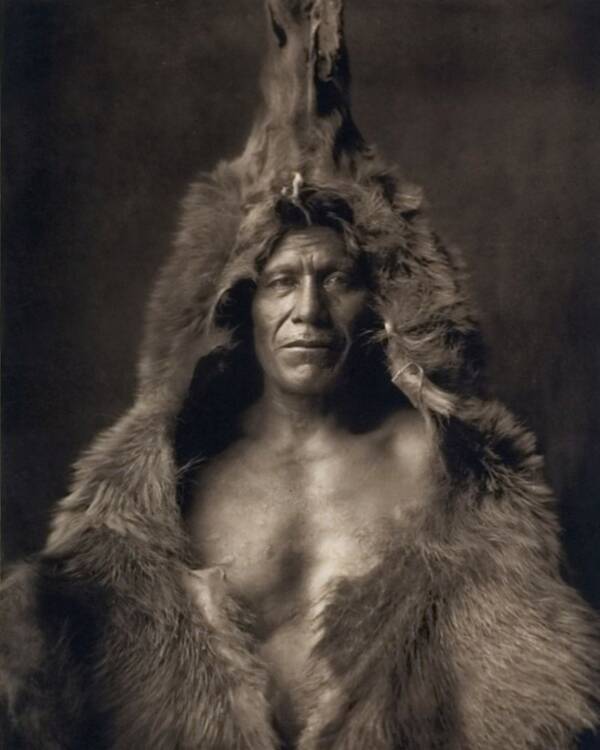
Wikimedia CommonsAn Arikara man wearing a bear skin. 1908.
These two men were John Fitzgerald and a young man named “Bridges”; some historians believe this young man was the famous mountain man Jim Bridger. However, as Glass continued to survive five days later, they decided to abandon him. Taking his weapons and tools, they left him helpless in the wilderness.
But Glass managed to survive – and he made it his mission to take revenge on the men who had left him for dead.
Hugh Glass’s Quest for Revenge
When Hugh Glass regained consciousness, he quickly realized he had been abandoned. Based on the information around him, he thought he was about 200 miles from Fort Kiowa; there he could get help.
First crawling, then slowly beginning to walk, Glass made his way toward the fort. He ate whatever he could find. This usually consisted of fruits, roots, and insects, but he occasionally came across buffalo carcasses that had been torn apart by worms.
When he reached halfway to his goal, he encountered a Lakota tribe that was friendly to fur traders. There, he managed to negotiate for a leather canoe.
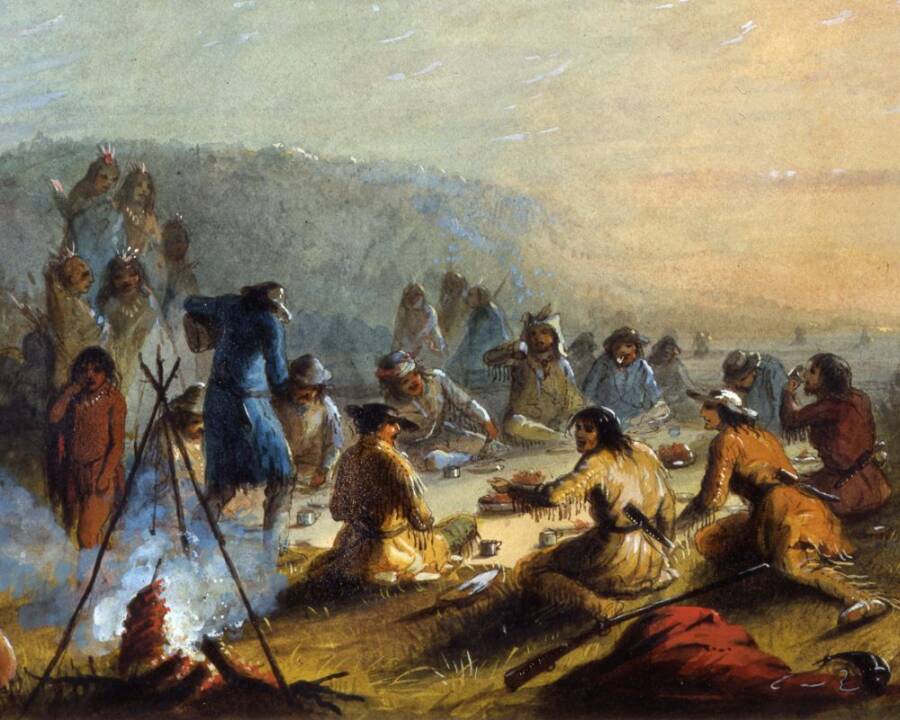
Alfred Jacob Miller/Wikimedia CommonsFur traders often make peace with local Native Americans, but sometimes they engage in conflicts with tribes like the Arikara.
Glass reached Fort Kiowa about six weeks after the bear attack. After resting and purchasing supplies on credit, he set out to rejoin Ashley’s Hundred. When he finally reached them, everyone was shocked to see he was alive. Fitzgerald had left the group to join the U.S. Army, but Bridges was still with them. It was now time for Glass to fulfill his desire for revenge.
However, when Glass confronted Bridges, he is said to have forgiven the young man. He realized it was Fitzgerald who had persuaded the group to leave him.
Glass then set out to find Fitzgerald – and he forgave him too. Fitzgerald was under the protection of the Army, so Glass could not harm him. However, Fitzgerald was reported to have been forced to return Glass's shotgun.
Completing his mission to track down Bridges and Fitzgerald, Glass continued to work as a fur trader for the next 10 years. He survived violent encounters with Native Americans two more times and was left alone in the wilderness again when he separated from a trapping party during an attack.
But in 1833, Glass finally met the end he had long evaded. According to the National Park Service, while on a trip along the Yellowstone River with two fur traders, Hugh Glass was once again attacked by the Arikara.
This time, he was not so lucky.
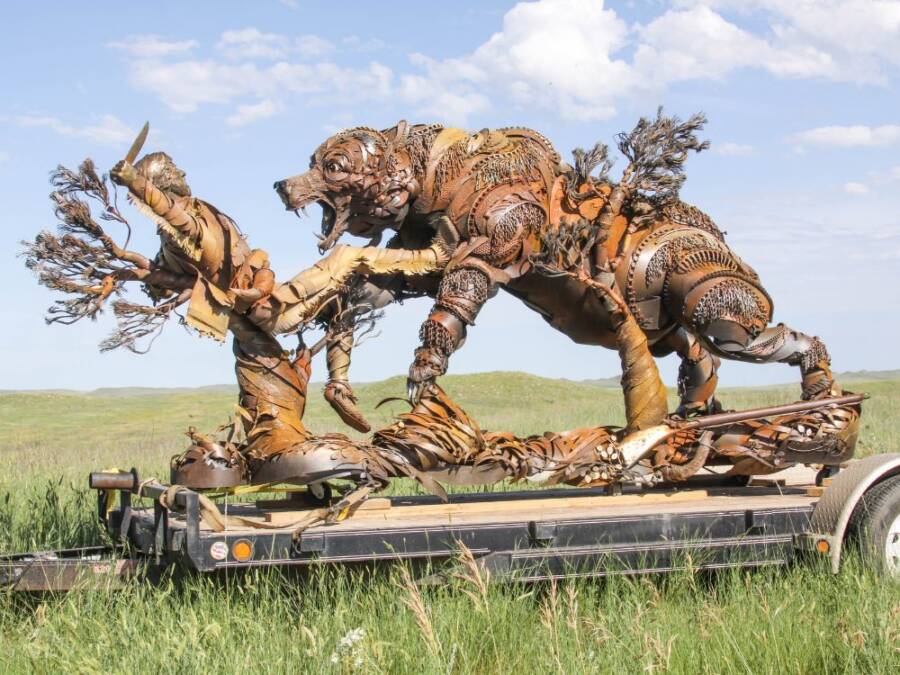
Wikimedia CommonsA monument to Hugh Glass has been erected in Lemmon, South Dakota, where he was attacked by the bear.
The epic tale of Hugh Glass was so incredible that it caught Hollywood's attention and was turned into the Oscar-winning film The Revenant in 2015; this film, starring Leonardo DiCaprio, tells the story of Glass facing a grizzly bear and surviving. Today, a monument stands near the site of Glass's famous attack on the south bank of the Grand River, reminding all who pass of the man who faced a grizzly bear and lived to tell the tale.




Comments
(1 Comment)