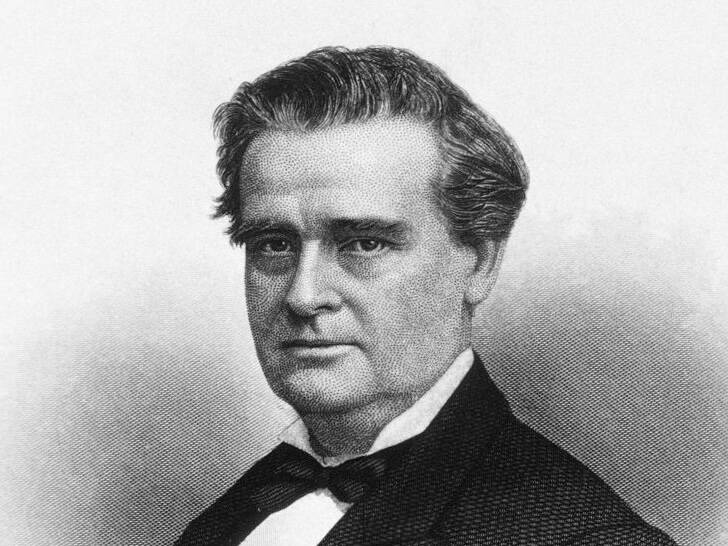
Wikimedia CommonsDr. J. Marion Sims is often praised as the "father of modern gynecology," but he achieved all these successes by conducting experiments on enslaved women and girls.
In the 1840s and 50s, J. Marion Sims, a surgeon from Alabama, successfully performed the first surgery to correct a condition that had long excluded postpartum women. He then invented the instrument used in examinations by every gynecologist today, the speculum. For these contributions and more, Sims was referred to as the "father of modern gynecology."
However, the way James Marion Sims patented his experimental surgeries and instruments has come under scrutiny in recent years; because his subjects were enslaved Black women and girls who could not truly give consent and were tested on without anesthesia, some of whom he even owned himself.
James Marion Sims' Medical Breakthroughs
Born in 1813, James Marion Sims settled in Alabama from Philadelphia in 1835 to pursue medical education.
Sims is reported to have shown little interest in "women's diseases." He once wrote, "If I hated anything, it was investigating the organs of the female pelvis."
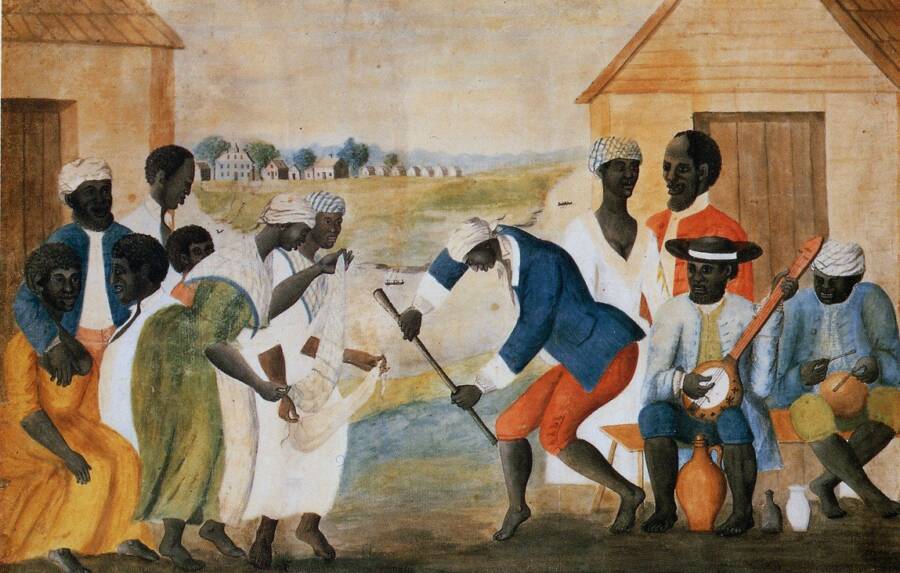
John Rose/Abby Aldrich Rockefeller Folk Art MuseumA depiction of enslaved people in an agricultural field from the late 18th century. As a doctor in the Deep South, J. Marion Sims had the opportunity to choose non-consenting enslaved subjects.
However, in 1845, a slave owner called Sims to assist Anarcha, an 18-year-old enslaved woman in labor for 72 hours. Sims successfully delivered the newborn but discovered that the difficult birth had caused Anarcha to develop a condition known as a vesicovaginal fistula.
Vesicovaginal fistulas are holes that form between a woman's vagina and bladder, common in women who have difficult births, and lead to urinary incontinence. This condition was considered embarrassing and often isolating. It was once thought to be impossible to treat.
Over the next four years, Sims performed 30 experimental operations to treat Anarcha's condition. In doing so, he also cured Empress Eugenie of France of this condition.
As other owners called Sims to treat their enslaved women, the surgeon developed a new system: he purchased these patients for surgical experimentation. Sims explained, "The owners allowed me to keep them (at my own expense)."
The surgeon saw this as a great advantage, stating, "There was never a time when I could not find a subject for an operation on any given day."
Sims eventually became reputable enough to open a private clinic serving a wealthy, white clientele in New York. He became an award-winning surgeon in his time and invented the speculum instrument used by all gynecologists today to examine the vagina.
In 1855, he opened the country's first Women's Hospital in New York City.
The Black Women and Children Behind Sims' Successes
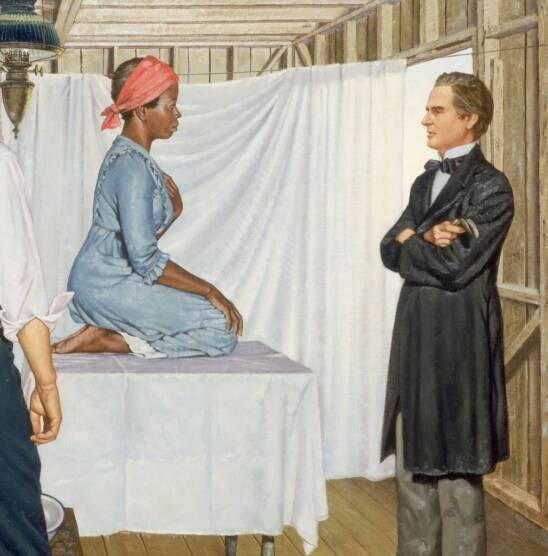
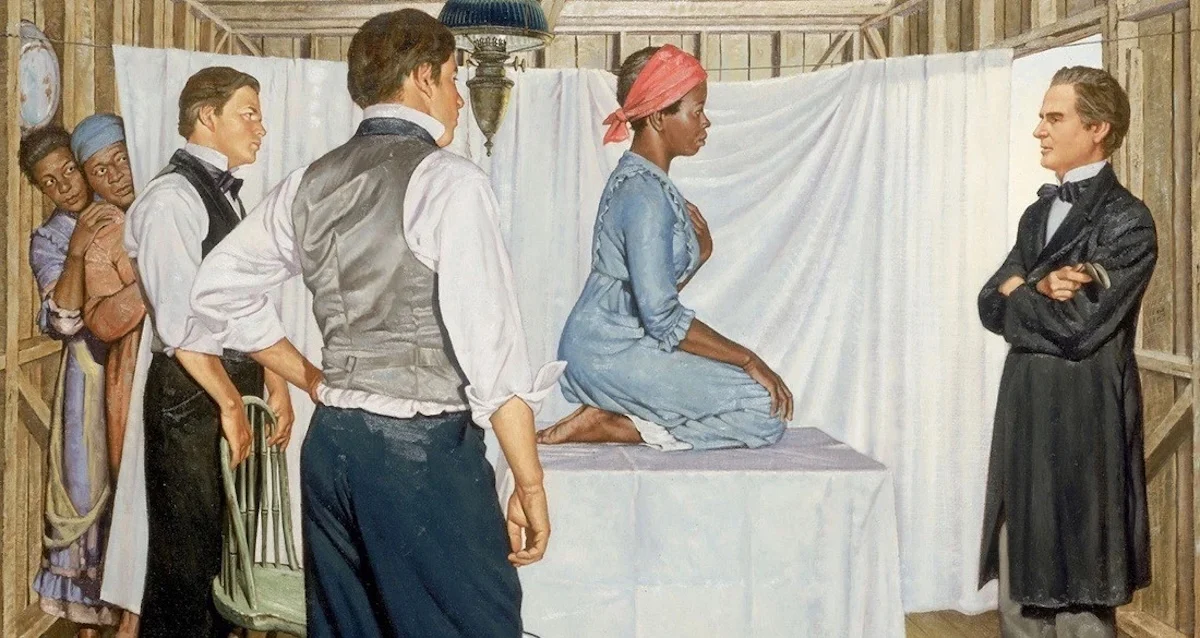
This is claimed to be the only depiction of Lucy, Anarcha, and Betsey painted by Robert Thom in the "Great Moments in Medicine" series.
J. Marion Sims recorded the names of some of his Black female subjects: Anarcha, Lucy, and Betsey. The identities of his other subjects have been lost.
All three women were young mothers struggling with untreated fistulas. They all served as experimental subjects for Sims.
Sims invited "about a dozen doctors" to observe his experiments on Lucy. He noted, "All the doctors... decided that I was on the verge of a great discovery and that each of them was interested in seeing me perform surgery."
Lucy underwent an hour-long surgery without anesthesia. "Poor girl, on her knees, underwent the surgery with great courage and heroism," wrote Sims. "Lucy was in so much pain," and she developed a fever a few days after the surgery. "I thought she was going to die," Sims confessed. Her recovery took months.
Meanwhile, between 1845 and 1849, Sims performed 30 surgeries to treat Anarcha's fistula, all without anesthesia.
When Sims invented his speculum using a spoon, he first tried it on Betsey. The instrument was designed to keep the vagina open so that the doctor could use both hands to examine the patient. In his first examination with the speculum, Sims noted in astonishment, "I saw everything as I had never seen before."
However, before and after experimenting on enslaved women, Sims also performed inhumane procedures on Black children. Sims believed that Black people did not feel or think as white people did, and therefore he used a shoemaker's tool to separate the bones of children and examine their heads.
Ethical Issues of Consent and Anesthesia Refusal in J. Marion Sims' Work
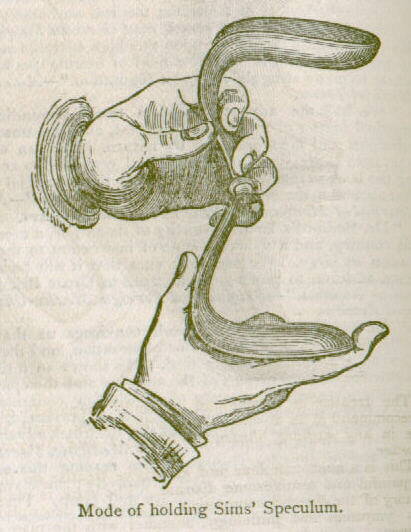
Unknown/Wikimedia CommonsThe Sims Speculum was originally based on a bent spoon.
Sims claimed that all of his subjects consented to the experiments. It is said that he promised a slave owner, "If you give me Anarcha and Betsey for the experiment, I promise not to perform any experiment or operation that would endanger their lives."
He also wrote that he asked his enslaved subjects whether they wanted to give permission for the experiments, claiming they "consented willingly."
However, as slaves, women like Anarcha, Betsey, and Lucy could only give consent. As property, what other option did they have? Today, medical ethics standards require informed consent - something Sims could not obtain from a slave.
Sims also performed experimental surgeries on enslaved women without using anesthesia, while he routinely used anesthesia on white, paying patients in the Women's Hospital.
Like other 19th-century physicians, J. Marion Sims assumed that Black people had a higher pain tolerance than white people, and therefore believed they did not need pain relief for these extremely distressing surgeries.
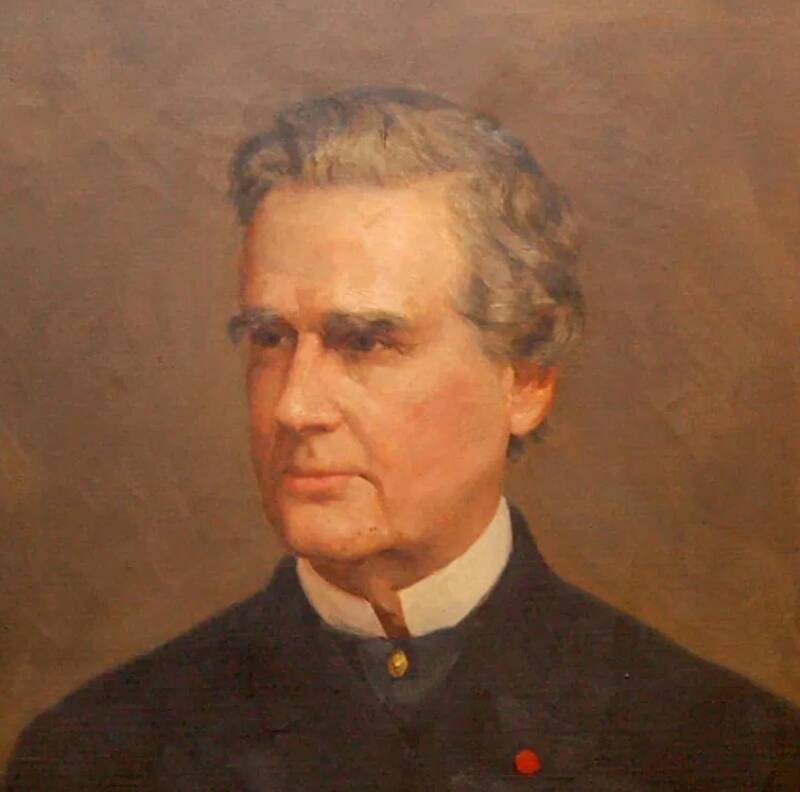
Alabama EncyclopediaThroughout the 1840s and 50s, Sims worked in the hospital in his backyard, experimenting on at least 12 enslaved women and girls.
Supporters of Sims' choices point out that anesthesia was new in the 1840s and rarely used in the United States. However, even after anesthesia became common, Sims frequently refused to provide anesthesia to women for fistula surgeries. In 1857, Sims told the New York Academy of Medicine that fistula surgeries "did not cause enough pain, so they were not worth the trouble."
Additionally, he rarely took responsibility when his patients died after surgery; instead, he blamed "the laziness and ignorance of their mothers and Black midwives."
James Marion Sims saw no problem with the way he conducted his experiments. Indeed, modern researchers are astonished by the ordinariness of his tone as they document his disturbing practices. As one doctor put it, he was perhaps just a "product of his time."
The Changing Reputation of James Marion Sims in the 21st Century
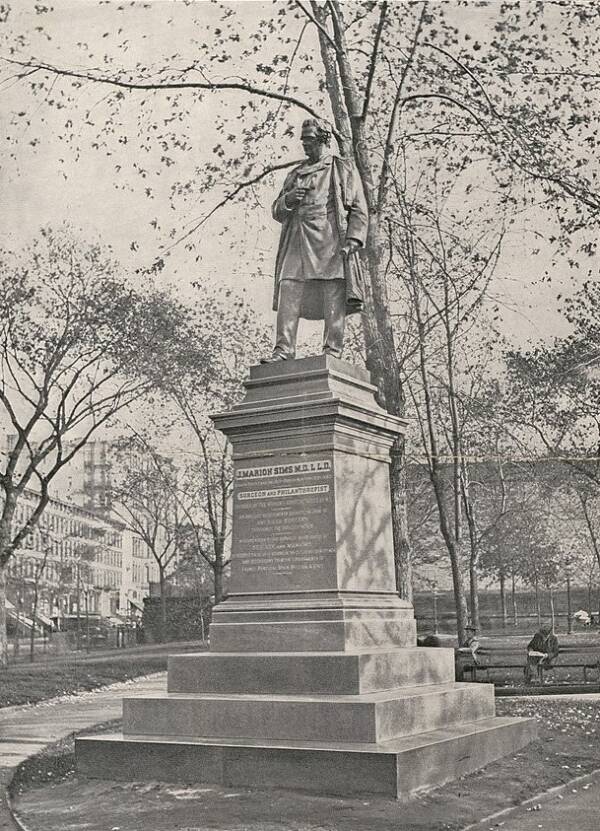
Bibliothèque interuniversitaire de Santé/Wikimedia CommonsA statue of J. Marion Sims from the late 19th century was initially displayed in Bryant Park in New York and later moved to Central Park. It was removed in 2018.
Modern historians are debating the legacy of James Marion Sims.
His defenders argue that he was a man of his time and that he still obtained consent from his patients and treated them.
American Journal of Obstetrics and Gynecology acknowledged in 1978, "His original three subjects could not have endured the pain and suffering of repeated surgeries had they not been enslaved." However, the article concluded, "In the long run, they had reasons to be grateful to Sims."
In 1981, Journal of South Carolina Medical Association praised Sims for creating a new surgical procedure "almost with a magic wand."
In 2006, Washington University surgeon Lewis Wall defended Sims in the Journal of Medical Ethics, writing, "J. Marion Sims was a dedicated and meticulous physician living and working in a society that practiced slavery."
However, that same year, the University of Alabama, Birmingham, removed Sims from the "Medical Giants of Alabama" exhibit.
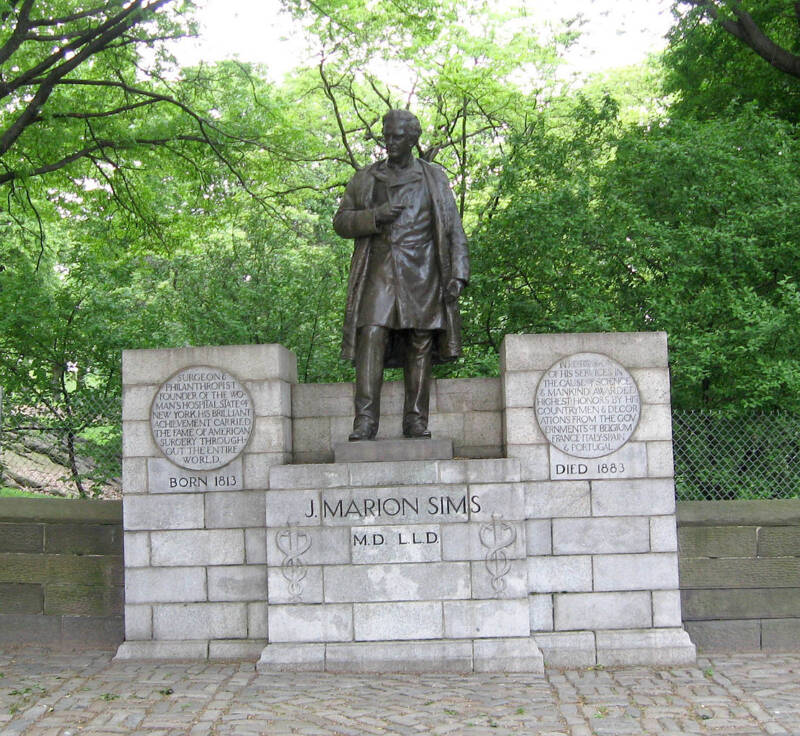
Ferdinand Freiherr von Miller/Wikimedia CommonsThe statue of J. Marion Sims before it was moved to Greenwood Cemetery in Brooklyn.
In 2017, a vandal wrote "RACIST" on the statue of J. Marion Sims in Central Park, New York. In response to calls for the statue's removal, the prestigious journal Nature published an unsigned article defending Sims's statue, stating, "Removing Statues of Historical Figures Risks Historical Whitening." After the article sparked a significant backlash, Nature retracted, changing the title of the article to "Science Must Acknowledge Past Mistakes and Crimes."
Reassessing the legacy of James Marion Sims in the 21st century does not mean denying his medical contributions, but it requires us to evaluate them in a social context. Instead of ignoring the Black women subjected to his experimental treatments, we must acknowledge them.
In 2018, New York removed the statue of J. Marion Sims from Central Park, relocating it to his burial site in Brooklyn.
The city also installed a new plaque recognizing the roles of Betsey, Lucy, Anarcha, and others in the history of medicine, replacing the original plaque that only narrated Sims's medical achievements.





















Comments
(7 Comments)