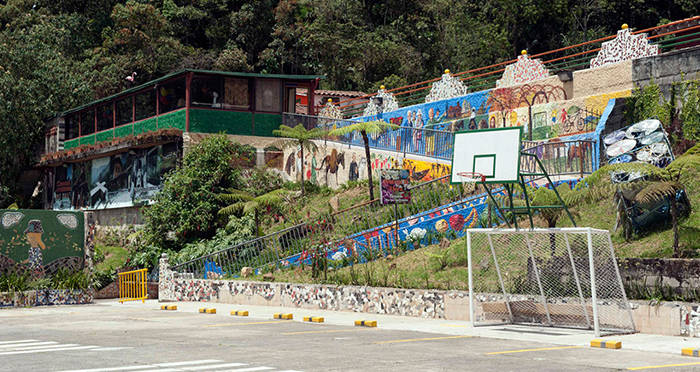
Drug lord and "King of Cocaine" Pablo Escobar accepted a prison sentence in Colombia on his own terms. He built such a luxurious prison that it was named "Hotel Escobar" or "Club Medellin," but its permanent name became La Catedral, meaning "The Cathedral" — and there’s a good reason for that.
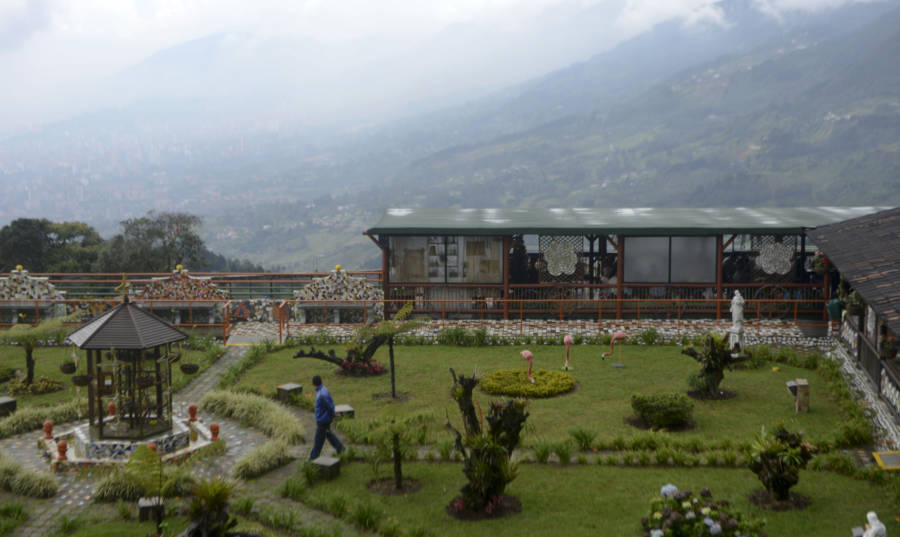
RAUL ARBOLEDA/AFP/Getty ImagesThe prison known as La Catedral ("The Cathedral") where Pablo Escobar was held near Medellin, Colombia.
The prison included a football field, a jacuzzi, and a waterfall. Indeed, La Catedral resembled a fortress more than a prison; because Escobar managed to keep his enemies outside and continued to run his operations.
Pablo Escobar's Controversial Surrender
The Colombian government struggled to prosecute Escobar's Medellin cartel because Pablo Escobar was quite popular among certain segments. Still, Escobar's legacy is remembered with hatred by those condemning the violence and destruction he caused, while others show respect by recalling his charitable acts in his own city.
However, a small group of politicians and police working to uphold the rule of law refused to be intimidated by Escobar. Ultimately, both sides reached a stalemate as they both refused to back down, and a temporary agreement was reached on a new policy: negotiated surrender.
The terms of surrender were agreed upon with the promise that Escobar and his gangs would stop internal terrorism and would surrender themselves to the authorities in exchange for not being extradited to the U.S. Extradition meant being tried in a U.S. court, which Escobar wanted to avoid.
During negotiations, Escobar also added conditions that reduced his prison sentence to five years and stipulated that he would serve his sentence in a prison he built himself, with guards of his choosing.
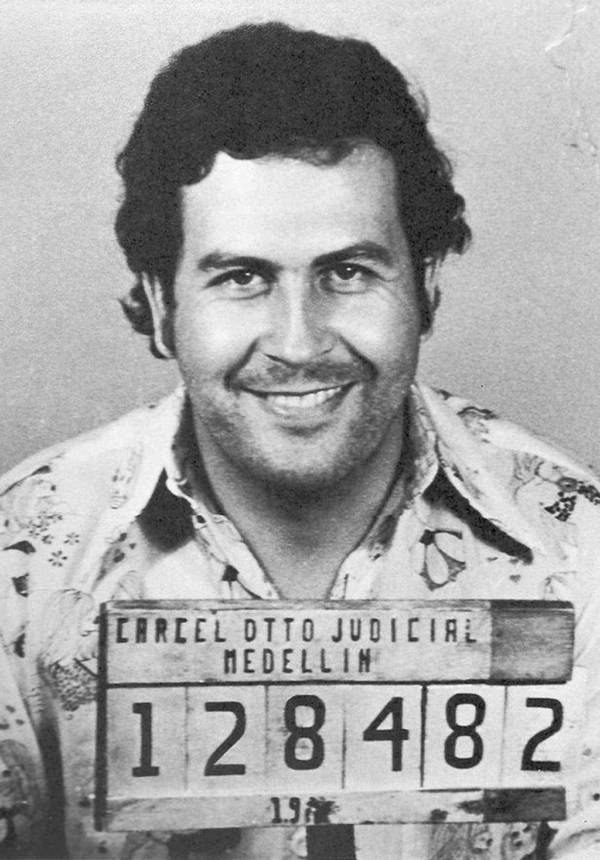
Wikimedia ComonsPablo Escobar agreed to surrender to Colombian authorities to avoid extradition to the U.S.
Despite the claims of fierce opponents to the negotiated surrender policy, the Colombian government added a constitutional amendment prohibiting the extradition of citizens in June 1991.
Escobar complied with the terms of the agreement and surrendered a few days later; President Cesar Gaviria stated that the treatment of the drug criminal "would not differ from what the law required."
La Catedral, the Prison that Held Pablo Escobar
Escobar quickly proved the lie behind Gaviria's statement. On June 19, the drug lord was helicoptered to the mountaintop he had strategically chosen to build his prison. He bid farewell to his family, passed through armed guards, and entered the area where he officially signed the surrender documents, passing through 10-foot-high barbed wire fences.
On the surface, this seemed like a fairly standard prisoner surrender process. However, the appearance of barbed wire and concrete was a thin cover for a very different reality.
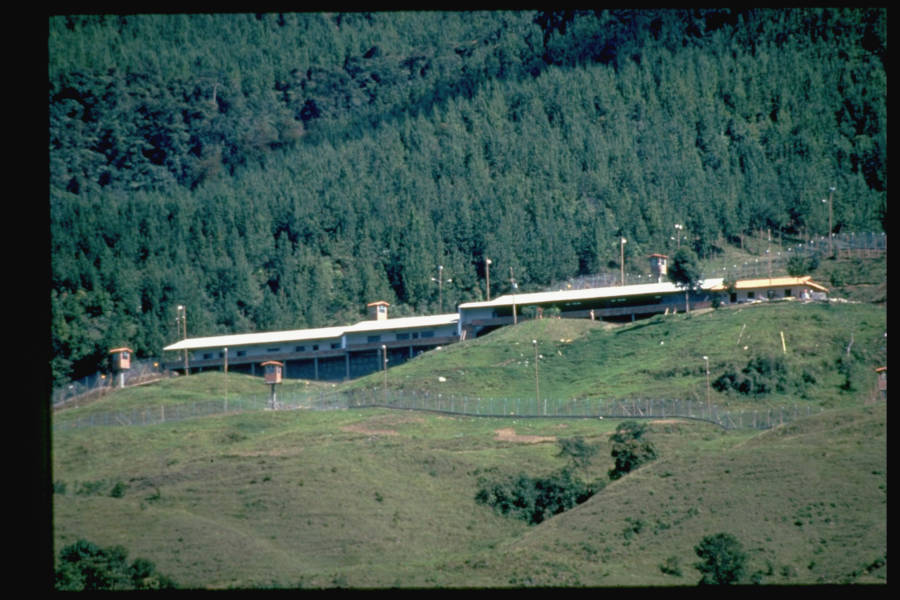
Timothy Ross/The LIFE Images Collection/Getty ImagesLa Catedral, the private prison where Colombian drug lord Pablo Escobar was held, is protected by his own guards and surrounded by the luxurious scenery of his hometown.
For example, while most federal inmates in the U.S. have access to a gym, they typically cannot have amenities like a sauna, jacuzzi, and pool. Escobar had large outdoor sports facilities to host national sports teams when he invited the Colombian National Team to his personal football field.
La Catedral was so extravagant that it also had an industrial kitchen, a billiard room, several bars with large screen TVs, and a disco where he held wedding receptions while incarcerated. He enjoyed meals like stuffed turkey, caviar, fresh salmon, and smoked trout in the arms of beautiful women.
Escobar's Escape from La Catedral and Today's Prison
As those opposing the negotiated surrender policy had predicted, the prison sentence did not prevent Escobar from managing his drug empire.
During his time in "Hotel Escobar," the king received over 300 unauthorized guests, including several wanted criminals. However, in 1992, when Escobar ordered the killings of several cartel leaders and their families from the safety of his luxurious La Catedral, the Colombian government decided it was time to put an end to this farce.
When military troops descended on "Club Medellin," Escobar had already slipped out the door and had served only thirteen months of his sentence.
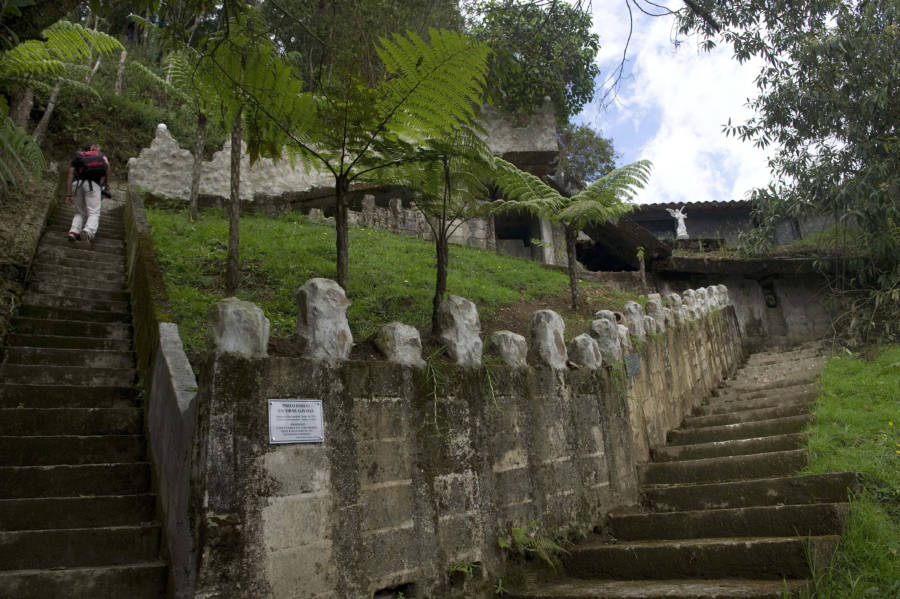
RAUL ARBOLEDA/AFP/GettyImagesThe general view of the Benedictine monastery taken during the opening of the first memorial for victims of violence in Colombia.
Pablo Escobar was killed in a shootout while still on the run a year later.
However, for La Catedral, Escobar's luxurious prison remained abandoned for years until the government rented the property to a group of Benedictine monks; some claim that the former owner still appears at midnight.

Comments
(6 Comments)