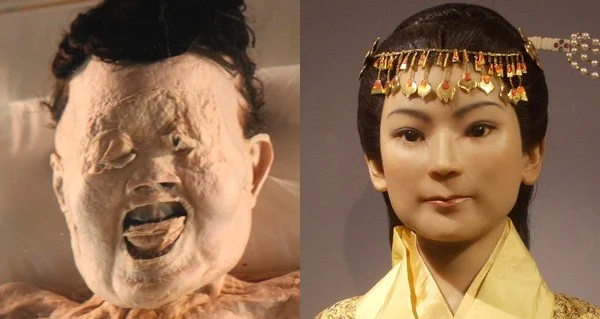
Xin Zhui, also known as Lady Dai, is a mummified woman from China's Han dynasty (206 BC - 220 AD) who is over 2,000 years old. Her own hair is still in place, her touch is soft, and her connective tissues are still flexible like a living person.
She is widely recognized as the best-preserved human mummy in history. Here is her astonishing story.
The Discovery of Xin Zhui, “Lady Dai” Mummy
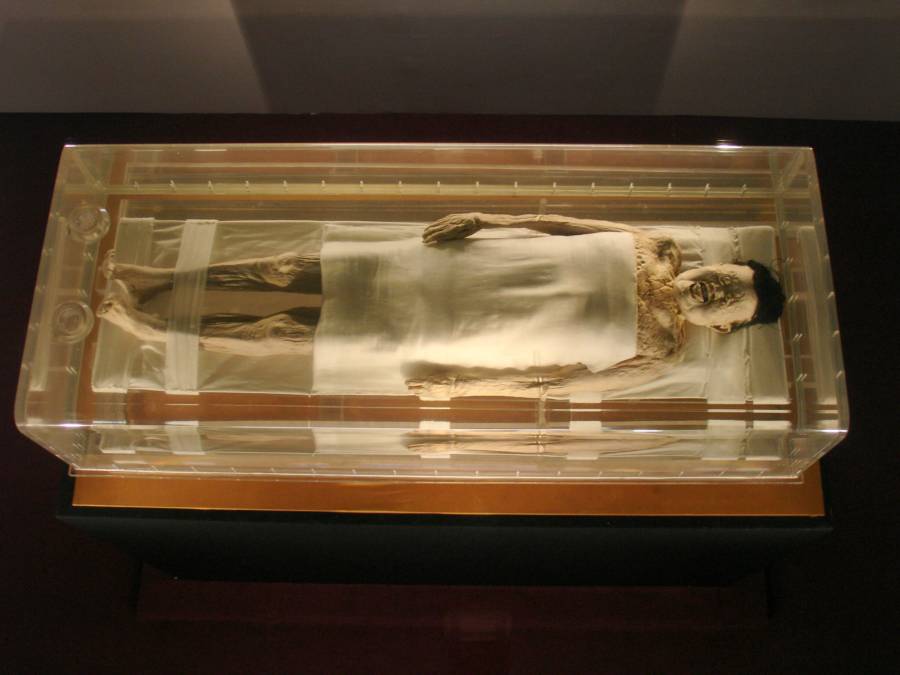
David Schroeter/FlickrXin Zhui's remains are referred to as the best-preserved mummy in the world.
Xin Zhui was discovered in 1971 when workers near an air raid shelter in Changsha stumbled upon her enormous tomb. The funnel-shaped tomb contained over 1,000 valuable artifacts, including makeup, toiletries, hundreds of lacquered items, and 162 carved wooden figures representing her servants. A meal was even prepared for Xin Zhui to enjoy in the afterlife.
However, in addition to the impressive structure, Xin Zhui's physical condition truly astonished researchers.
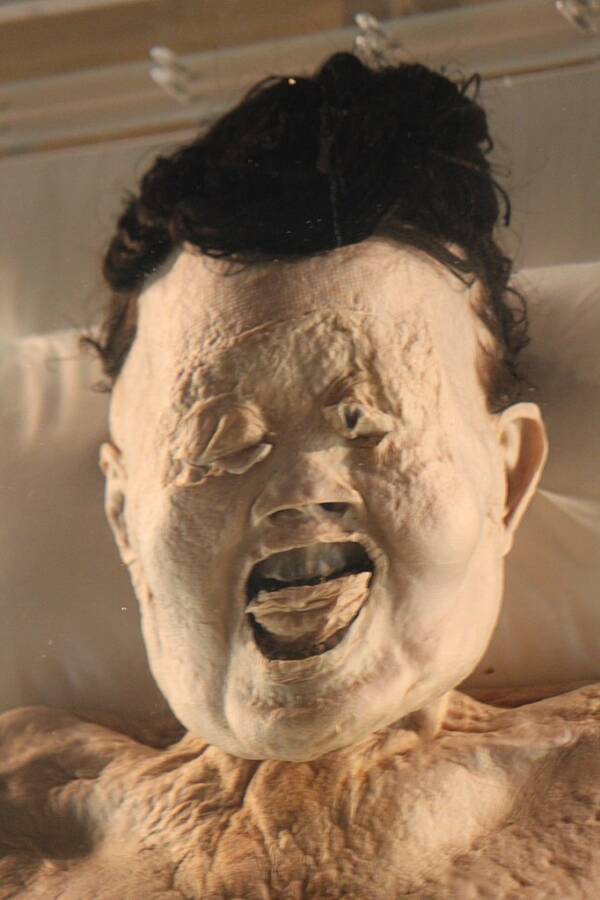
Wikimedia CommonsXin Zhui's face remains remarkably preserved thousands of years later.
When unearthed, it was revealed that her skin retained the texture of a living person, soft and moist to the touch. Her original hair was found intact, including on her head and inside her nostrils, along with her eyebrows and eyelashes.
Researchers Studying the World's Best-Preserved Mummy
Scientists conducted an autopsy and discovered that her 2,000-year-old body — she died in 163 BC — resembled that of a recently deceased person.
However, Xin Zhui's preserved body began to deteriorate immediately upon exposure to oxygen in the air. Therefore, the current images of Xin Zhui do not fairly reflect her initial discovery.
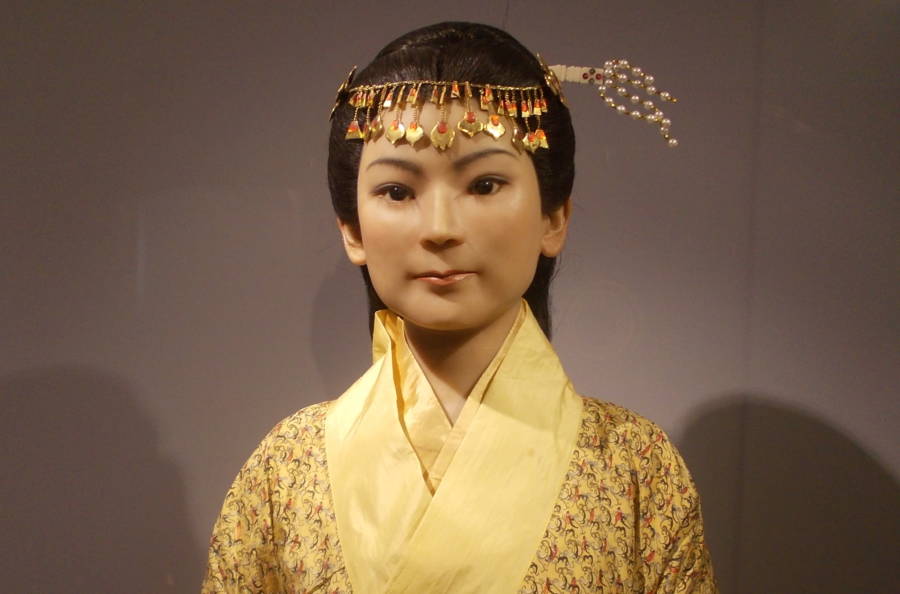
Wikimedia CommonsA recreation of Xin Zhui, also known as Lady Dai.
Additionally, researchers found that all her organs were intact and her veins still carried type A blood. These veins also showed clots, revealing the cause of death: a heart attack.
Xin Zhui's body also exhibited various additional ailments such as gallstones, high cholesterol, high blood pressure, and liver disease.
While examining Lady Dai, pathologists found 138 undigested melon seeds in her stomach and intestines. Since such seeds typically take about an hour to digest, it can be inferred that the melon was her last meal, consumed just before her heart attack.
How Was Xin Zhui's Lady Dai Mummy So Well Preserved?
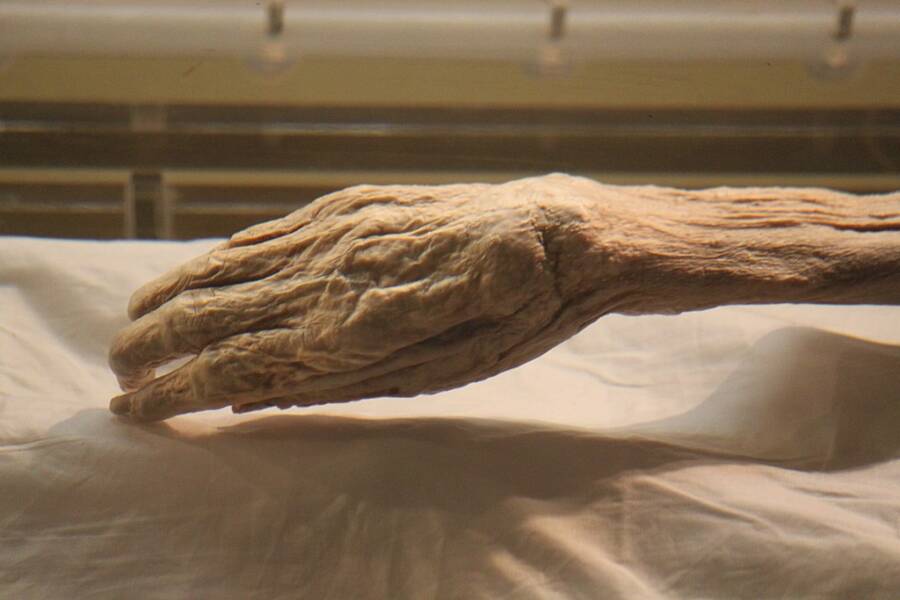
Wikimedia CommonsXin Zhui's hands have remained frozen in time for thousands of years.
Researchers refer to the airtight and complex tomb in which Lady Dai was buried.
Resting approximately 40 feet deep, Xin Zhui was placed inside the smallest of four cedar coffins, each nested within a larger one (think of Matryoshka dolls, but when you reach the smallest doll, you find the body of an ancient Chinese mummy).
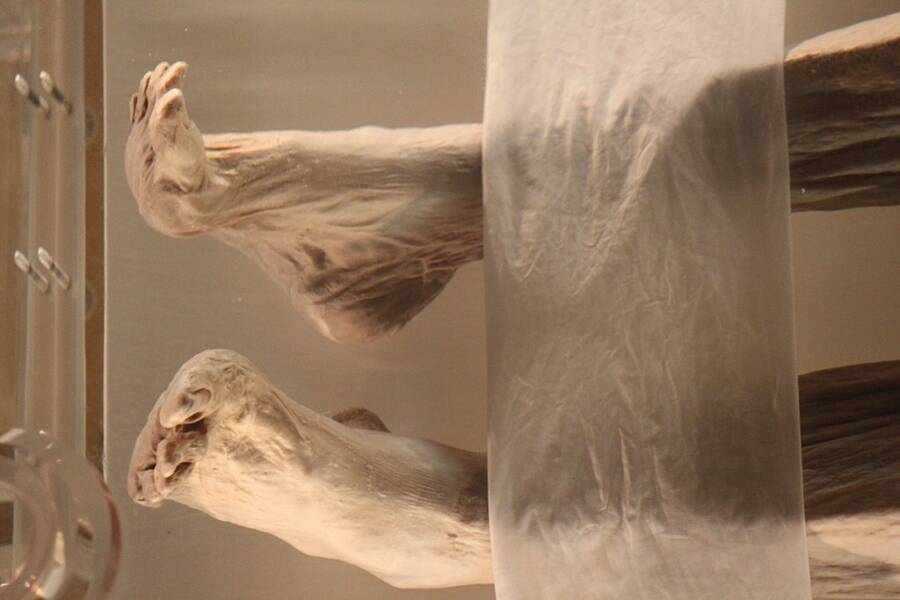
Wikimedia CommonsMore than 2,000 years later, Lady Dai's feet still retain their shape.
Wrapped in twenty layers of silk fabric, her body was found in 21 gallons of “an unknown liquid” containing traces of magnesium and mild acidity.
The site was covered with a thick layer of dough-like soil, and the entire structure was filled with moisture-absorbing charcoal and sealed with clay, preventing oxygen and decay-causing bacteria from entering the endless chamber. The top was sealed with an additional three feet of clay to prevent water ingress.
Who Was Xin Zhui Before She Became a Mummy?
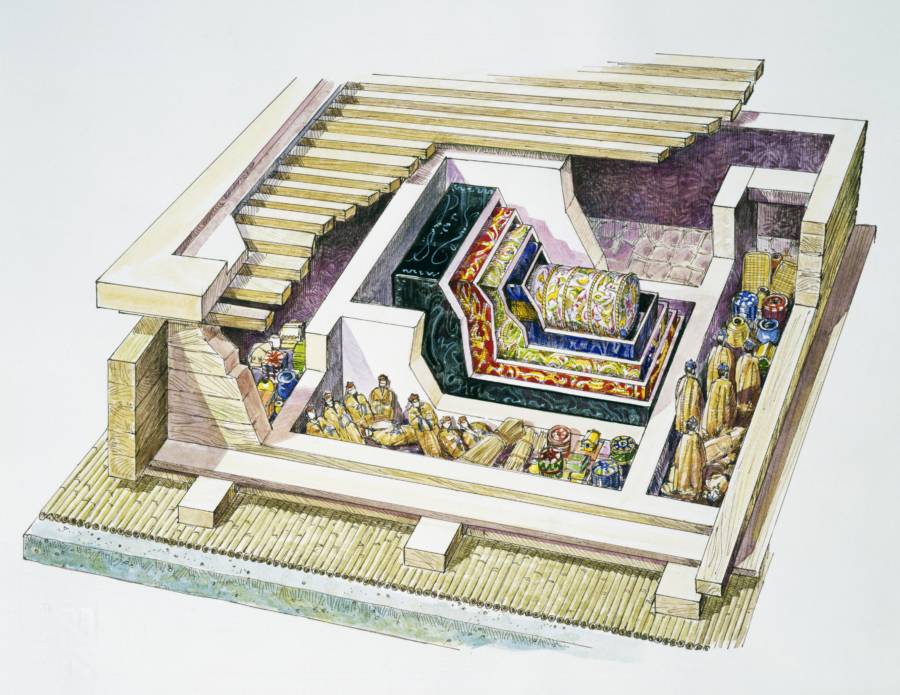
DeAgostini/Getty ImagesA drawing of Xin Zhui's burial chamber.
Despite knowing so much about Xin Zhui's burial and death, we know relatively little about her life.
Lady Dai was the wife of Li Cang, a high-ranking Han official (Dai Marquis), and she died young at the age of 50 due to her excesses. The heart attack that killed her resulted from obesity, inactivity, and an excessively luxurious diet.
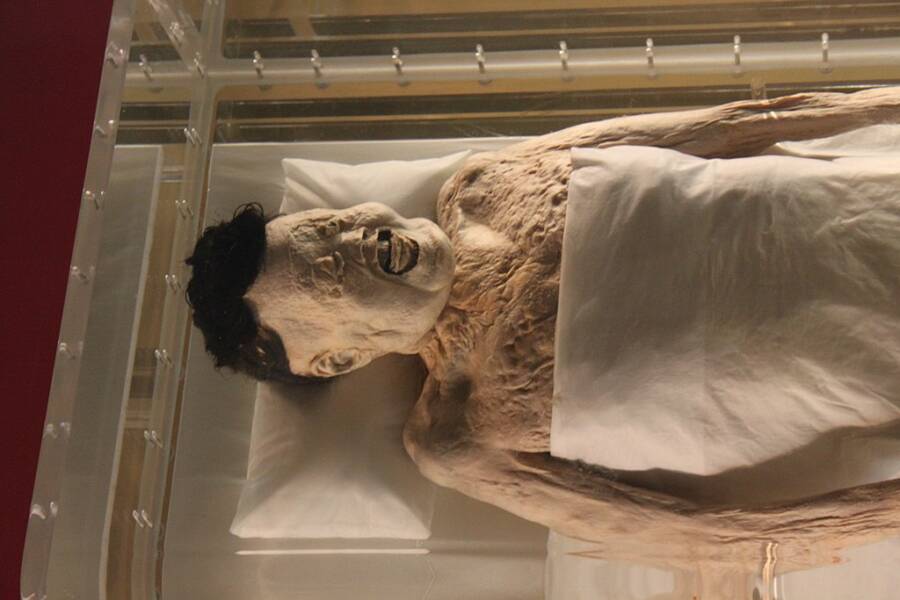
Wikimedia CommonsLady Dai, known as the best-preserved mummy in the world, continues to astonish experts with her remarkable state thousands of years later.
Still, her body remains perhaps the best-preserved corpse in history. Xin Zhui is currently on display at the Hunan Provincial Museum and serves as a key example in body preservation research.































Comments
(4 Comments)