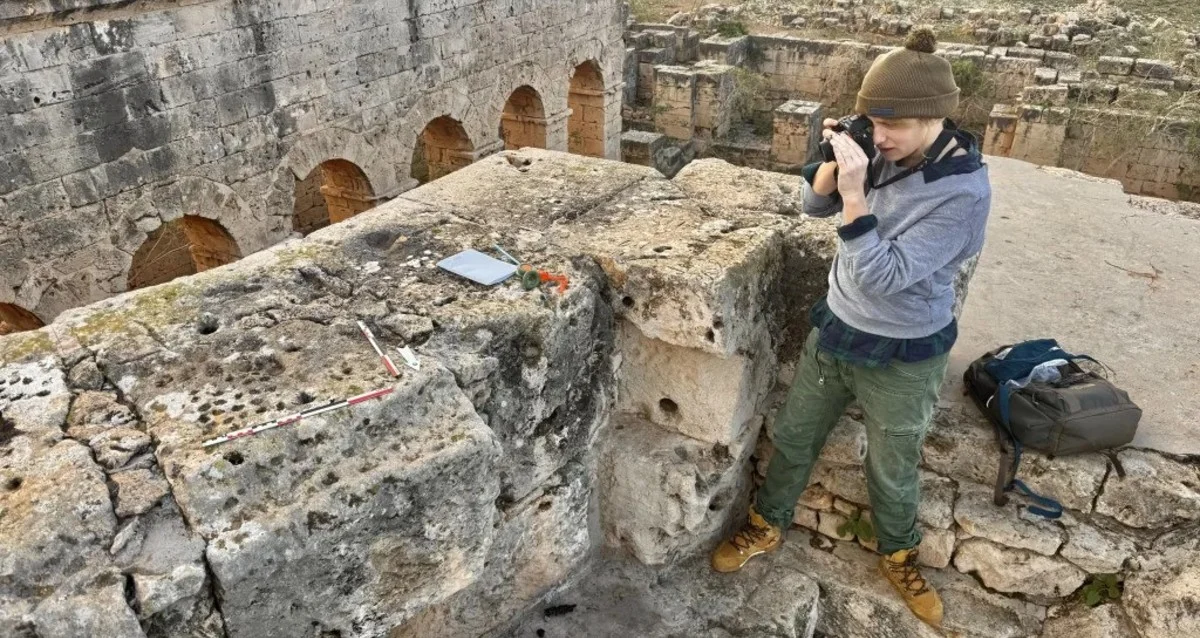
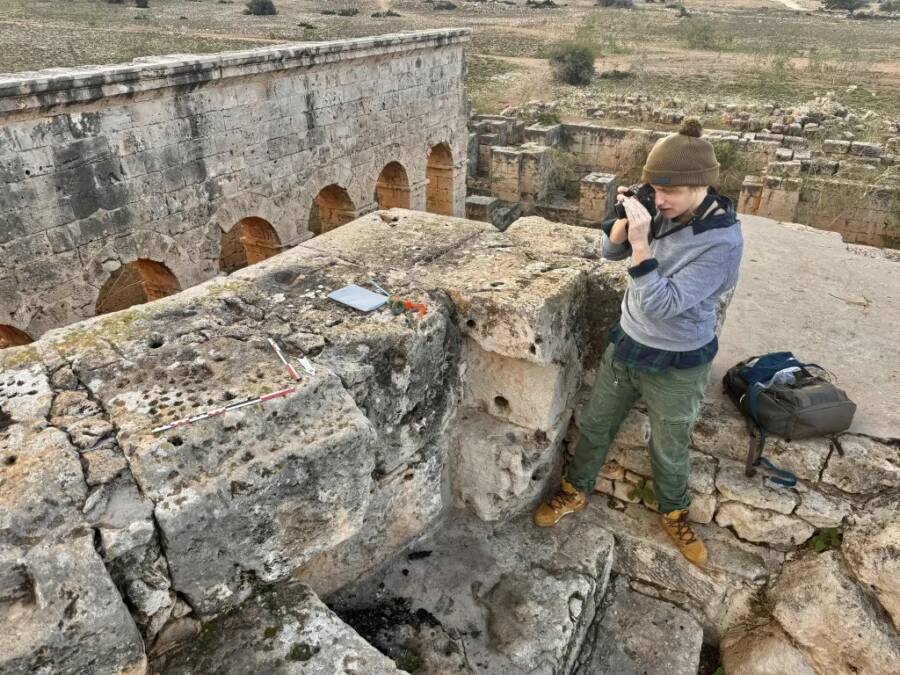
Radosław TusznioArchaeologist Zofia Kowarska is photographing the game boards at the ruins of Ptolemais.
The ruins of the ancient city of Ptolemais in modern Libya have long offered exciting archaeological discoveries. In recent years, archaeologists have conducted underwater dives to examine the city's acropolis and investigate an ancient shipwreck. However, one of the city's most interesting discoveries has been a collection of over 100 game boards, which has now been announced to the public.
These boards, likely used in games such as checkers and three stones, are believed to have been carved into the stones of ancient buildings by shepherds living in the area after the collapse of Ptolemais in the 7th century. The remnants of these stones can still be seen today.
Game Boards Found in the Ancient Greek Ruins of Ptolemais
According to sources from Science in Poland, the game boards were discovered by archaeologists from the University of Warsaw, who had been delayed for a long time in 2023 due to civil unrest. Archaeologist Zofia Kowarska began documenting the boards that were likely used in a game called siza.
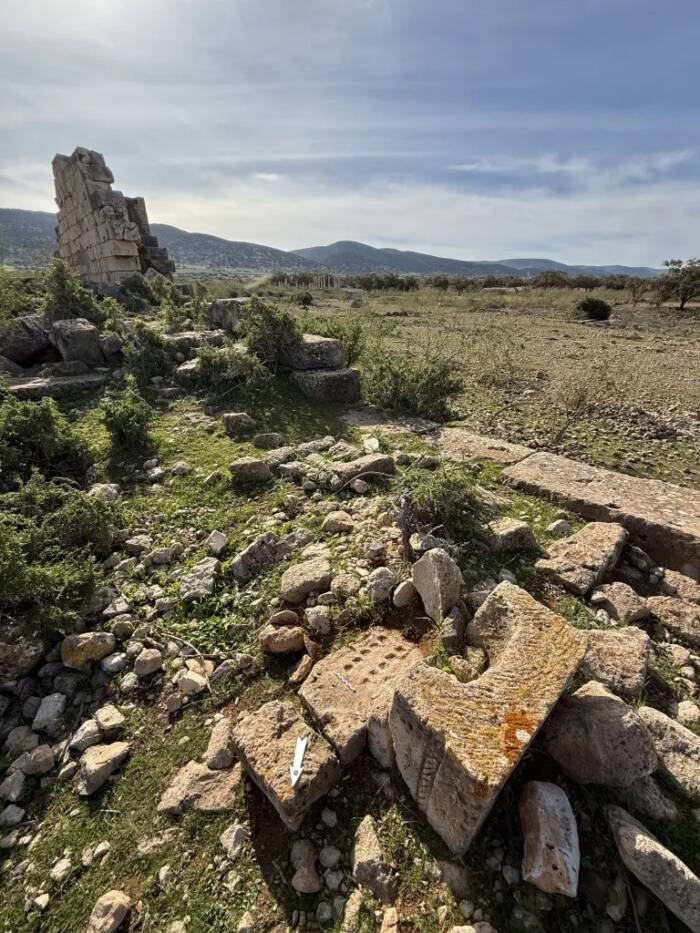
Zofia KowarskaOne of the game boards discovered by archaeologists from the University of Warsaw in Ptolemais.
There are many different versions of the games, and some resemble modern checkers or three stones. However, Kowarska was surprised to find dozens of boards scattered among the ruins when she initially thought only a few would be found.
“When I started my research, I thought only a few boards would be found, but a few days later I found over 100, and this is not the end; we will continue our research,” she said. “The presence of boards in the ruins indicates that these games were a quite common form of entertainment. Sometimes we find ten, twenty, or thirty boards together in one place.”
Although it is difficult to date the game boards precisely, archaeologists believe that the boards were carved into the remnants of the city for a long time after the Arab conquests of Ptolemais in the 7th century. It is thought that these boards were carved while shepherds played simple games to pass the time while watching over their grazing flocks.
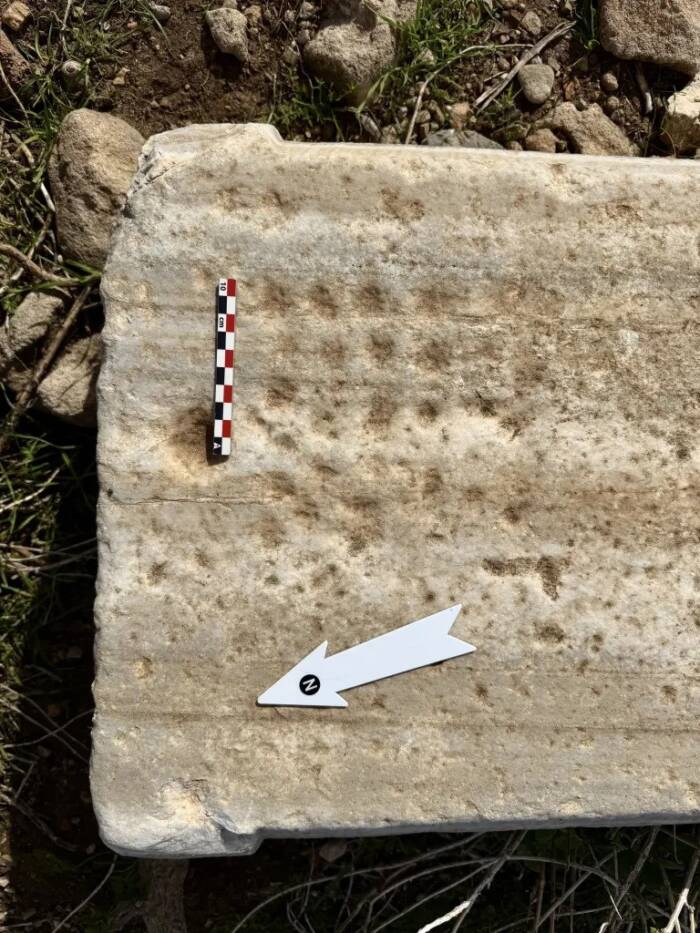
Zofia KowarskaA close-up view of a game board found in Ptolemais, which may have been used in a game resembling modern checkers or three stones.
“The area of the ancient city is undeveloped, but it is always surrounded by vast lands that are excellent pastures for animals, goats, and sheep,” Kowarska said. “We find boards in the ruins of buildings, at higher places than the surrounding terrain, and at the corners of buildings. We believe that people sat in these high places while grazing their animals, allowing them to observe the surroundings and the animals more comfortably. They would spend some time there and entertain themselves with games.”
However, while Ptolemais became a place where shepherds peacefully played games while watching over their flocks in modern times, it was a powerful and vibrant city in the ancient world.
The Rise and Fall of Ptolemais in Ancient Times
According to UNESCO reports, Ptolemais was established as a Greek settlement in the 7th century BC and was initially used as a port for the inland city of Barca. In the Hellenistic period, it was officially founded and named by Macedonian rulers, Ptolemy I or Ptolemy III, after the conquest of ancient Egypt following the death of Alexander the Great in 323 BC.
Ptolemais developed in the following years — including during the Roman period — and became an important Christian bishopric as Christianity began to spread in the region. Due to its Greek origins, the city had many Hellenistic features; it included defensive walls, city blocks, large houses, statues, and numerous baths. However, Ptolemais fell into ruins after the Arab conquests in the 7th century.
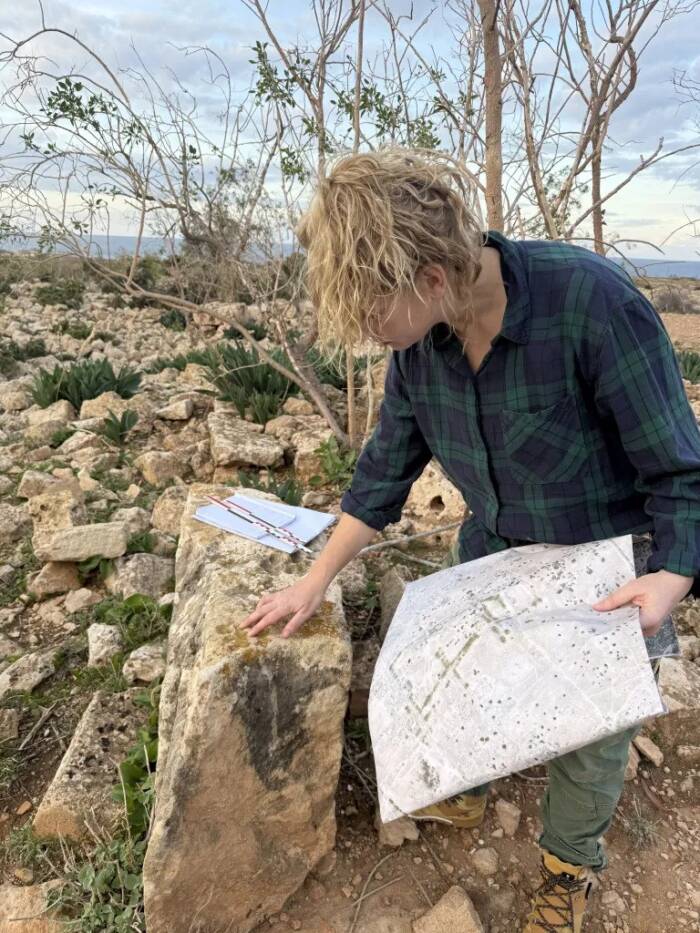
Radosław TusznioZofia Kowarska is examining the ruins of Ptolemais to find evidence of the carved game boards.
Once a bustling metropolis, Ptolemais quickly became a place ruled by shepherds and their flocks. The carved boards are a remnant of this period, and while the games played with these boards resemble modern games in the region, archaeologists note that these traditions are rapidly fading into the past.
“Some of the residents of present-day Tolmeita [a nearby village in Libya] still know the rules of these games,” Kowarska said, “but unfortunately, traditional entertainments are disappearing and other activities like mobile phone games are taking over.”




































Comments
(10 Comments)