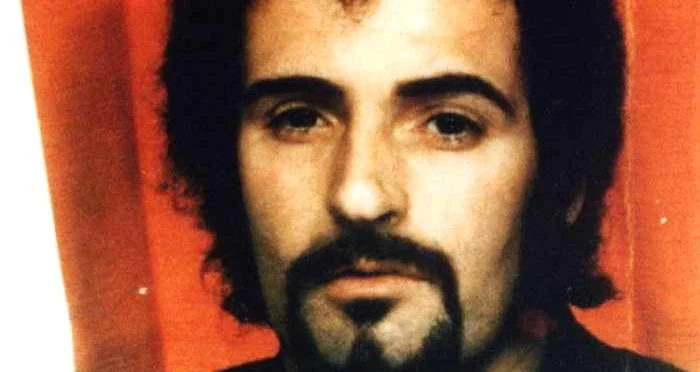
Between 1975 and 1980, for five years, Peter Sutcliffe terrorized Britain as the bloody Yorkshire Ripper.
Claiming to be on a divine mission to kill prostitutes, Peter Sutcliffe brutally murdered at least 13 women and attempted to kill seven more — all while repeatedly evading capture.
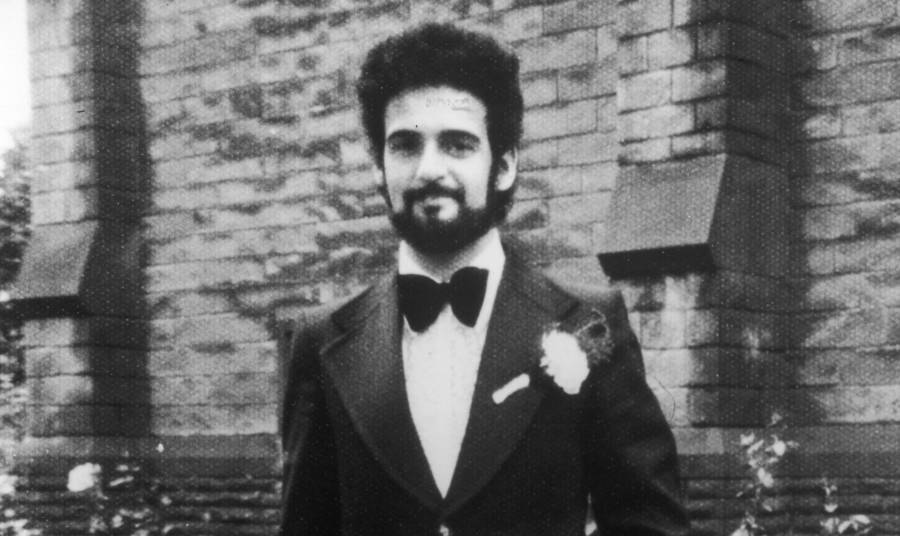
Express Newspapers/Getty ImagesPeter Sutcliffe on his wedding day, August 10, 1974.
Despite dying in prison from COVID-19 in November 2020, Peter Sutcliffe's horrific legacy as the Yorkshire Ripper continues to live on.
Peter Sutcliffe Creates a Normal Face as a Gravedigger
Peter Sutcliffe was born on June 2, 1946, in the working-class town of Bingley, Yorkshire. From a young age, Sutcliffe, who was a solitary and misfit individual, left school at 15 and transitioned from job to job, including working as a gravedigger.
As a young man, Sutcliffe began to be recognized among cemetery workers for his morbid sense of humor. He also developed an obsession with prostitutes and began to constantly watch them as they worked on the streets of Leeds.
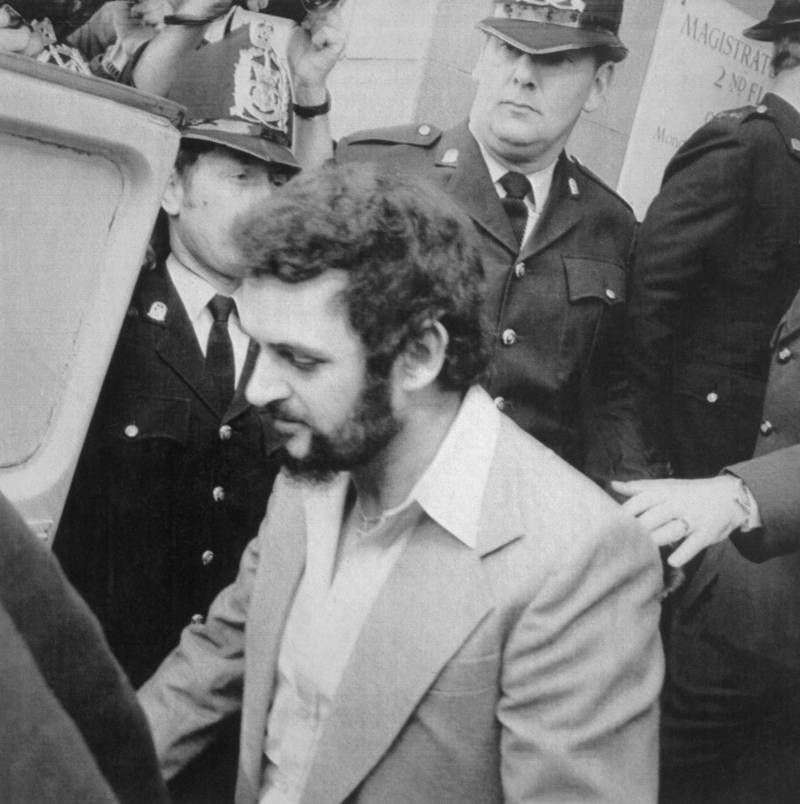
Bettmann/Contributor/Getty ImagesYorkshire Ripper Peter Sutcliffe under heavy police protection outside court on April 14, 1983.
However, as his morbid and watchful interests developed, Sutcliffe also began to build a relatively normal life for himself. In 1967, he met a local woman named Sonia Szurma, and the couple married in 1974. The following year, Sutcliffe obtained a heavy goods vehicle driving license.
Despite having a regular job opportunity and a spouse at home, this truck driving job allowed him to be on the road for long periods. Before long, Peter Sutcliffe would not just be content with watching prostitutes.
The Yorkshire Ripper Goes on a Blood Hunt
In 1975 — some believe he attacked women as early as 1969 — Peter Sutcliffe began a horrific murder spree that would earn him the name "Yorkshire Ripper."
It is known that Sutcliffe attacked at least four young women — one was struck on the head with a stone inside a sack in 1969, while the other three were attacked with a hammer and knife in 1975 — before turning directly to murder.
The motive remains unclear, but some claimed he attacked prostitutes out of a desire for revenge. The Yorkshire Ripper said he was compelled to kill by the voice of God.
The method of murder remained quite consistent throughout his spree. He would typically strike his victims, mostly prostitutes, from behind with a hammer before attacking them repeatedly with a knife. The victims of the Yorkshire Ripper were also consistent and were entirely women; some were vulnerable women like prostitutes.
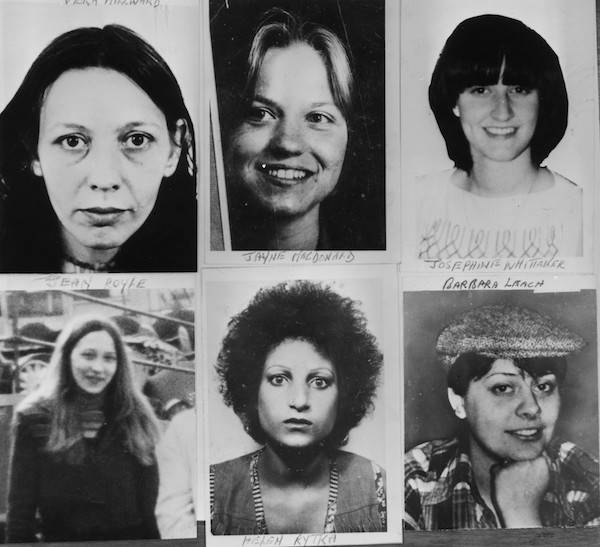
Keystone/Getty ImagesSix women murdered by Peter Sutcliffe.
His first murder victim, Wilma McCann, was struck on the head with a hammer in late 1975 and stabbed 15 times in the neck and abdomen. The Yorkshire Ripper attacked McCann, a mother of four, at night while her children were asleep about 150 meters away in the family home.
Sutcliffe's next victim, Emily Jackson, suffered more than three times the knife wounds inflicted on McCann. Sutcliffe picked her up while she was selling her body on the streets of Leeds in January 1976 and dragged her to a nearby area, where he attacked her with a screwdriver, leaving a boot print on her leg.
The attacks continued with this same horrific signature — hammer blows followed by brutal stabbings and sexual assaults to the chest and neck areas — until 1977. However, that year, the police finally began the process of identifying the Yorkshire Ripper.
An Unfortunate Investigation Missed Peter Sutcliffe
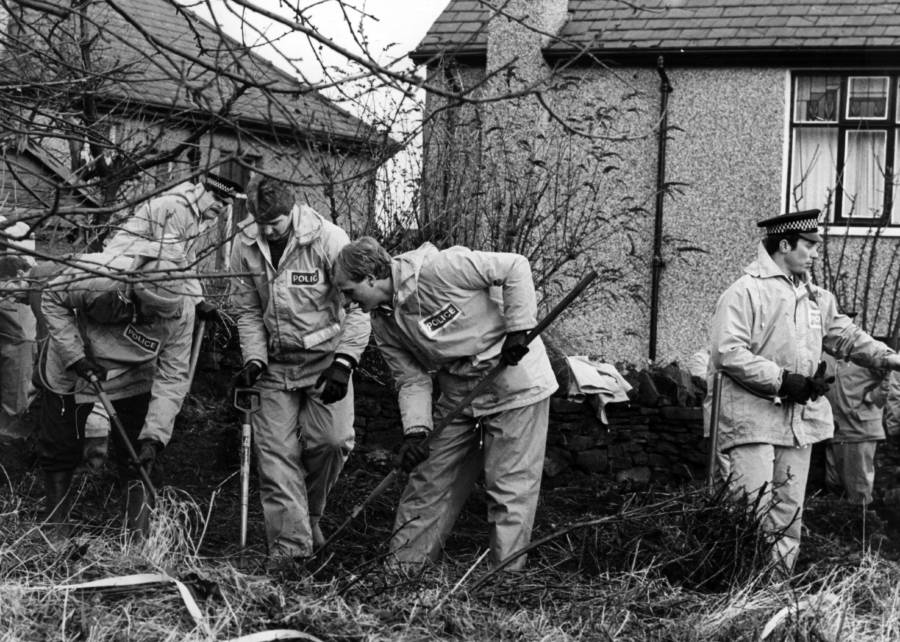
Andrew Varley/Mirrorpix/Getty ImagesPolice are searching behind his house after the arrest of Peter Sutcliffe on January 9, 1981.
More than 150 police officers were involved in the Yorkshire Ripper investigation, but they could not catch Peter Sutcliffe for years. Moreover, they lost his trail with fake letters and a voice recording falsely claiming to be the killer.
In fact, the first clue in the case came in 1977; a five-pound note was found in a hidden compartment of the bag of Jean Jordan, a dismembered prostitute. The police thought that a client might have given Jordan that note and that the client might have information about her death.
The police were able to trace the note to a specific bank and discovered through analyzing the bank's transactions that the note could be one of the fares taken by approximately 8,000 people.
Authorities were able to question about 5,000 of these individuals — including Peter Sutcliffe — but his alibi (a family party) was deemed credible.
The Yorkshire Ripper, who managed to evade the police, attacked another prostitute named Marilyn Moore just two months later. However, she survived and provided the police with a detailed description of the attacker; this description matched Sutcliffe's appearance.
Additionally, tire tracks at the crime scene matched those found in Sutcliffe's previous attacks, leading the police to believe they were very close to the serial killer.
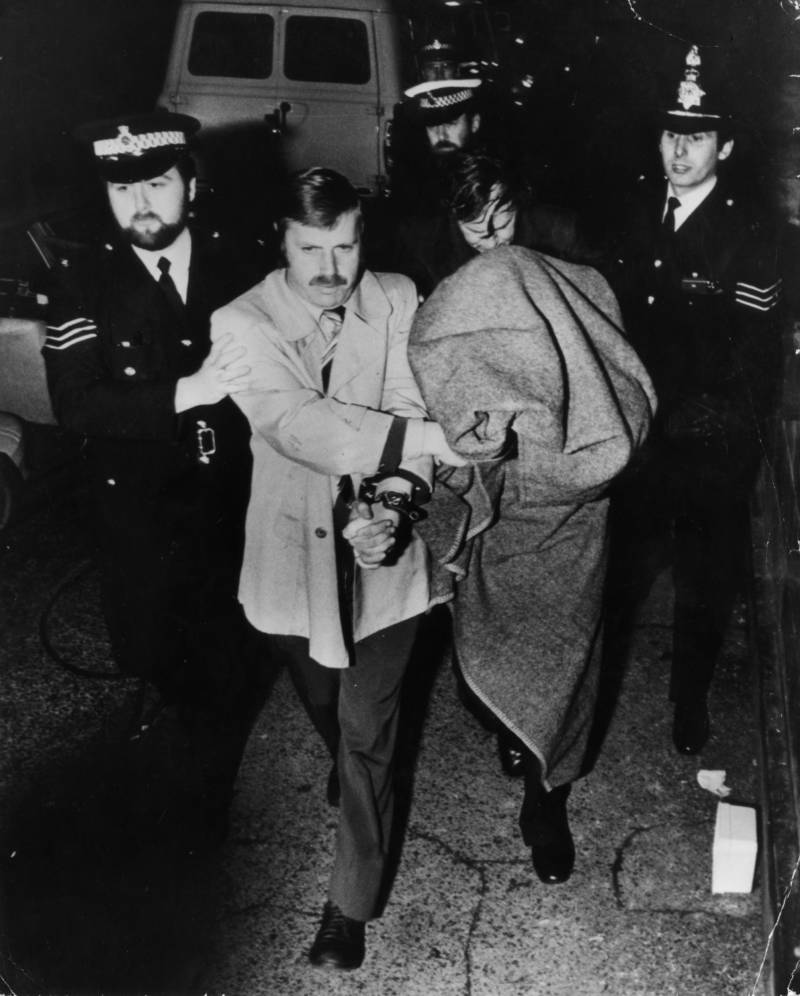
Keystone/Getty ImagesPolice are taking Peter Sutcliffe, the killer known as the Yorkshire Ripper, to Dewsbury Court on January 6, 1981.
The five-pound note, Sutcliffe matching Moore's description, and his vehicles frequently being seen in the areas where the murders occurred led the police to question Sutcliffe frequently. However, each time there was not enough evidence, and Sutcliffe always had a corroborating alibi.
Authorities questioned Peter Sutcliffe a total of nine times in connection with the Yorkshire Ripper murders — and failed to link him to them.
The police could not catch Peter Sutcliffe as the Yorkshire Ripper, but they were able to arrest him for drunk driving in April 1980. While awaiting the trial process, he killed two more women and attacked three others.
During this time, in November of that year, Sutcliffe's acquaintance Trevor Birdsall reported him to the police as a suspect in the Yorkshire Ripper case. However, the documents he provided got lost among other reports and information related to the case — and the Ripper frustratingly remained free.
Yorkshire Ripper Finally Caught
On January 2, 1981, two police officers approached Sutcliffe, who was parked in an area frequently visited by prostitutes and their clients. The police determined that the vehicle had fake license plates.
Sutcliffe was arrested for this minor offense, but when they realized his appearance matched the descriptions of the Yorkshire Ripper, they began to question him regarding this case.
It soon became clear that Sutcliffe was wearing a V-neck sweater under his pants and had pulled his arms over his legs, exposing the V part to his genital area. Ultimately, the police determined that Sutcliffe did this to perform sexual acts on his victims while kneeling over them.
After two days of questioning, Peter Sutcliffe confessed to being the Yorkshire Ripper and detailed many of his crimes the next day.
Sutcliffe was tried for 13 counts of murder. He did not plead guilty to the murder charge but accepted the manslaughter charge on the grounds of diminished responsibility; he claimed he had been diagnosed with paranoid schizophrenia and that he was an instrument of God's will to kill prostitutes.
This was exactly what he told his wife Sonia Sutcliffe, who knew nothing throughout all the murders. Sutcliffe revealed the truth to her immediately after his arrest. Sutcliffe recalled:
“After I was arrested, I personally told Sonia what happened. I asked the police not to tell her, just to bring her in and let me explain. She had no idea, not the slightest clue. There was no blood on me or anything else. There was nothing to tie me to it; I was taking my clothes home and washing my own laundry. I was working all day, and she was working as a teacher, so I could only do this at night. When I told her, she was in deep shock. She couldn't believe it.”
It is unknown whether Sutcliffe's wife believed the mission story from God, but the jury certainly did not. Peter Sutcliffe was found guilty on all 13 charges and one count of attempted murder and was sentenced to 20 consecutive life sentences. The reign of the Yorkshire Ripper was over.
The Long Shadow of Peter Sutcliffe's Savage Crimes
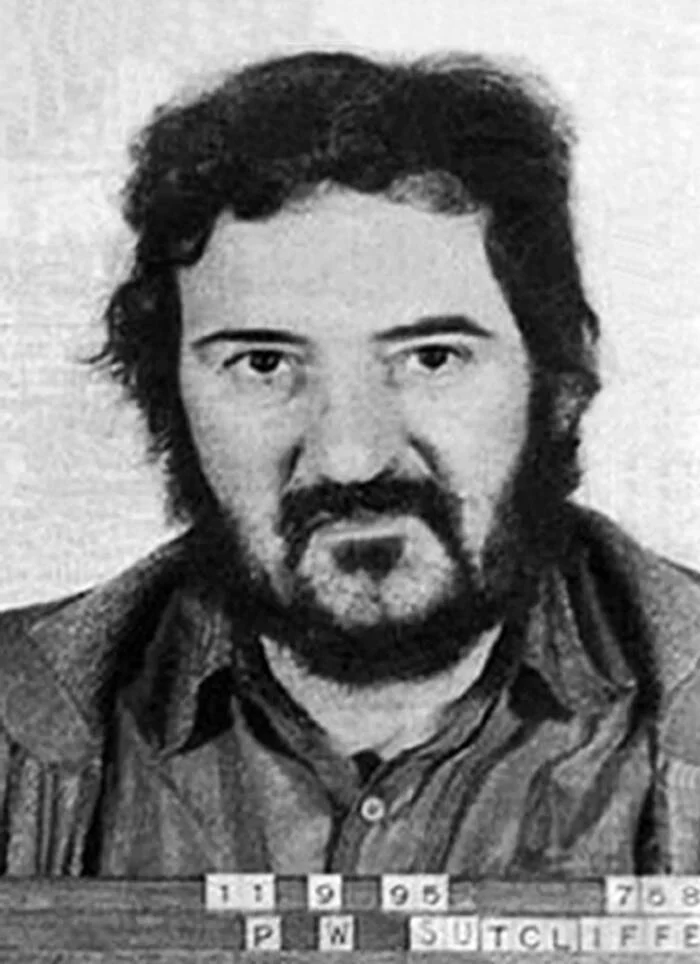
Public DomainDespite Peter Sutcliffe killing 13 victims as the Yorkshire Ripper, some say he may have killed 10 or more other women as well.
In 1984, Peter Sutcliffe was diagnosed with paranoid schizophrenia and transferred to a psychiatric facility known as Broadmoor Hospital, even though he had been found mentally fit to stand trial.
Ten years later, his wife divorced him and he was attacked several times by other inmates.
An attack in 1997 left Sutcliffe blind in his left eye; another inmate attacked him with a pen. Ten years later, another inmate attacked Sutcliffe with deadly intent, saying, "You damn rapist, killer, I will blind your other eye."
Sutcliffe survived this attack and was deemed fit for release from Broadmoor two years later. In 2016, he was transferred to a non-psychiatric prison.
The Yorkshire Ripper died at the age of 74 from COVID-19 in November 2020 at Her Majesty's Frankland Prison in County Durham, but the legacy of his search for blood continues to live on.
While alive, Sutcliffe applied for parole but was quickly rejected. In the words of the High Court judge overseeing the application, "This was a campaign of murder that terrorized a large part of Yorkshire for several years... It is hard to imagine how one man could account for so many victims outside of a terrorist attack."
Meanwhile, Peter Sutcliffe's wife arranged a secret funeral for her ex-husband after his death. His family was upset that they were not included in the ceremony, hoping to leave behind this horrific chapter while seeking some "closure" in his death.







Comments
(7 Comments)