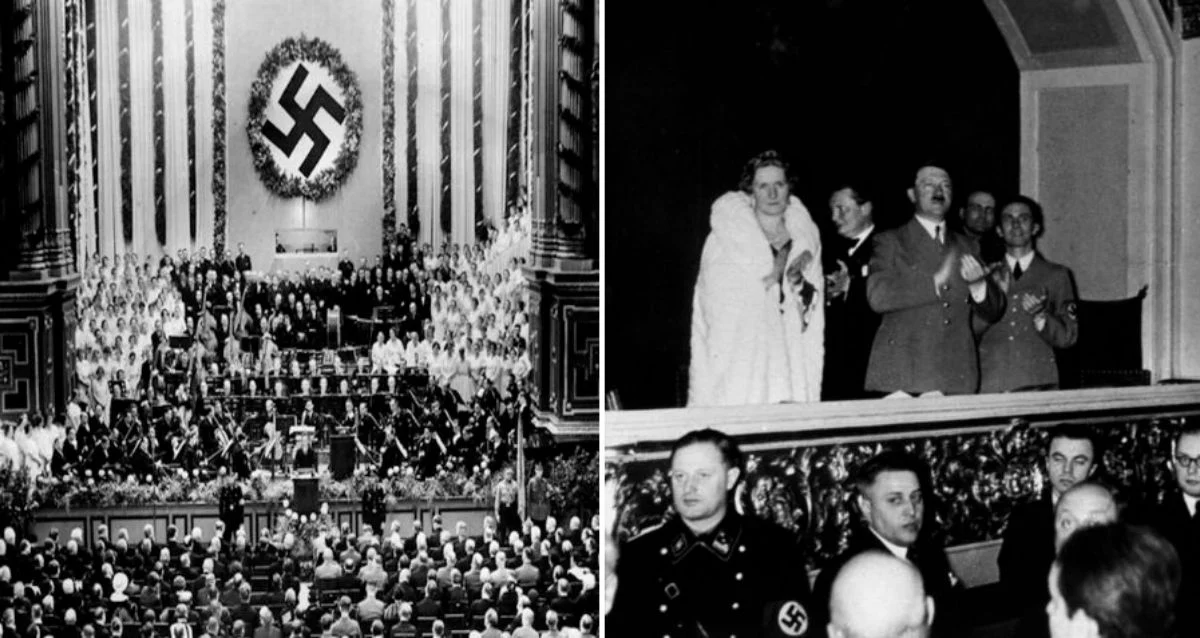
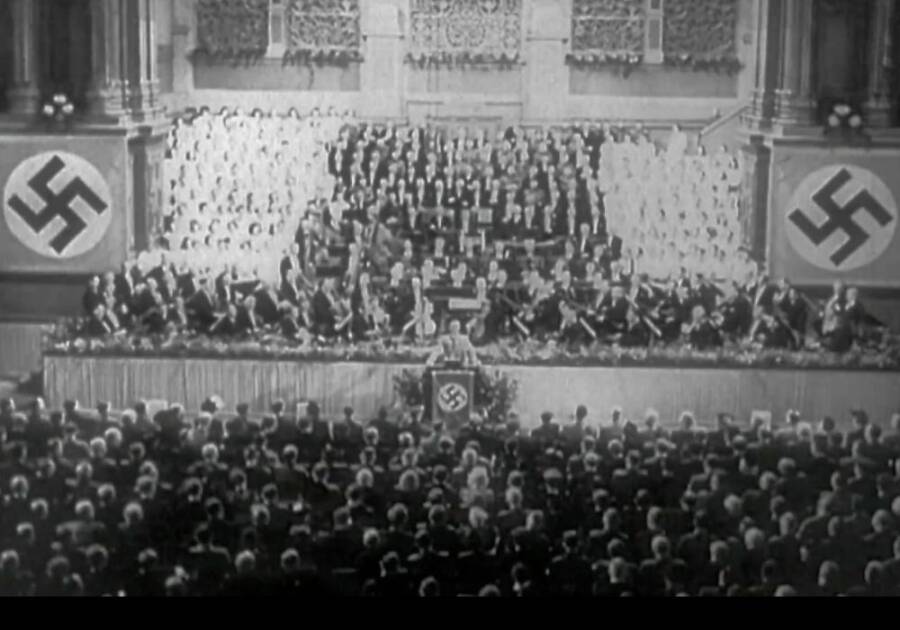
Berliner Philharmoniker/YouTubeThe performance of the Berlin Philharmonic Orchestra in Nazi Germany in the 1940s.
As the Red Army approached the German capital in April 1945, the Berlin Philharmonic Orchestra continued to play. Amid the blackouts in the city and the distant sounds of artillery, the symphony orchestra presented a concert of Beethoven and the closing piece of Richard Wagner's Twilight of the Gods to a full audience.
The choice of song was chilling. Wagner had ended his musical drama with the death of Brünnhilde; this Valkyrie's suicide led to the destruction of Valhalla. This situation chillingly reflected the inevitable collapse of the Nazi regime.
At the end of the performance, members of the Hitler Youth distributed cyanide capsules to the audience. Four days later, the Soviets launched their final assault against the Nazis. By the time the Battle of Berlin ended, Adolf Hitler was dead, and Germany had to surrender.
During these chaotic few weeks, the last wartime concert of the Berlin Philharmonic echoed as a cold harbinger of what was to come in the devastated city.
History of the Berlin Symphony Orchestra
Berliner Philharmoniker was founded in 1882 by a group of musicians who left due to poor working conditions under their former conductor. The symphony orchestra emerged from World War I intact, but financial difficulties in the 1920s and early 30s nearly ended its musical ambitions.
The Berlin Philharmonic managed to survive once again - but at a cost. Its chief conductor Wilhelm Furtwängler sought funding from the Third Reich. Joseph Goebbels, the chief propagandist of the Nazi Party, agreed to provide financial support if the group accepted to be a cultural ambassador for Adolf Hitler's Germany. Thus, Reichsorchester was born.
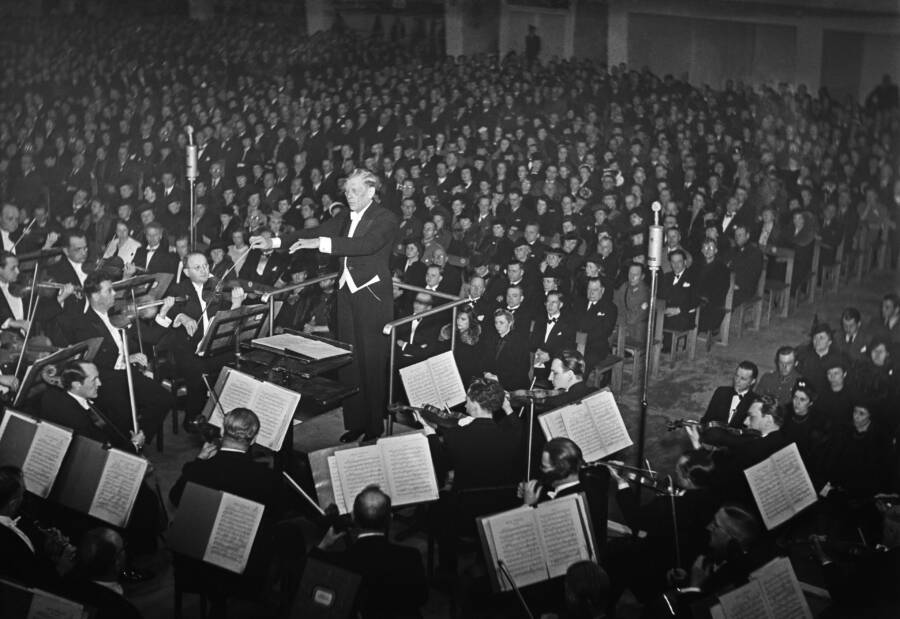
Finnish Heritage AgencyThe performance of the Berlin Philharmonic Orchestra in Helsinki in 1941.
The remainder of the 1930s brought darker struggles with Hitler's campaign against Germany's Jewish population. Four members of the orchestra left the country when it became clear their homes were no longer safe. By the end of 1935, musicians had to obtain "Aryanization cards" to keep their jobs.
Conductor Szymon Goldberg left the orchestra in 1934. According to the official website of the Berlin Philharmonic, Goldberg later recalled: "As a Jew and a Pole, I knew I could not expect anything good from staying in Hitler's Germany, so I decided to get out of my contract with the Berliner Philharmoniker."
Five years later, World War II officially began. This would result in further losses for the Berlin Philharmonic.
The Berlin Philharmonic During World War II
Despite the chaos of war, the Berlin Philharmonic continued its performances and circulated internationally as the music of the Third Reich - which led to much controversy.
In April 1942, the orchestra played Beethoven's Ninth Symphony for Hitler's birthday. After the concert, Joseph Goebbels approached the conductor's podium and shook hands with Furtwängler. Although Furtwängler did not agree with the ideology of the Nazi Party, he had to greet Goebbels on stage knowing that refusing him could cost him his job, or even his life.
This handshake led to international criticism, and Furtwängler ultimately had to flee to Switzerland to avoid arrest due to several other disputes he had with Goebbels.
Six members of the Berlin Philharmonic lost their lives during the war, either from bombings or by suicide. In January 1944, the Philharmonie concert hall was destroyed by British bombers, and the orchestra had to move to temporary venues.
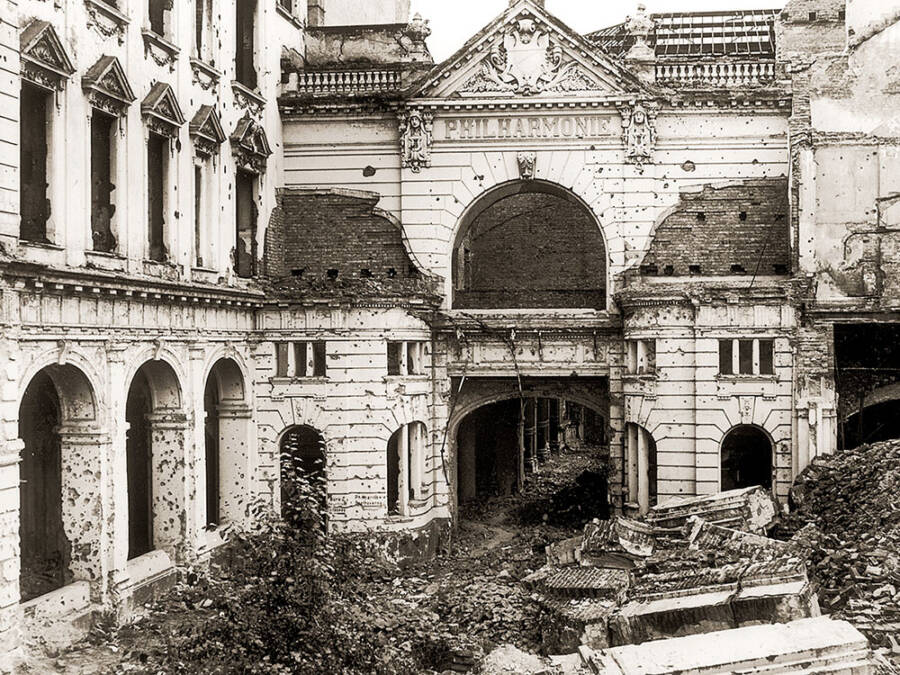
Berlin State ArchivesThe Philharmonie building after being bombed by British forces in 1944.
As it became clear that Berlin would fall, Goebbels ordered all orchestra musicians to be assigned to the Volkssturm as a last desperate defense. Then, Hitler's personal architect Albert Speer intervened.
The Last War Concert of the Berlin Philharmonic
Speer wanted to organize a final concert for the Berlin Philharmonic. According to Gitta Sereny's 1995 biography Albert Speer: His Battle with the Truth, Speer had the musicians' files removed from the liquidation office and told the orchestra manager to prepare for the final performances. "When I told them to play Bruckner's Romantic Symphony, I said it meant the end was near and that the musicians needed to prepare to leave Berlin," Speer reported.
On April 12, 1945, the Berlin Philharmonic indeed played Bruckner's symphony. Speer's setlist also included a Beethoven concert and the final scene of Richard Wagner's Twilight of the Gods.

Public DomainThe orchestra's last war performance included "Brünnhilde's Immolation Scene" from Twilight of the Gods.
The end of Wagner's musical drama closes with the end of the old Scandinavian order and the fall of Valhalla, and the eerie atmosphere in the concert hall that night was palpable. According to Sereny's biography, Luftwaffe officer Nicolaus von Below later wrote of the event: "It was unforgettable. I sat with Speer and Admiral Dönitz and listened to Beethoven's Violin Concerto, the finale of Götterdämmerung, and Bruckner's symphony. Could such a moment, such an experience exist?"
When the concert ended, it was claimed that members of the Hitler Youth distributed cyanide capsules to the participants. High-ranking Nazi officials would use similar tablets to commit suicide as the Red Army approached Berlin. In fact, Soviet troops were already on their way.
Four days after the Berlin Philharmonic's performance, on April 16, the Red Army began its final assault against the Nazis. The Battle of Berlin lasted just over two weeks. This resulted in Hitler dying alongside Goebbels in his Führerbunker.
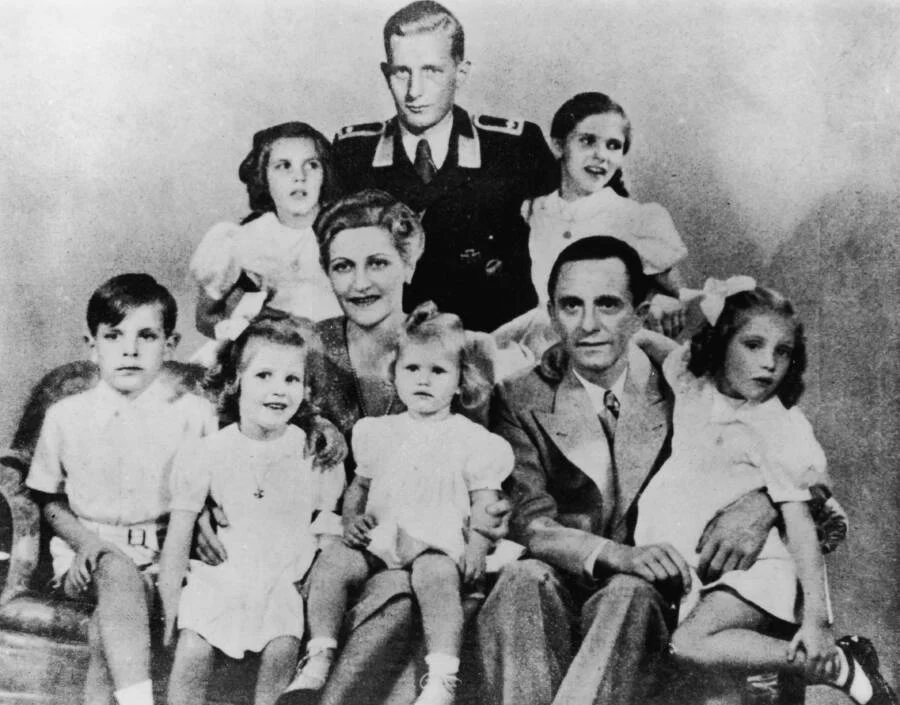
German Federal ArchivesJoseph Goebbels and his wife Magda killed themselves and their six young children in Hitler's Führerbunker on May 1, 1945.
Germany officially surrendered on May 7, 1945. In the following days of that month, the Berlin Philharmonic took the stage again. Leo Borchard had taken over as chief conductor, but he too would soon meet a terrible fate. Before the year ended, he was shot and killed by American troops for failing to stop at a checkpoint.
Today, the Berlin Philharmonic is one of the most acclaimed orchestras in the world. However, its haunting past still follows it, and its ghosts are perhaps best defined by that final performance in April 1945.























Comments
(9 Comments)