Did you like this gallery?
Share:
- Share
-
 Flipboard
If you liked this article, you should also check out these popular articles:
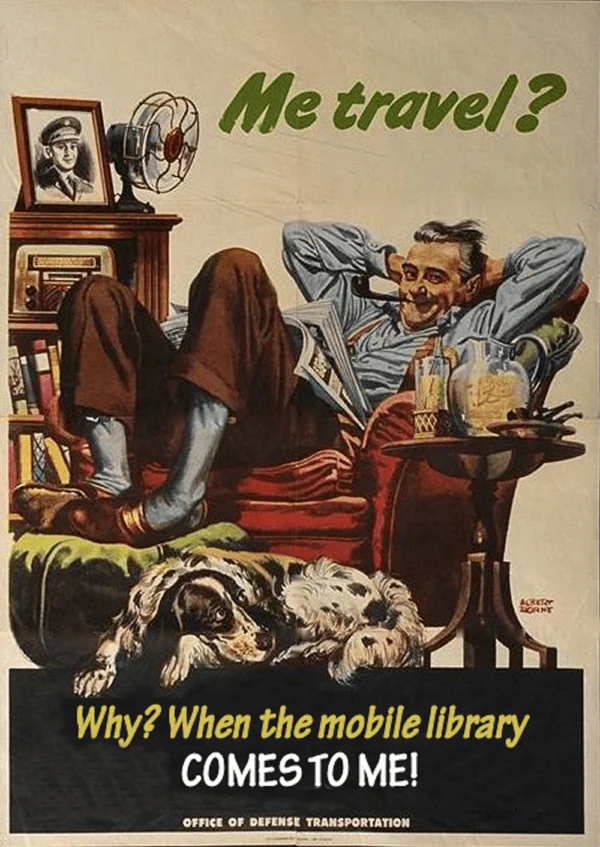
Is there anyone who doesn't want to curl up with a book? After this poster by Albert Dorne, no one will!
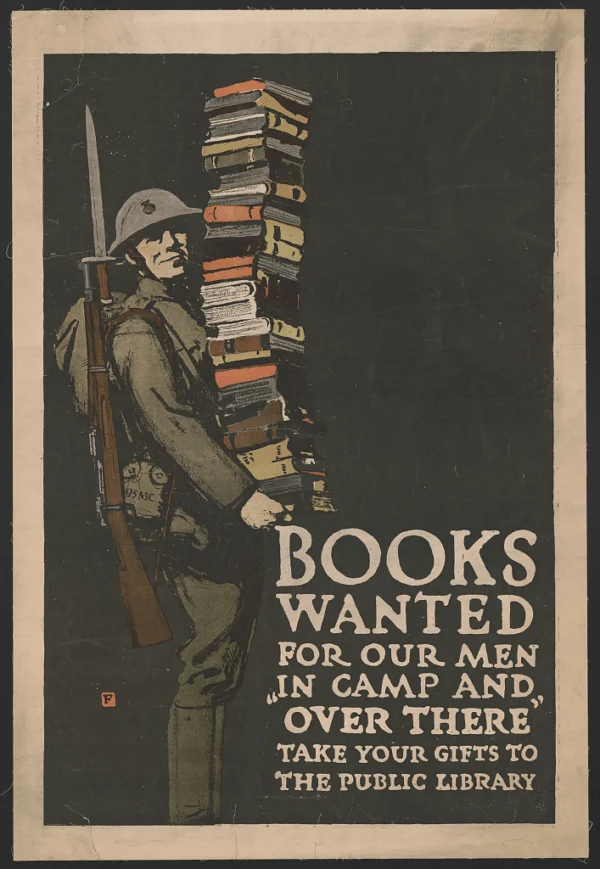
This poster created by Charles Buckles encouraged Americans to support soldiers by donating books. Between 1918 - 1923.
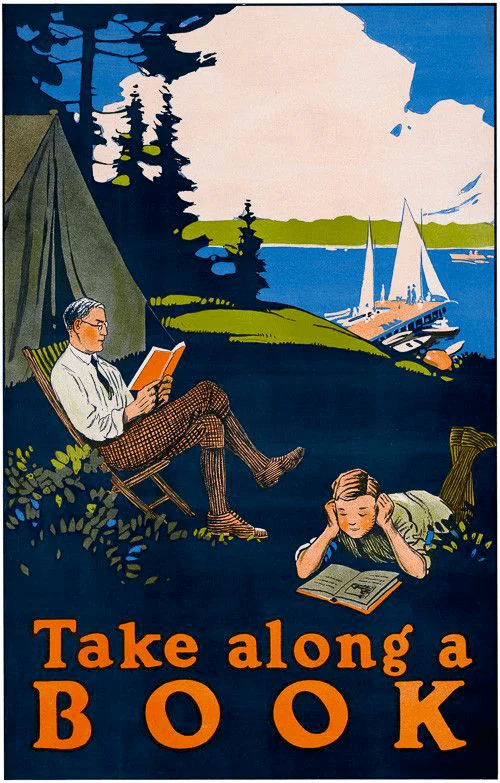
This 1910 poster shows a father and son enjoying reading in nature.
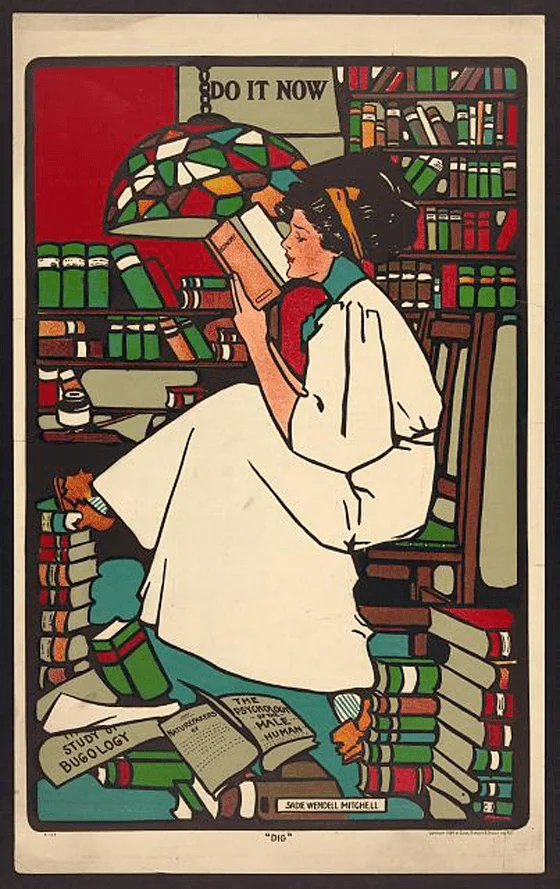
Sadie Wendell Mitchell created this poster around 1909 to encourage women to read. The title of the book at the woman's feet is Human Psychology.
Albert M. Bender created this poster for the WPA Art Project between 1936 and 1940.
This poster for Chicago Public Library Week was created between 1936 and 1941 under the WPA.
Books Are Weapons, Federal Art Project, 1941-1943. New York Public Library Schomburg Collection.
There's nothing like a good book. This poster was prepared by Jon O. Brubaker for Children's Book Week in 1926.
Rain is bad for a book! Gregg Arlington, artist, Illinois W.P.A. Art Project, 1936 - 1940.
A Bookmark Would Be Better! Gregg Arlington, artist, Illinois W.P.A. Art Project, 1936 - 1940.
This breaks the spine of a book! Gregg Arlington, artist, Illinois W.P.A. Art Project, 1936 - 1940.
Don't glue a book shut. Gregg Arlington, artist, Illinois W.P.A. Art Project, 1936 - 1940.
Holiday Reading Club. WPA Federal Art Project, 1936 - 1939.
Little Miss Muffet. Gregg Arlington, artist, Illinois WPA Art Project, 1936 - 1940.
January - a year full of good reads. Illinois WPA Art Project, 1936 - 1941.
A poster for the Library Project shows a woman blowing in the wind and books by Scott, Dumas, Thackeray, Dickens, Austen, and other authors. 1936.
September - back to work - back to school - back to BOOKS. V. Donaghue, WPA Art Project, 1940.
Wee Willie Winkie runs through town... to count many children reading library books. Sara Cleo, artist, Federal Art Project, 1940.
10,000 current books for curb service. Chicago Public Library, Illinois WPA Art Project, 1936 - 1941.
What's in Science? 1950s.
As the World Changes. 1950s.
Book Hunter. 1950s.
You can't start younger! 1955.
The library turns. 1950s.
Good books also satisfy your curiosity. 1950s.
A date... with a good book? 1950s.
When you want to learn the facts, visit your school library. 1950s.
Which family reads together? 1950s.
There is a future in books. 1950s.
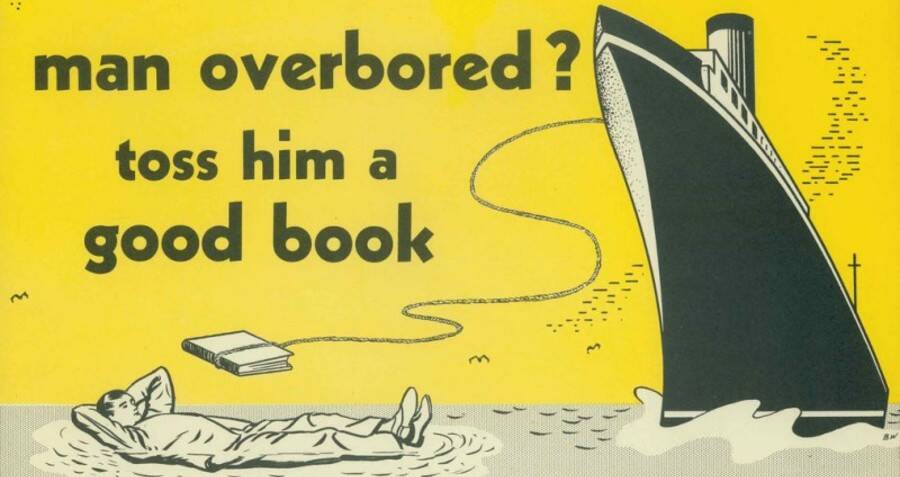
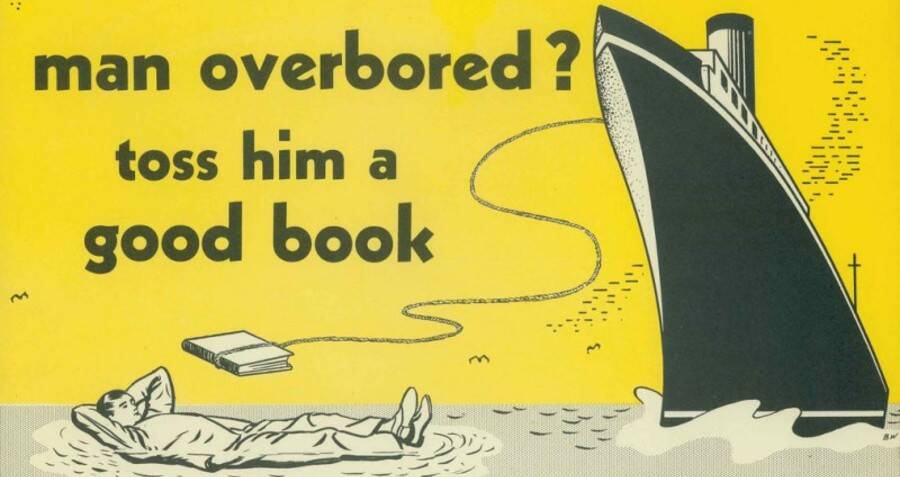
Is the man bored? 1950s.
Are you bored? Read. 1950s.
Are you bored? Why don't you read an exciting book? 1950s.
Read ... fun! 1950s.
Read more, know more! 1950s.
There is romance in books. 1950s.
Sea Stories. 1950s.
What is your future? 1950s.
Did you like this gallery?
Share:
- Share
-
 Flipboard


Literacy in the 1900s
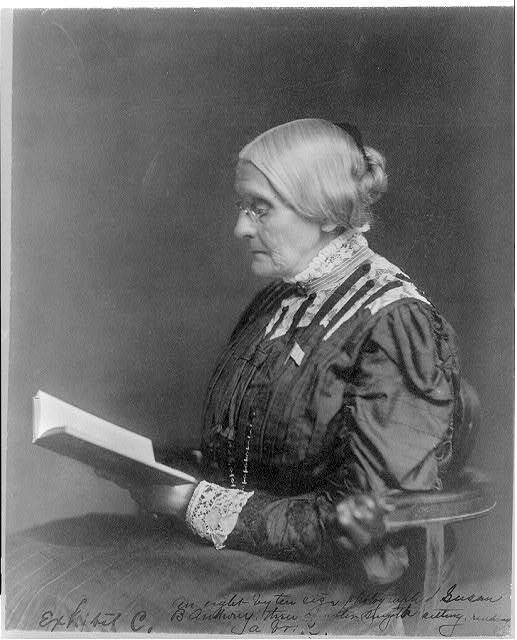
Library of CongressA woman reading a book around 1900, women's rights activist Susan B. Anthony.
In the past, reading was often exclusive to the upper classes and mostly applicable to white men. For people of color, there were additional barriers to education. Before the Civil War, a complex web of state laws prohibited teaching slaves to read and in some states, prevented free black people from learning or teaching.
The effects of these laws were still felt in the 1900s. While only 10% of the general population was illiterate, this rate rose to 44.5% among black people and other people of color.
Traditional gender roles for women posed a barrier to literacy. The expectation that girls would be raised only as wives and mothers led to less energy being spent on developing an interest in books.
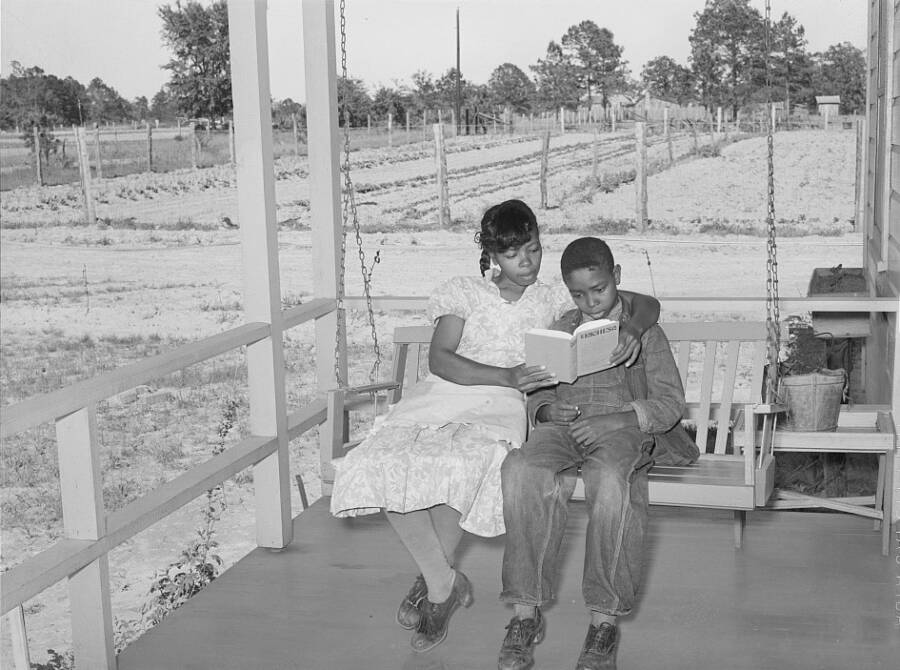
Library of CongressA woman reading with her son in 1939.
It is somewhat surprising that one of the oldest nostalgic library advertisements from 1909 shows a woman reading. However, the title of the book at her feet, The Psychology of Men, is not exactly progressive.
While some of these posters may seem regressive today, they show some progress. After all, these nostalgic library posters allowed men and women of all races, who were not encouraged to read in the past, to benefit from reading.
On the brink of the Great Depression, public libraries were ready to provide books and other resources to people suffering from poverty and hunger.
Federal Art Project
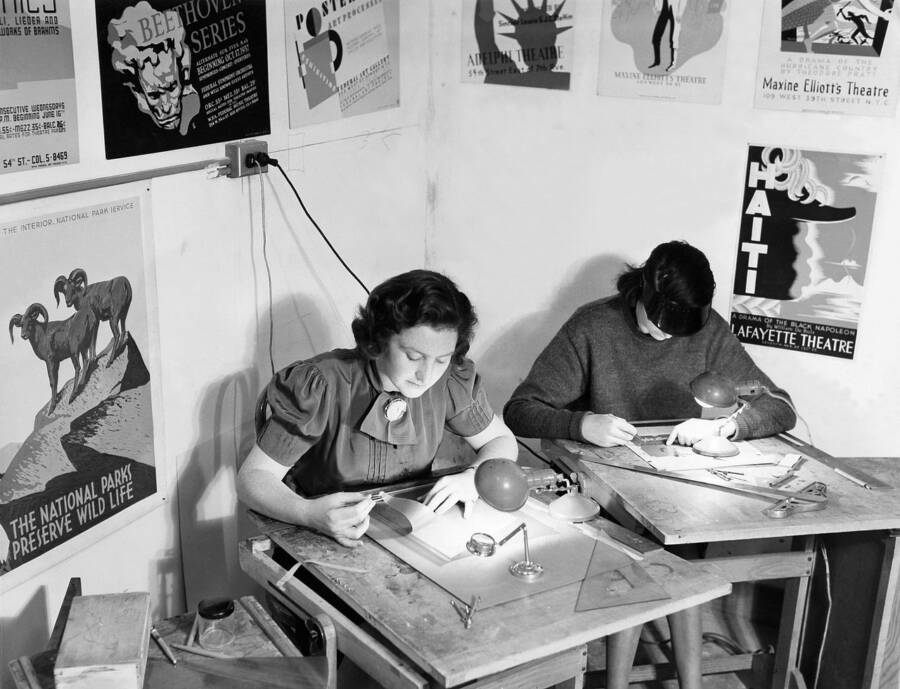
Wikimedia CommonsThe WPA employed artists to show these two women working in a poster shop.
Many of these nostalgic library advertisements emerged thanks to the WPA Federal Art Project, just a few decades after the first libraries. This was a major effort to provide government support to American artists during the Great Depression, lasting from 1935 to 1943.
President Franklin Delano Roosevelt allocated $35 million to the program and at its peak in 1936, employed over 5,000 artists.
Federal Art Project artists created 2,566 murals, over 100,000 easel paintings, and approximately 17,700 sculptures. In addition, the creators produced nearly 300,000 quality prints and about 22,000 plates for the American Design Index.
The project's national director, Holger Cahill, was a former museum curator and expert in American folk art. He recognized the potential for cultural development at the WPA and appreciated that artists could work while being paid.
For artists, many saw this program as a much-needed support and an opportunity to create art that reflects their hopes for a better future. Creating works that encourage reading was a natural extension of the desire to improve these conditions.
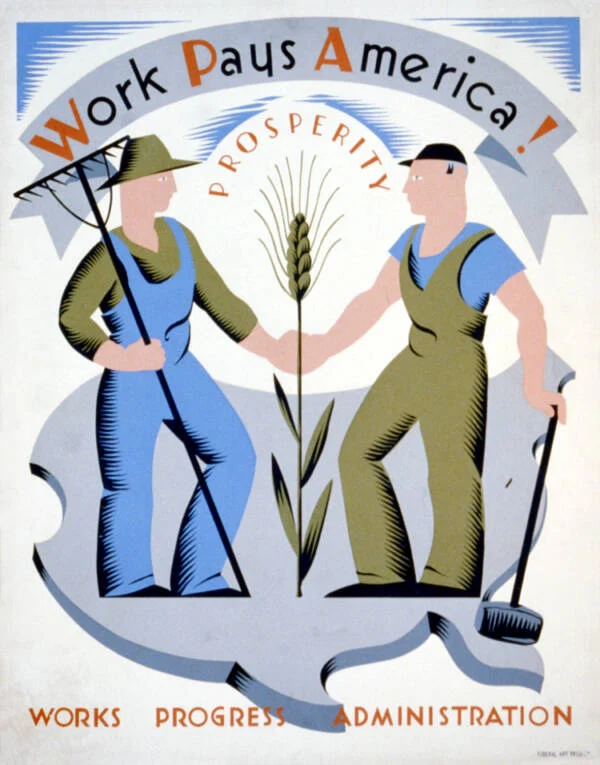
Wikimedia CommonsArtists employed by the Works Progress Administration also created works that promoted national parks, state programs, and the WPA.
Although the program ended in 1943, artists continued to create posters directing people to good books throughout the 1950s and beyond. And now, with the rise of email, messaging, and social media, our literacy skills are more visible than ever before.
Literacy rates among American adults are much higher than they were in the past. However, as of 2019, one in five adults still has low English literacy skills. This means that approximately 43 million people struggle with reading.
With millions of people lacking the ability to summarize what they read, compare written information, and make inferences about texts, perhaps it is not a bad time for a revival of these nostalgic library posters.










Comments
(5 Comments)