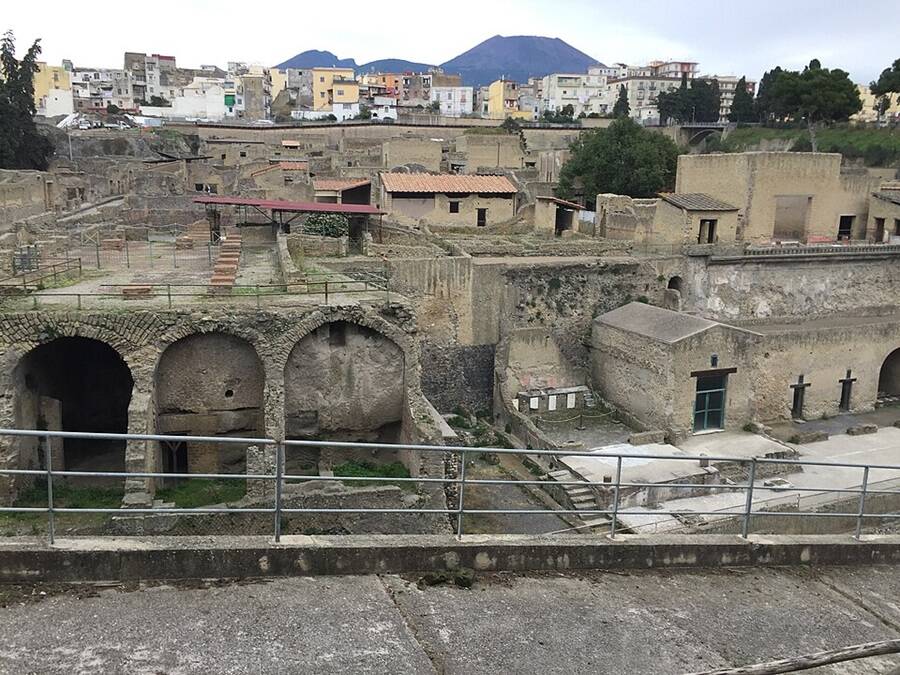
Inarajin/Wikimedia CommonsThe ancient ruins of Herculaneum are located in the shadow of Mount Vesuvius, which destroyed the town in AD 79.
In August AD 79, Mount Vesuvius erupted violently and destroyed the ancient Roman city of Pompeii. However, a small coastal town known as Herculaneum was also buried under volcanic debris.
Wealthy Romans flocked to Herculaneum in the summer; here, they vacationed in luxurious villas overlooking the Bay of Naples. However, the town's tranquility was disrupted by noises from Vesuvius, located four miles to the west. At that time, there was no real equivalent for the word "volcano" in Latin. The tens of thousands of people living in the shadow of Vesuvius were unaware of the destruction that was to come.
When Vesuvius erupted, Herculaneum initially escaped due to the direction of the wind, and many residents found time to evacuate. However, deadly pyroclastic flows eventually reached the town, killing everyone in their path; streets and buildings were covered in ash and mud. This material was different from the volcanic debris that buried Pompeii and preserved Herculaneum perfectly for centuries.
The lost town was rediscovered in the 18th century, 1,600 years after the eruption of Mount Vesuvius. Since then, archaeologists have been working to uncover Herculaneum and the artifacts left behind by its doomed inhabitants.
The Town of Herculaneum in the Shadow of Vesuvius
The ancient town of Herculaneum was located in the Bay of Naples in southern Italy. Although it was smaller than the nearby city of Pompeii, it was a wealthier and more exclusive place; it was closer to a coastal resort than a bustling city center. Its population ranged from 4,000 to 5,000, but elite members of Roman society did not live there full-time.
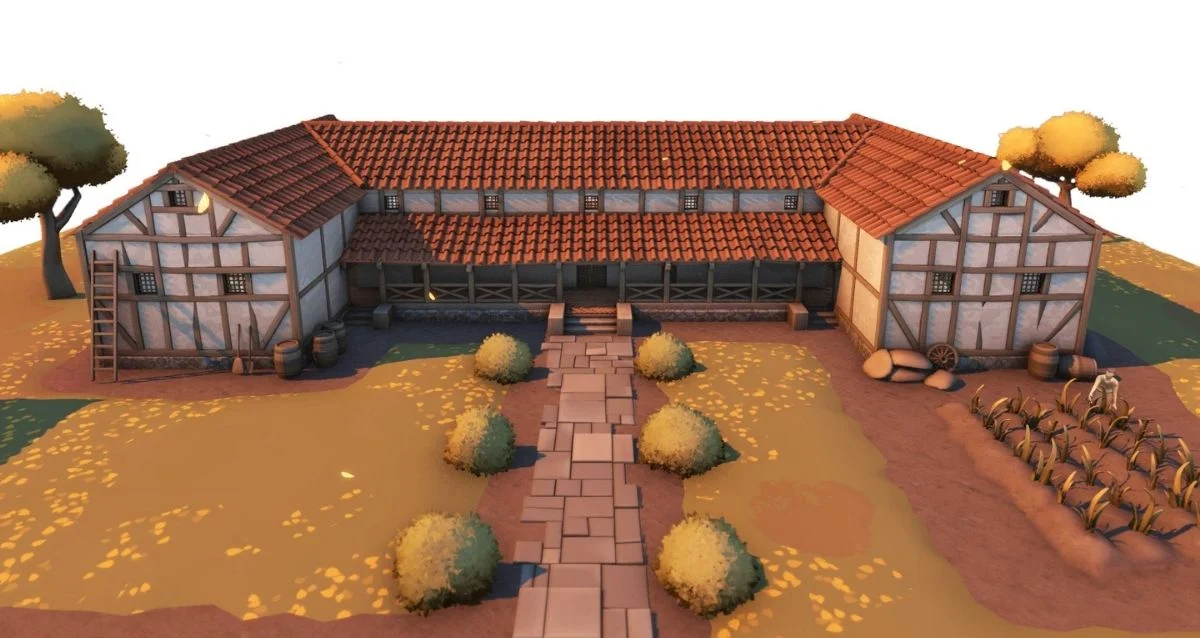
Its seaside location provided ample food and trade opportunities. Merchants, slaves, craftsmen, and wealthy Romans wandered its streets. Public baths were central to daily life; citizens chatted about business, politics, and local gossip there. In the residential part of the town, many houses were luxurious villas with multiple stories and colorful marble facades.
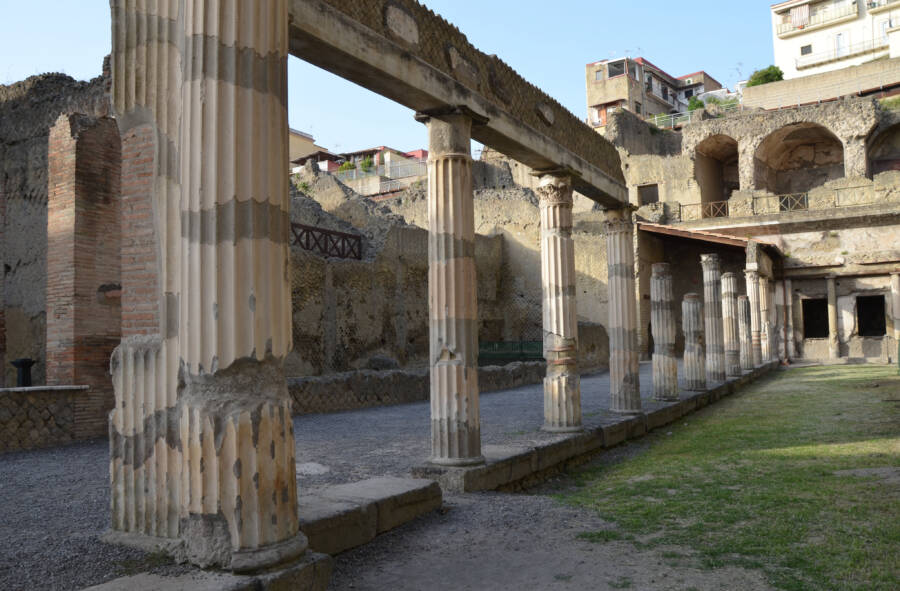
Carole Raddato/World History EncyclopediaThese columns surrounded a sports complex in Herculaneum.
However, by AD 62, the peaceful region began to show signs of instability. That year, an earthquake struck Campania. Seneca described this event three years later in Naturales quaestiones: "Part of Herculaneum was destroyed; the remaining buildings are very unsafe."
While the town was in the process of being rebuilt, disaster struck again.
The Destruction and Rediscovery of Herculaneum
In late August AD 79, Mount Vesuvius erupted, destroying Pompeii, Herculaneum, and the nearby towns of Torre Annunziata and Stabiae. The wind was blowing towards Pompeii, located to the southeast of the volcano, so it was the first and most affected place by the falling volcanic debris. Still, there was enough time for some people to evacuate and for news to spread. On the day of the first eruption, only a few inches of ash fell on Herculaneum, while residents began to evacuate, realizing that the situation could change rapidly.
This was a good decision. At midnight, the first pyroclastic flow entered Herculaneum, sending fiery hot ash and gas throughout the town. The flow was so powerful that a marble statue was thrown 50 feet high.
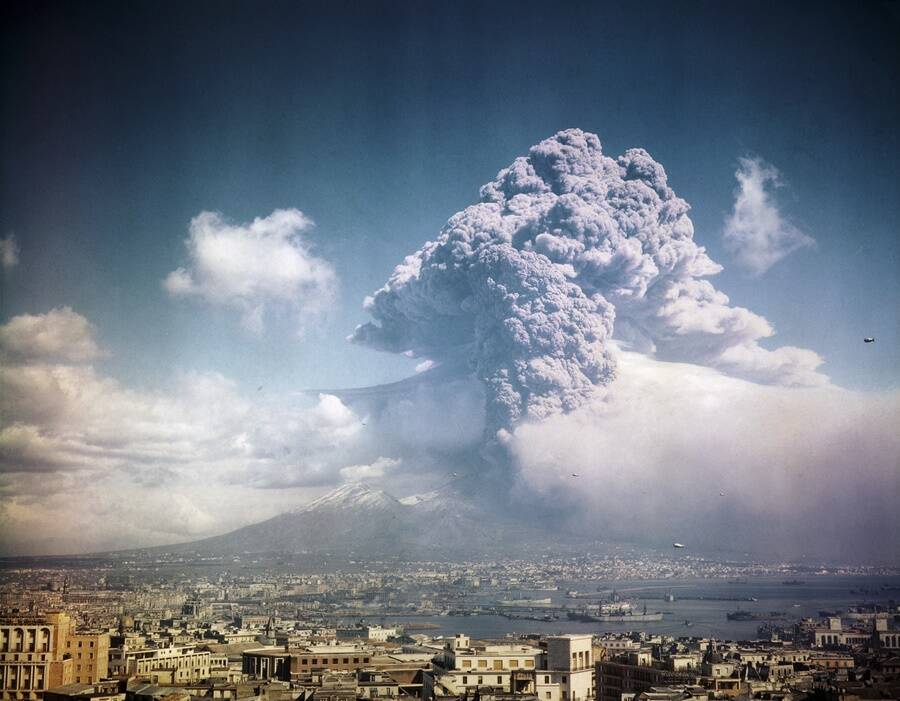
Public DomainThe view of Mount Vesuvius's 1944 eruption from Naples.
When Vesuvius fell silent once again, Herculaneum remained buried under more than 60 feet of volcanic ash and mud, which later became a porous stone called tuff. As decades passed, its exact location was forgotten, and eventually, a new town was built over the area.
Later, according to the story, in the early 18th century, a local farmer named Ambrogio Nucerino discovered ancient remains while digging a well. These were the remnants of the theater of Herculaneum. Subsequent archaeological excavations progressed slowly. While Pompeii was buried under softer ash, the tuff covering Herculaneum required a hammer and pickaxe to break. After 300 years of work, not even a third of the area had been uncovered.
However, what the archaeologists found was extraordinary.
In the Ruins of the Destroyed City
Thanks to the unique preservation of Herculaneum, materials such as wood and papyrus were discovered beneath the stones. There is still a wooden balcony of a multi-story building, and archaeologists had found a wooden table leg intricately carved with designs that once belonged to Dionysus, the god of wine.
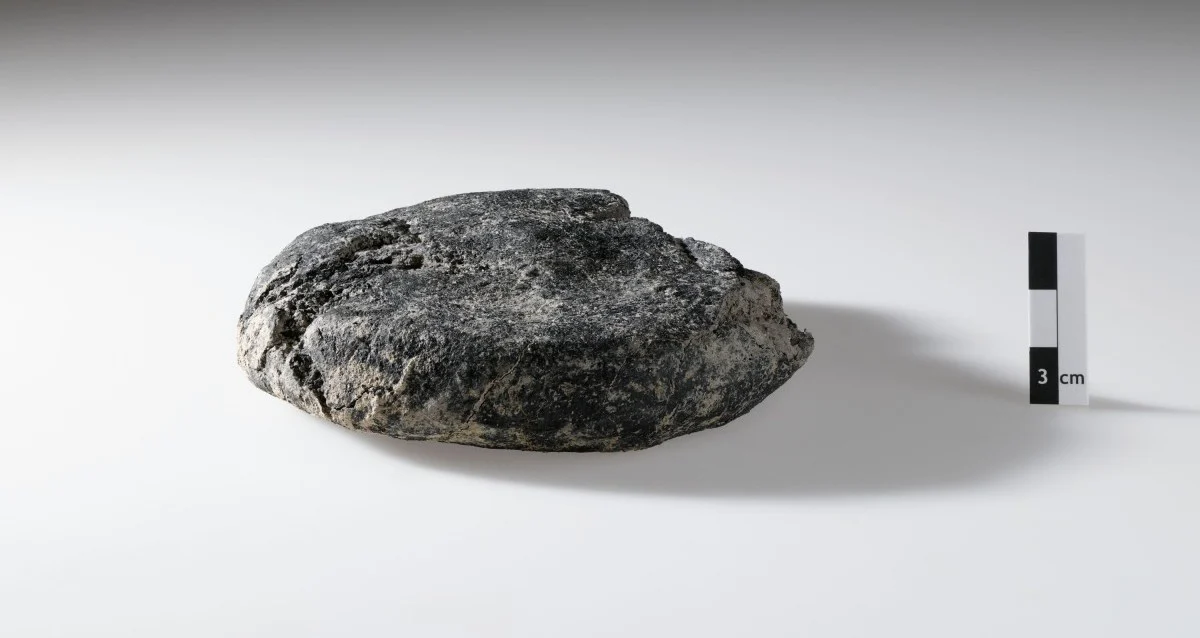
In 1750, a residence known as the Villa of the Papyri was uncovered. This villa may have belonged to Julius Caesar's father-in-law and housed a library consisting of 1,800 papyrus scrolls - the only intact library discovered from the ancient world. The scrolls were too charred to be opened, but modern technology has begun to reveal their contents, mostly Greek philosophical texts.
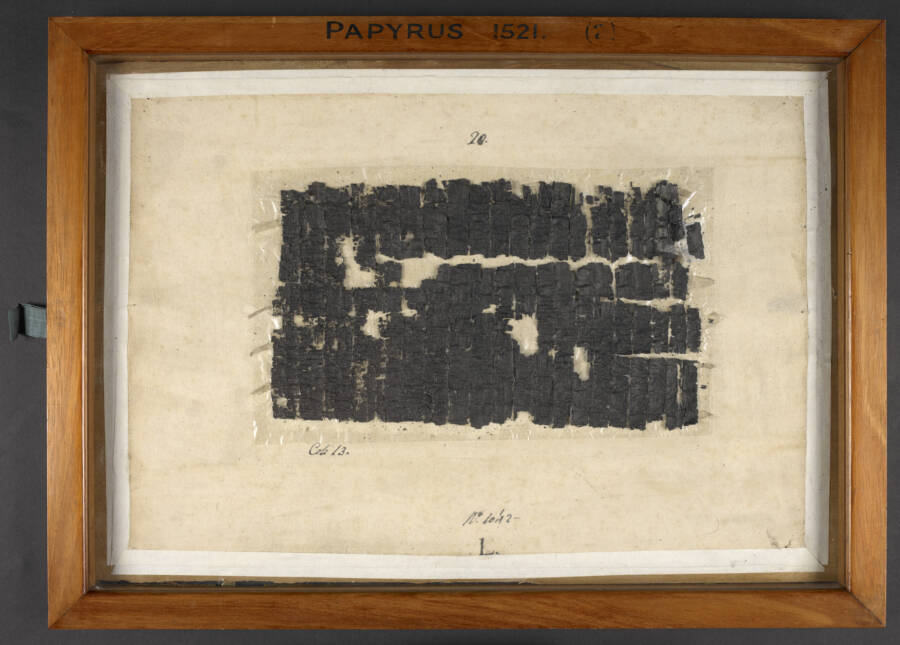
Public DomainOne of the scrolls found in the Villa of the Papyri is currently held at the British Library.
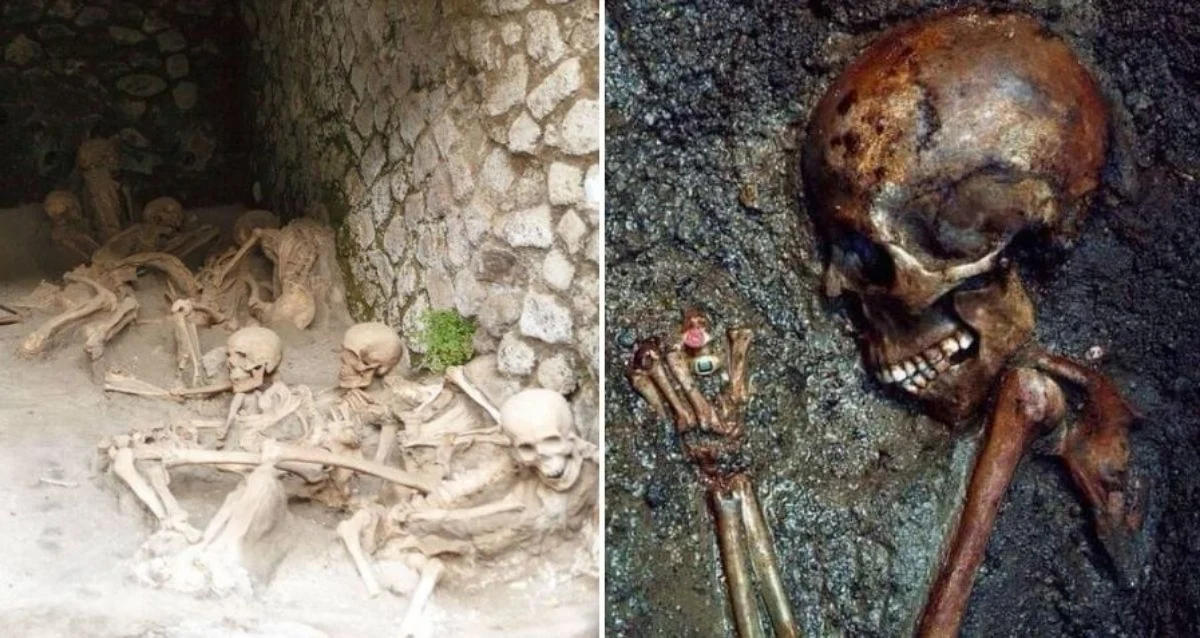
Very few corpses were found in Herculaneum in the first few centuries; this led archaeologists to believe that nearly everyone escaped before the pyroclastic flows reached the town. However, in 1980, a boathouse filled with about 300 skeletons was discovered along the coast.
Alongside the remains, archaeologists found jewelry, house keys, amulets, and other valuables. A skeleton dubbed the "Ring Woman" was wearing gold-adorned jewelry on her fingers. Another skeleton possessed a surgeon's toolset. These men, women, children, and slaves were caught by pyroclastic flows while waiting for a boat to rescue them.
Indeed, remains of a wooden boat were also found on the beach. The skeleton of a man believed to be a military officer was found nearby with his sword and dagger. One theory suggests that this boat belonged to the fleet of Pliny the Elder.
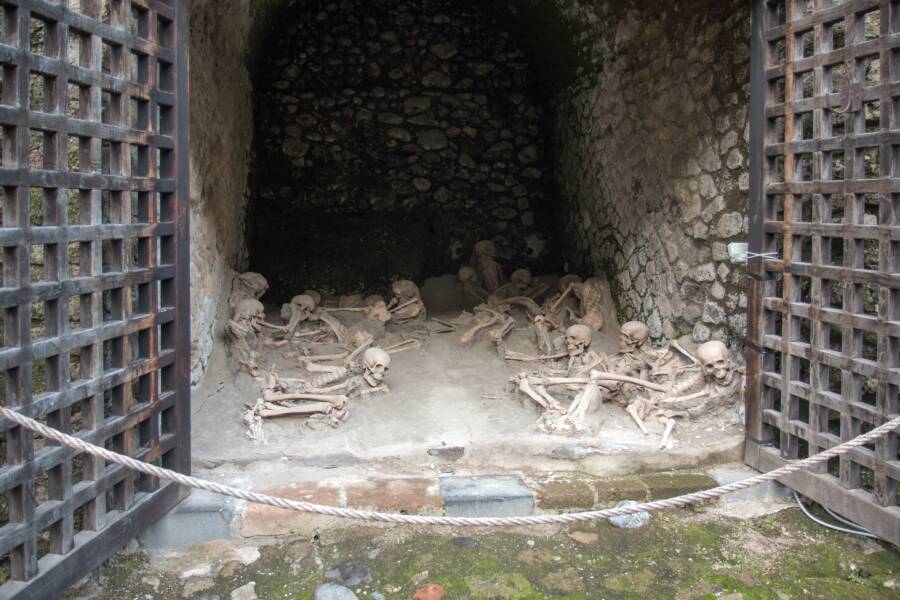
Andrea Schaffer/Wikimedia CommonsHundreds of people lost their lives in a boathouse in the Gulf of Naples during the eruption.
Pliny was commanding a fleet on the northern side of the Gulf of Naples when Vesuvius erupted. His nephew Pliny the Younger documented the disaster in a letter to the historian Tacitus.
Pliny the Younger described the ash cloud erupting from Mount Vesuvius as follows: "I can best describe its shape as resembling a stone pine. It rose into the sky with a very long 'trunk' and from there some 'branches' spread out... Its appearance heightened my uncle's desire to be a scientist."
As Pliny the Elder set out to investigate, he received a letter asking for help from a friend living at the foot of Vesuvius. He quickly changed his plans. After telling his nephew, "Fortune favors the brave," he set out with several ships toward the cloud.
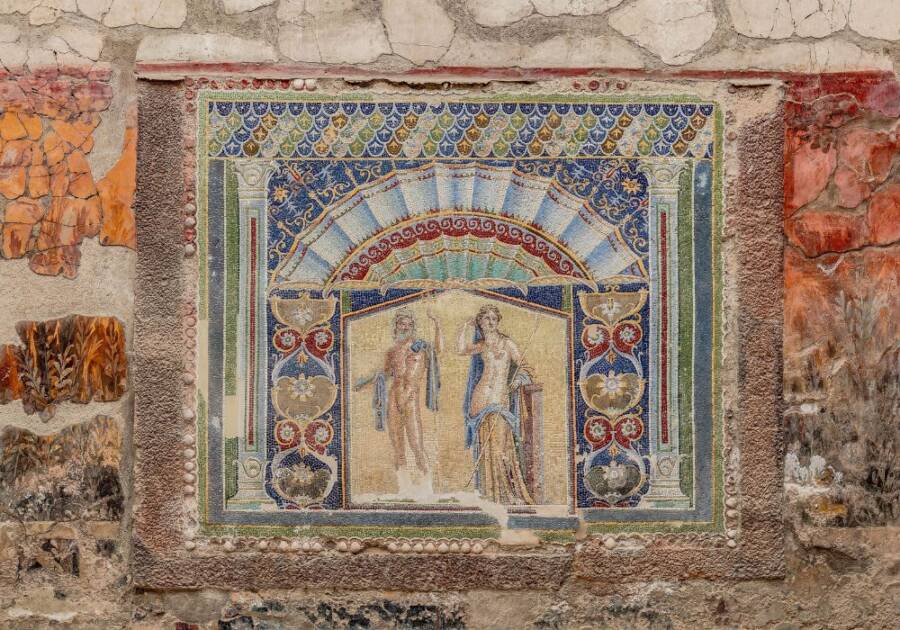
Jebulon/Wikimedia CommonsA mosaic found in the triclinium (dining room) section of a villa in Herculaneum. The art depicts Neptune and his wife Amphitrite.
Unfortunately, Pliny the Elder lost his life shortly after reaching the coast of Stabiae, just a few miles south of Herculaneum. "They tied pillows to their heads to prevent stones from falling on them," his nephew wrote. "Then came the smell of sulfur, the harbinger of flames... He stood up with the support of two little slaves and immediately collapsed. As far as I understand, he was prevented from breathing by the dusty air and his internal organs... just shut down."
It is unknown whether the boat found in Herculaneum belonged to Pliny; however, the terrified people there met a fate similar to Pliny's end. There is no way to know for certain how their last moments were spent; however, the ruins of the destroyed town they tried to escape from stand as a haunting reminder of one of history's worst natural disasters.





















Comments
(1 Comment)