Did you like this gallery?
Share:
- Share
-
 Flipboard
If you liked this article, don't forget to check out these popular articles as well:
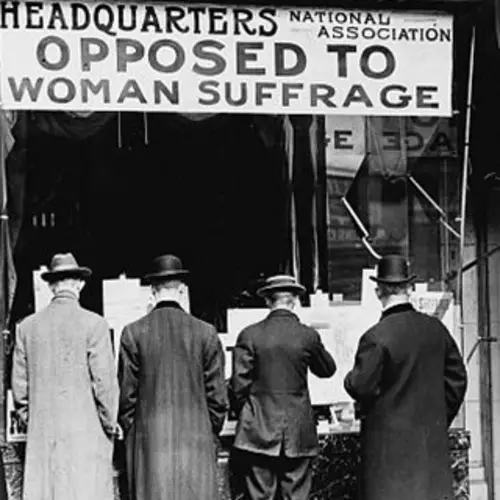
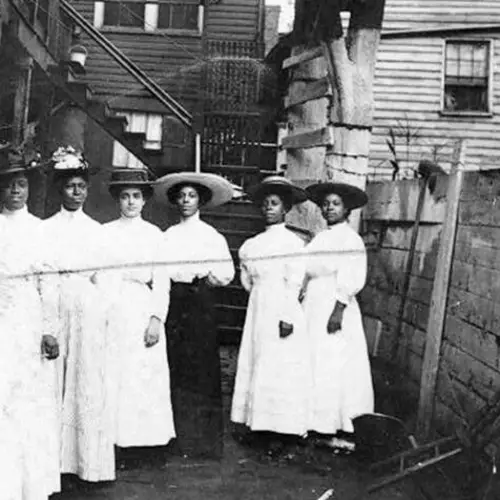
It took more than a century for women's rights activists to convince Americans that they had the right to vote. Suffragists risked their reputations while lobbying for voting rights, but their efforts were thwarted by relentless campaigns from opposing forces, including other women.
These anti-suffragists offered many justifications against women's voting rights, some of which were at least somewhat sexist in nature.
Indeed, it is surprising for a modern person to look at the sexist propaganda of anti-suffragists, but it serves an important purpose: it highlights how difficult the struggle for women's voting rights was and shows the social progress that has been recorded so far.
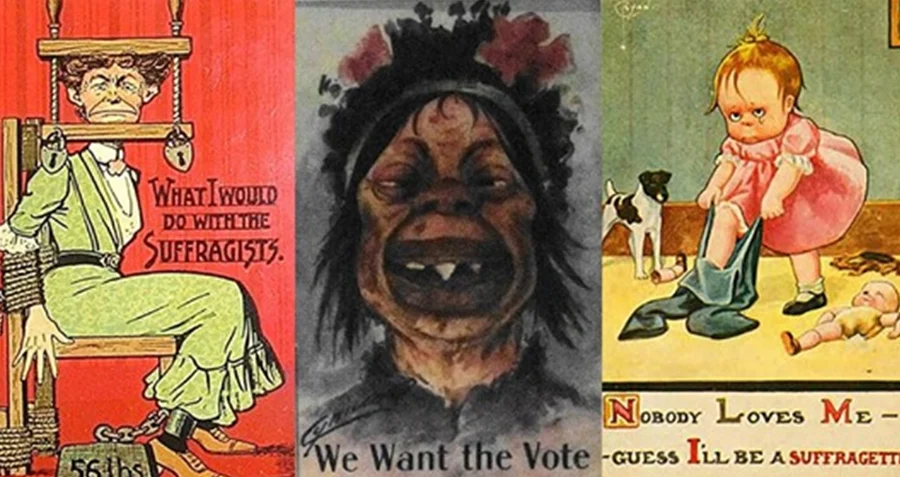
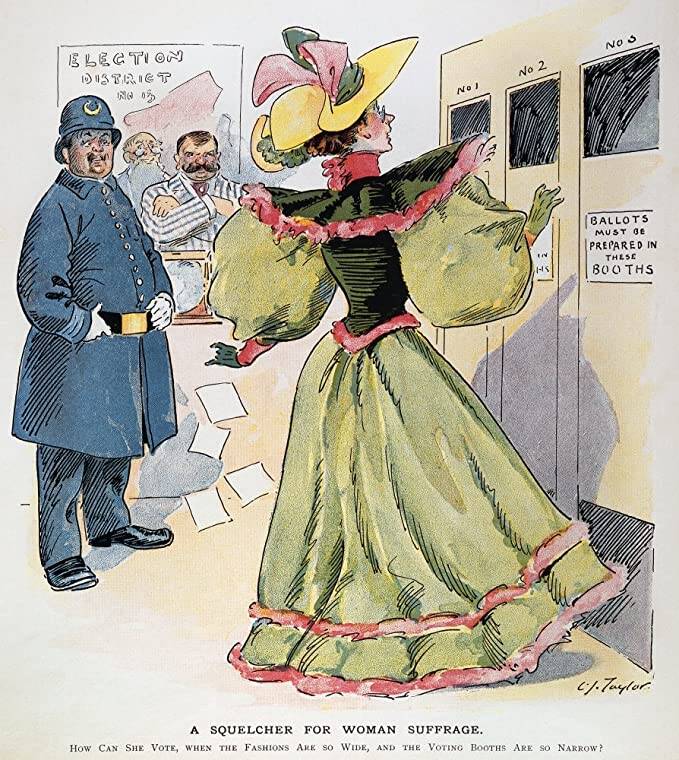
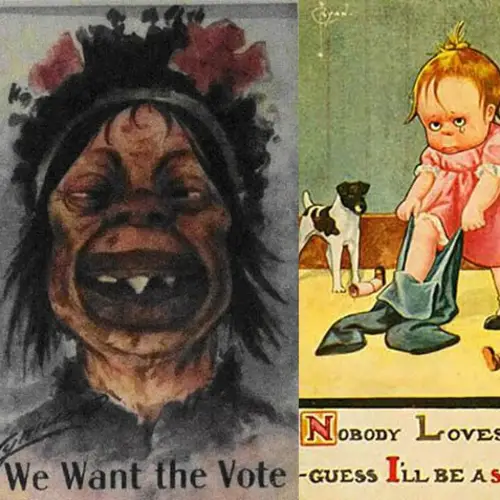
Take a look at the most absurd anti-suffrage postcards from the late 1800s to the late 1910s.
The Women's Suffrage Movement
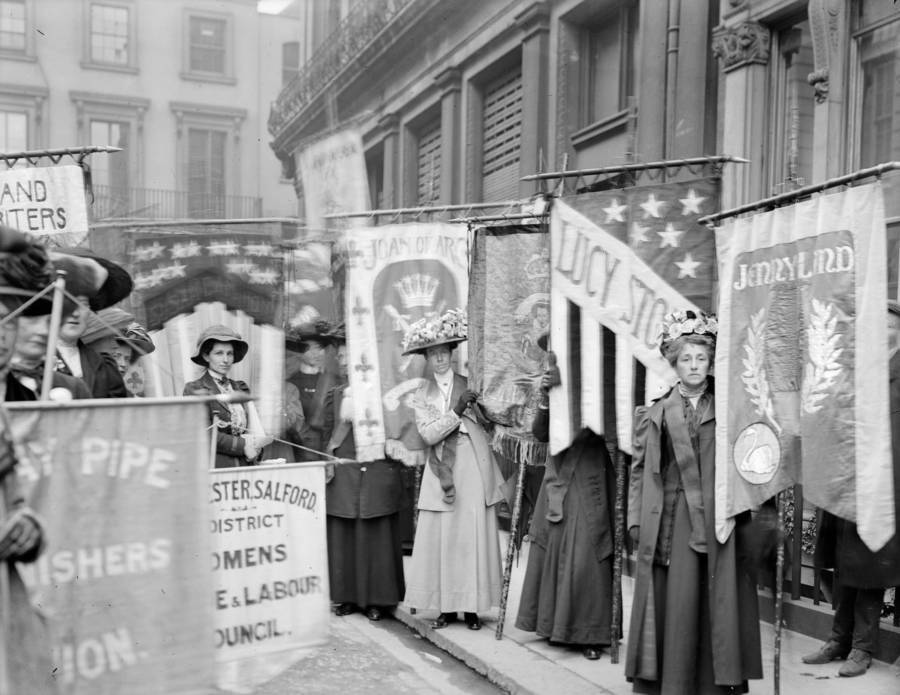
Wikimedia CommonsThe 19th Amendment states that the right of citizens of the United States to vote shall not be denied or abridged on account of sex.
The 19th Amendment to the U.S. Constitution was ratified on August 18, 1920, ending a century-long struggle for women's voting rights in America.
The women's suffrage movement was vibrant in both 19th century America and Britain. The movement was initiated by middle-class white women in Britain in the mid-1800s, but women's voting rights were largely ignored by the general public and Parliament.
When British suffragists began to use more militant tactics, their cause truly began to attract attention. This bold approach was led by Emmeline Pankhurst, who founded a radical women's group called the Women's Social and Political Union (WSPU) in 1903.
Over the next decade, WSPU members made headlines by declaring war against the British government. The organization launched campaigns that were largely anarchistic in nature, chaining themselves to public gardens, breaking windows, and even detonating bombs.
The women's suffrage movement in America really took shape after a convention held in Seneca Falls, New York, in 1848. Two-thirds of the 100 attendees were women, and this was the first of its kind in the country. However, widespread patriarchy and the rise of the anti-slavery movement at the onset of the Civil War temporarily stalled the suffrage movement in America.
The movement was revived decades after the Civil War ended, when suffragist Alice Paul organized a national pro-suffrage march in Washington, D.C. This was an unprecedented gathering of women coming together peacefully to exercise their First Amendment rights.
However, the peaceful march turned violent with the intervention of a group of police officers and anti-suffrage protesters. Many suffragists were spat on, shouted at, and even physically assaulted. Frustrated by the harassment, Paul essentially founded the National Women's Party, which was comparable to Britain's militant WSPU.
Suffragists used every means possible to raise awareness and gain support for women's voting rights, including distributing campaign materials such as badges, signs, and of course, postcards. However, their efforts were often thwarted by the opposition, which had its own anti-suffrage postcards.
Use of Anti-Suffrage Propaganda
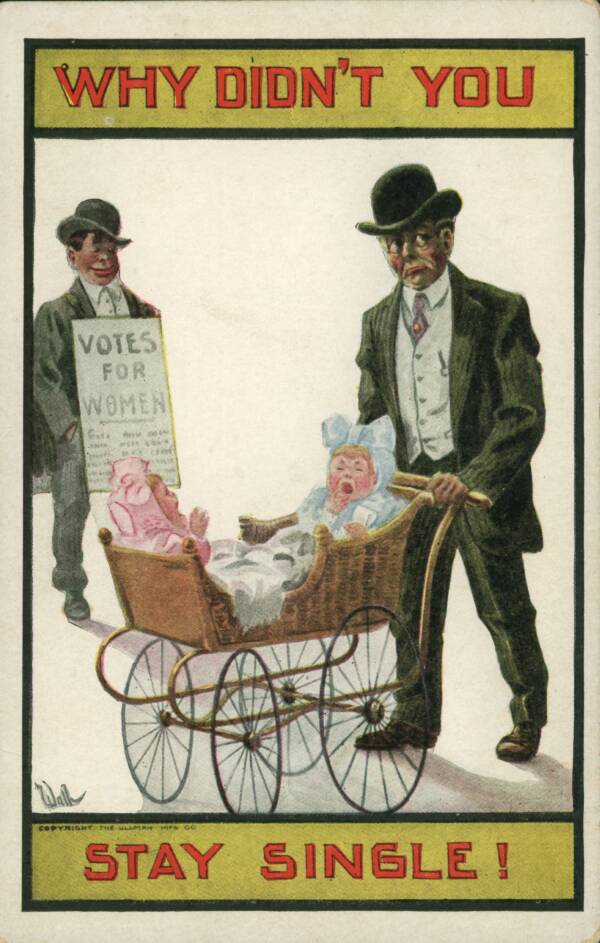
Palczewski, Catherine H. Postcard Archive/University of Northern IowaAnti-suffrage propaganda aimed to keep women at home instead of voting.
Long before the advent of social media, one of the most popular ways to influence public opinion was through illustrated postcards.
In the early 20th century, postcards were considered valuable works of art and were often used as home decor. Postcards reached their peak popularity between 1893 and 1918, likely due to their affordability and emotional appeal. As attention increased around the women's suffrage movement, postcards quickly became a popular propaganda tool—especially for the opposition.
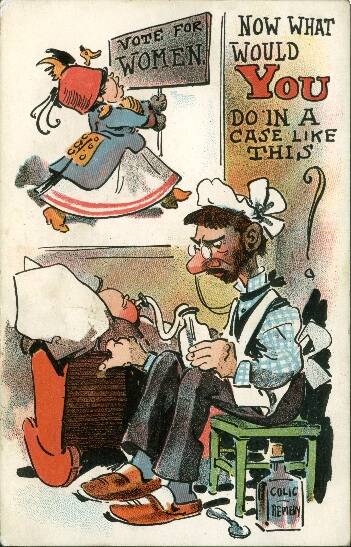
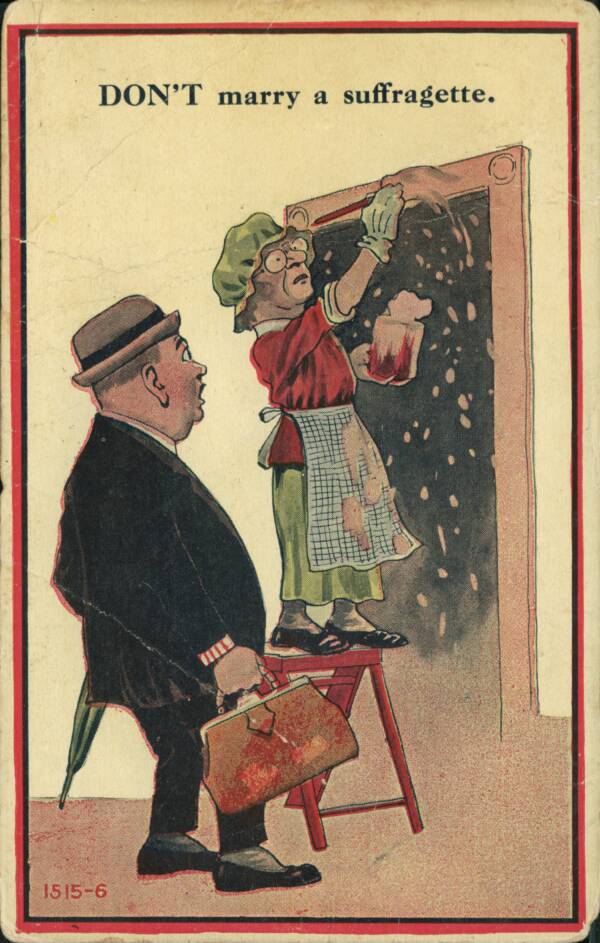
It is estimated that 4,500 different postcard designs and slogans were produced; some supported the movement while others mocked it. When it came to anti-suffrage propaganda, most of the materials played on themes of traditional gender roles, emphasizing that while men were expected to be breadwinners, women should take care of the home and children.
Interestingly, most anti-suffrage illustrations went beyond women's voting rights.
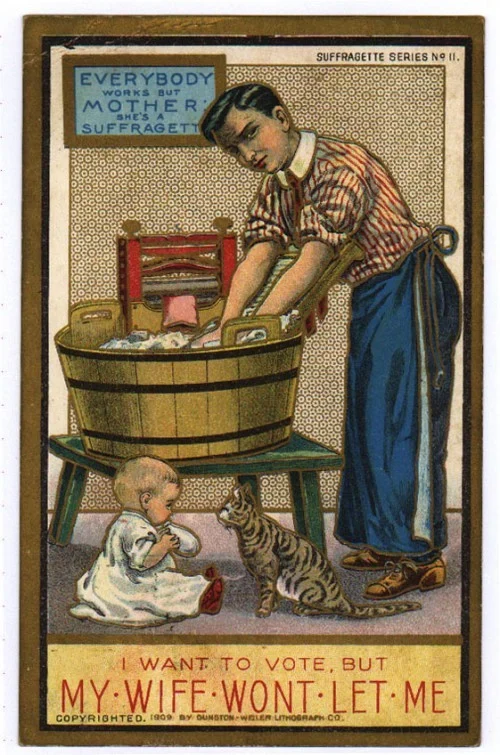
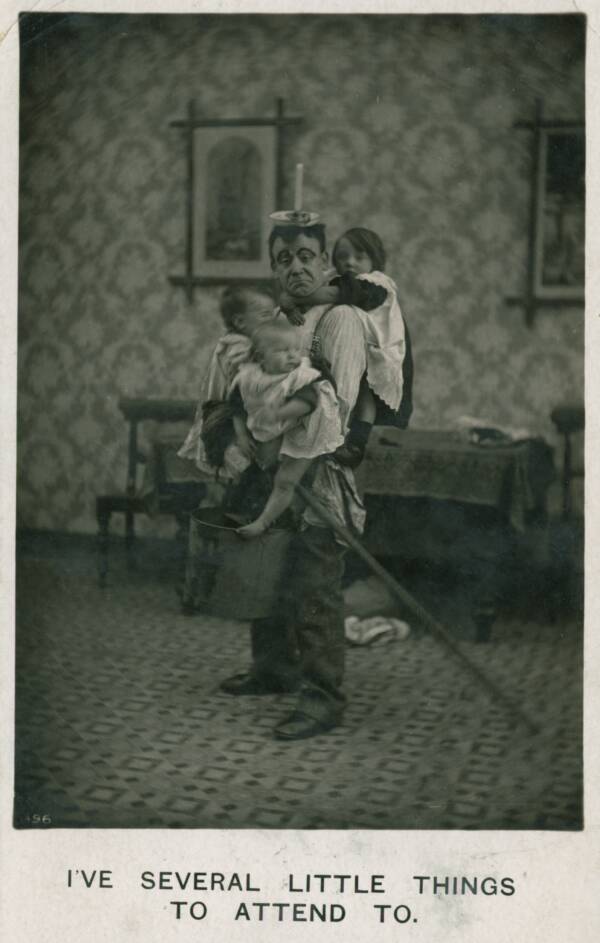
When you look at the debates for and against suffrage, there are all kinds of arguments that suggest women voting would make them masculine and cause them to lose their feminine identities, says Catherine H. Palczewski, a professor of women's and gender studies at the University of Northern Iowa and a vintage postcard archivist. However, there is not much about what women's voting would do to men. Yet in the postcards, there are images of men becoming feminine.
These postcards proclaimed the false and exaggerated consequences that liberated women would bring to society, essentially spreading the idea that husbands would take on home and child care alone, while their wives would go out in public and roam on their own.
While taking care of their own homes and children is the responsibility of every individual parent, it was considered extreme for men to do housework while women—God forbid—participated in the economy and political society.
As a result, illustrations showing women smoking cigars and wearing top hats, and men cradling babies were quite common. A selection of the most misogynistic anti-suffrage postcards can be found in the gallery above.
We operate with this zero-sum mentality; that is, if women gain rights, men lose, Palczewski added. You also see the idea that when people of color or ethnic minorities gain, whites lose something. So if men understand their identity in relation to women as being greater, that's a trade-off. You can see this in many anti-suffrage postcards that show men being harmed if women progress.
Propaganda Proved Ineffective
Fortunately, anti-suffragist postcards were not very effective in stopping the momentum of the growing women's movement.
The women's suffrage movement achieved significant gains in 1916 with Jeannette Rankin becoming the first woman elected to Congress from Montana. Rankin helped lobby for a constitutional amendment presented by suffragist leader Susan B. Anthony; this amendment stated that states could not discriminate based on gender regarding women's voting rights.
That same year, 15 states granted women the right to vote at the local level. With the support of President Woodrow Wilson, Congress voted five times on the federal amendment between January 1918 and June 1919.
The 19th amendment was finally ratified on August 26, 1920, after Tennessee became the 36th state to pass the law.













Comments
(8 Comments)