Innlandet County Administration“Mørstad Treasure” includes 1,000-year-old coins from England, Germany, Denmark, and Norway.
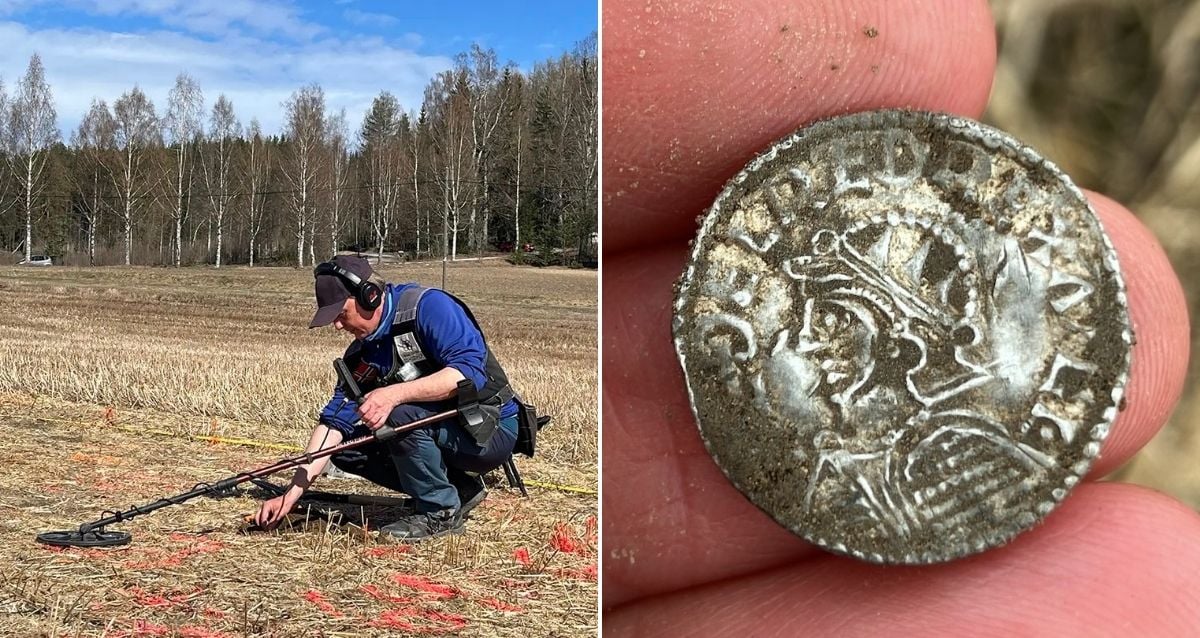
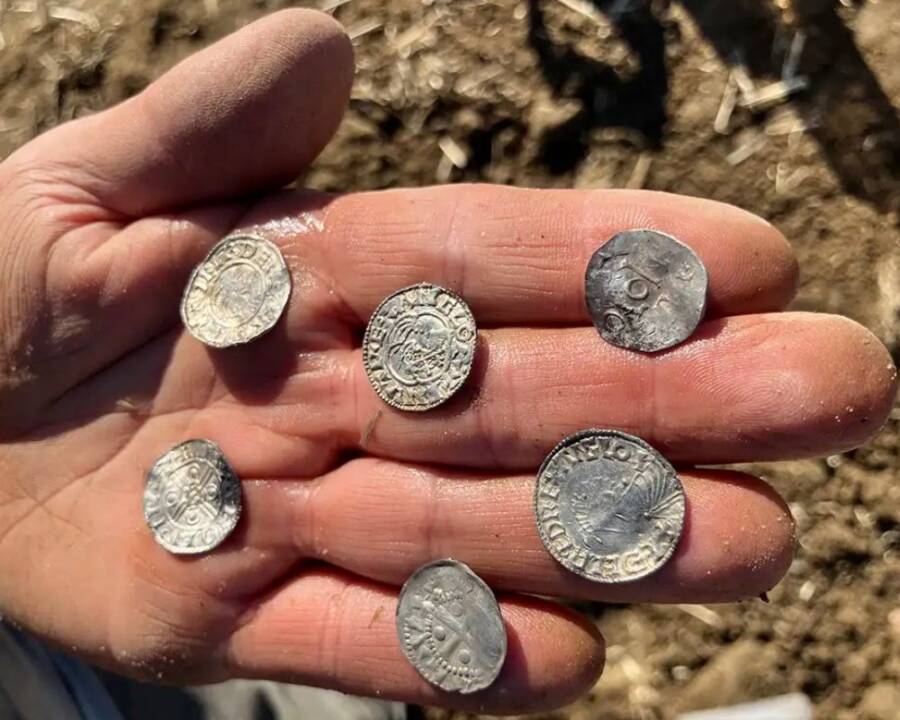
On April 10, 2026, metal detectorists Vegard Sørlie and Rune Sætre discovered 19 silver coins while exploring a field near the village of Rena in eastern Norway. They immediately informed the Innlandet County Administration, and officials rushed to the scene.
Over the next two weeks, archaeologists unearthed approximately 3,000 coins dating back to the Viking Age. The Mørstad Treasure has become the largest Viking coin treasure ever discovered in Norway, providing significant insights into a period of great change in the history of the Scandinavian country.
The Astonishing Discovery of a 1,000-Year-Old Viking Coin Treasure in Norway
When Vegard Sørlie and Rune Sætre set out with their metal detectors on April 10, they did not expect to make a significant discovery. Suddenly, they asked a landowner near Rena if they could search his field - an area that had never been explored with a metal detector before.
After receiving permission, the men began their hunt and soon found a silver coin. Then, another one. After pulling out 19 coins, Sørlie and Sætre decided to call the Innlandet County Administration.
Archaeologists, including May-Tove Smiseth, quickly arrived at the scene. While speaking to Science Norway, she said, "Jokingly, I said it would be nice if we found a few more coins to make the discovery even bigger. But the detectors never stopped!"
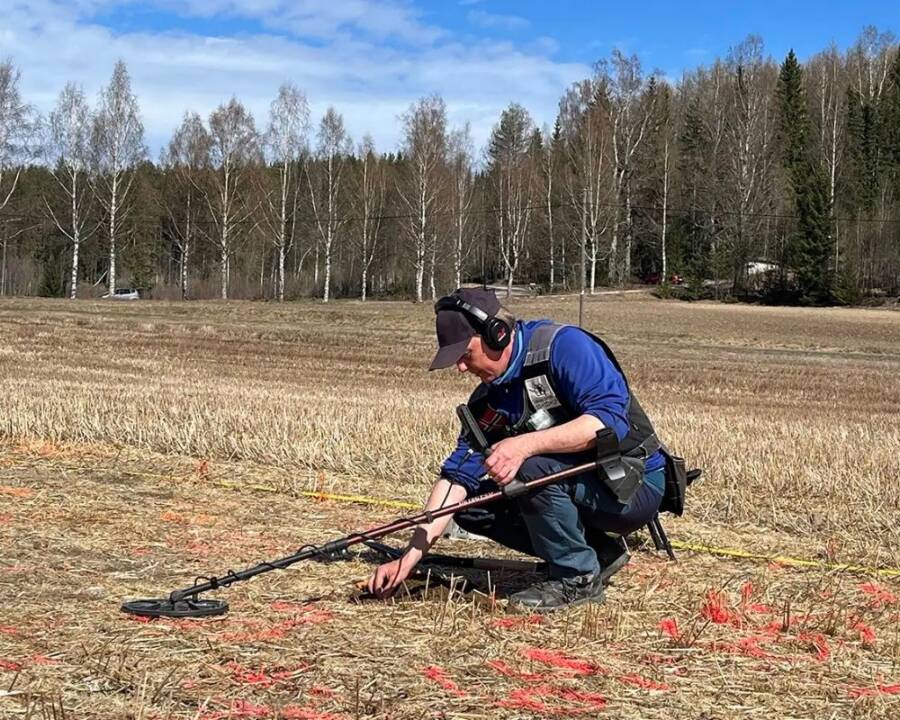
Anne Engesveen, Innlandet County AdministrationRune Sætre, one of the metal detectorists who discovered the Viking coin treasure.
By April 29, archaeologists had found 2,970 silver coins, making the Mørstad Treasure the largest in Norwegian history. According to the University of Oslo's Cultural History Museum, the second largest treasure discovered in the mid-19th century consisted of 1,849 coins. Furthermore, no treasure of such significance had been found since 1950; that year, 964 coins were discovered in the city of Trondheim.
Norwegian Minister of Climate and Environment Andreas Bjelland Eriksen stated in a release from the Innlandet County Administration, "This is a historic discovery. The fact that it belongs to the Viking Age makes it even more impressive."
Archaeologists are still continuing to excavate the site and hope to find more coins; meanwhile, experts at the Natural History Museum are examining the treasures that have already been unearthed.
What Does the Mørstad Treasure Tell Us About Norway's Viking Age History?
So far, the analysis of the coins has confirmed that they were buried around 1047, during the reign of Harald Hardrada.
Most of the artifacts are English and German coins; these coins have been described as the "euro or dollar" of the Viking Age, explained Svein Gullbekk, a professor at the University of Oslo. A few are Danish or Norwegian. They were minted under rulers such as Hardrada, Knut the Great, and Æthelred II. According to Gullbekk, "The coin treasure includes coins from the 980s to the 1040s."
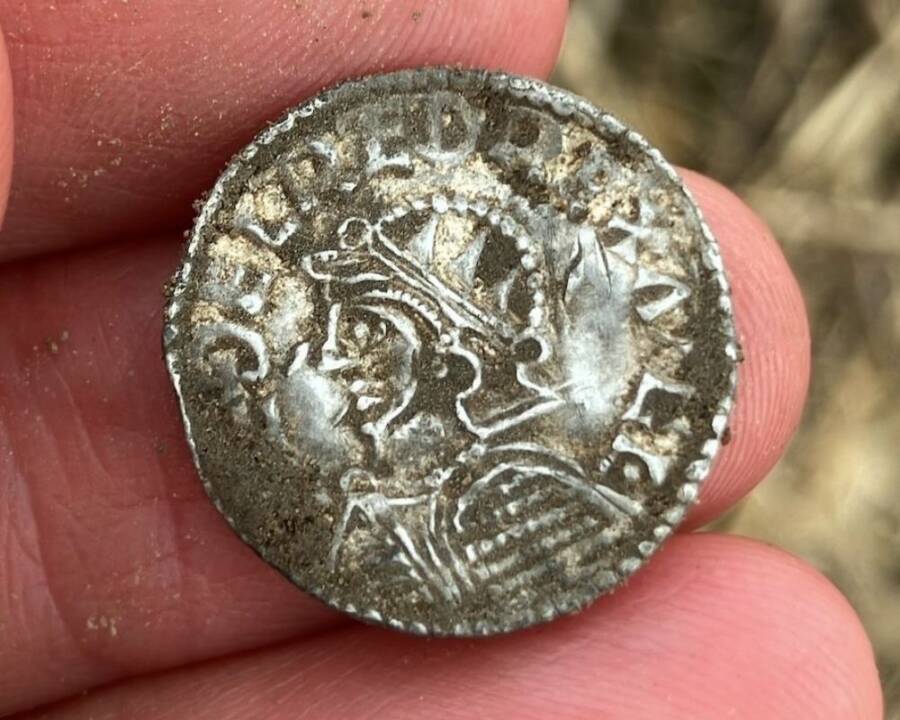
May-Tove Smiseth, Innlandet County AdministrationA coin depicting the head of Æthelred II (also known as Æthelred the Unready) with the inscription “EDELRED”.
During this period, eastern Norway was extracting large amounts of iron ore from swamps and exporting it to Europe; this facilitated the circulation of various foreign currencies. Then, when Hardrada ascended to the throne in 1046, he established the country's first national coin minting system.
Gullbekk said, "The treasure was buried right at the beginning of this development." "That’s why the discovery is not only extraordinary but also connected to a very interesting period in Norwegian history."
The exact reason why the coins were buried in the field is not known, but they were likely hidden to protect a family or individual's wealth from thieves or wars. Since there are no written records from that period, it is also unclear how much purchasing power the treasure had. However, experts suggest that it could be enough to buy a farm.
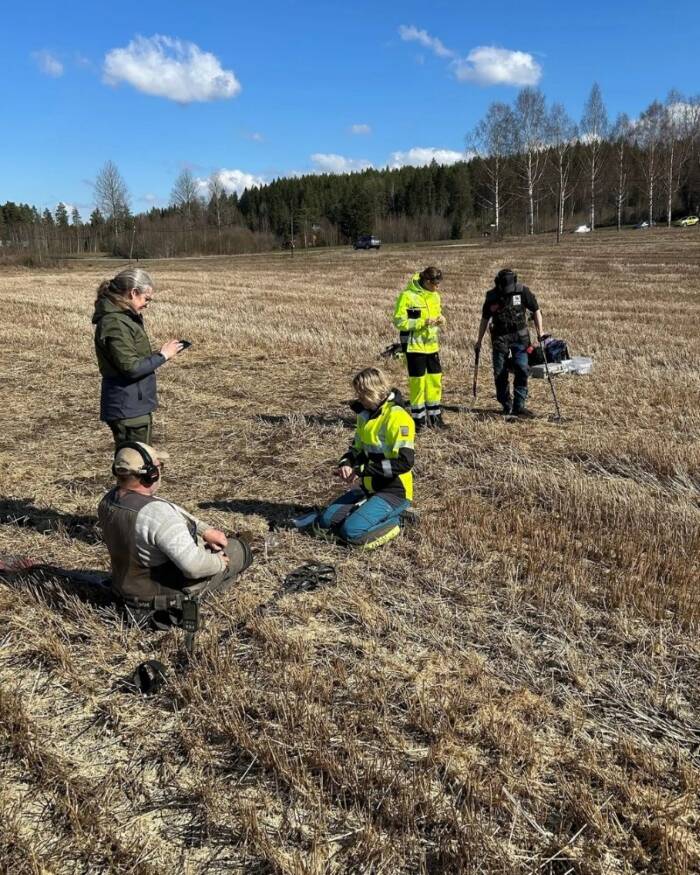
Innlandet County AdministrationArchaeologists uncovered 2,970 silver coins within two weeks.
Smiseth told the Innlandet County Administration, "This is a truly unique discovery that one might encounter only once in a career. Witnessing something like this is a wonderful experience both professionally and personally."
She also praised Sørlie and Sætre for their roles in the discovery and their collaboration with the authorities. "This is a model case of how it should be done," Smiseth said.
While the search for extra coins continues, the Mørstad Treasure has already become one of the most significant discoveries in Norwegian history. "This is both a national and an international event," said Hanna Geiran, Director of the General Directorate of Cultural Heritage, to the Innlandet County Administration. "[F] There are very few things in Norway’s Viking Age that capture people’s imagination as much as this."








Comments
(7 Comments)