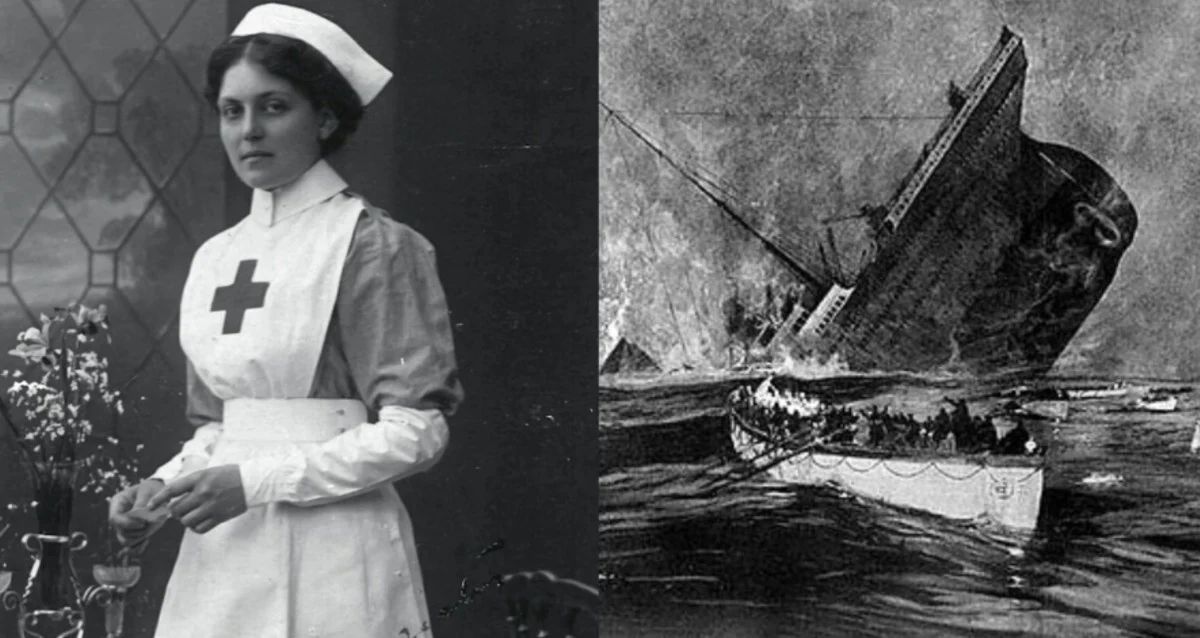
Violet Jessop began her struggle for survival at a young age. Despite losing three siblings at a young age and suffering from a near-fatal tuberculosis disease as a child, she managed to survive. However, Jessop is better known for surviving a different disaster.
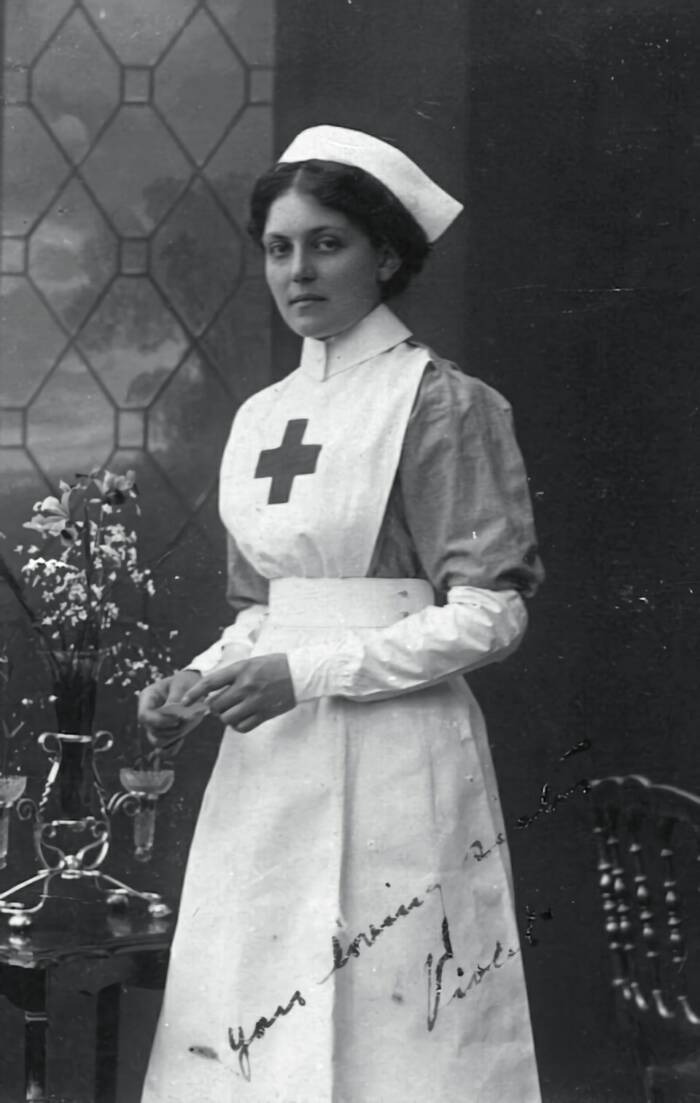
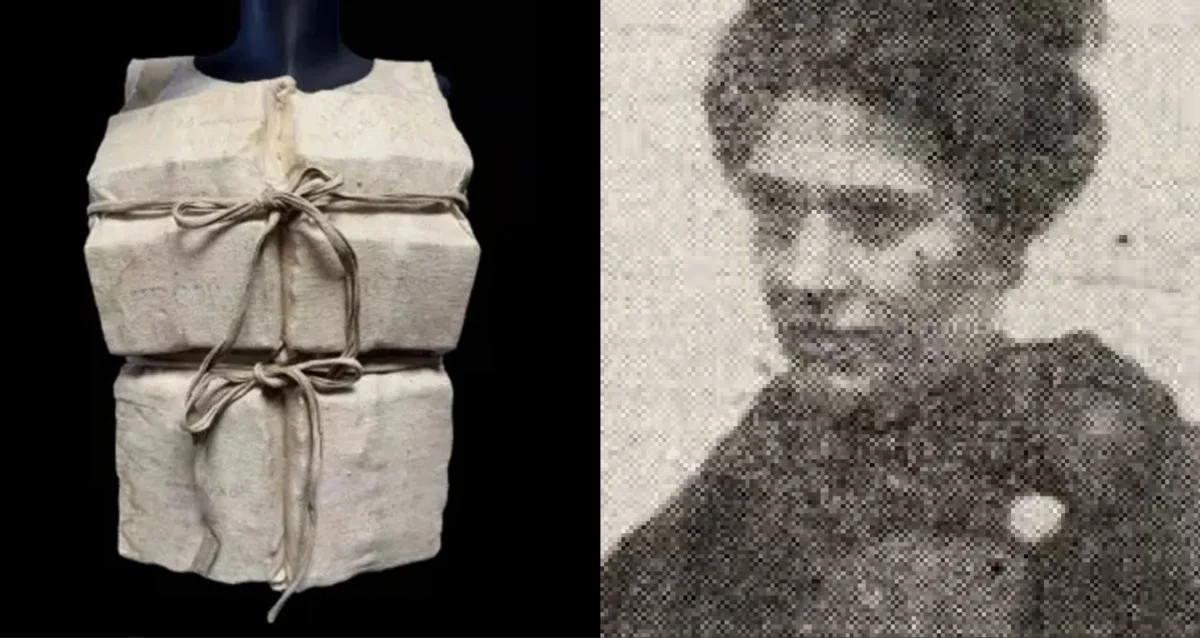
Public DomainViolet Jessop, the woman who survived disasters on the Titanic and two sister ships.
In 1912, Jessop was working as a stewardess on the RMS Titanic. When the ship struck an iceberg and sank in the North Atlantic, Jessop survived not only from the Titanic but also from the disaster that occurred on its sister ship, the Olympic, in 1911, and she survived the sinking of the other sister ship, the Britannic, in 1916.
This is the extraordinary story of how Violet Jessop, known as the "Unsinkable Girl," survived the disasters on the Olympic, Titanic, and Britannic.
Life as a Stewardess at White Star Line
Born on October 2, 1887, to an Irish couple living in Argentina, Violet Constance Jessop began her maritime career at a very young age. After her father's death, she moved to England with her mother, who worked as a stewardess. When Jessop's mother fell ill and could no longer work, Jessop followed in her footsteps and became a stewardess.
After working for two years at Royal Mail Line, Jessop found a job at White Star Line. Her first assignment was on the RMS Olympic, the largest civilian passenger ship of its time. However, just a few months after its maiden voyage in June 1911, the Olympic encountered disaster at sea.
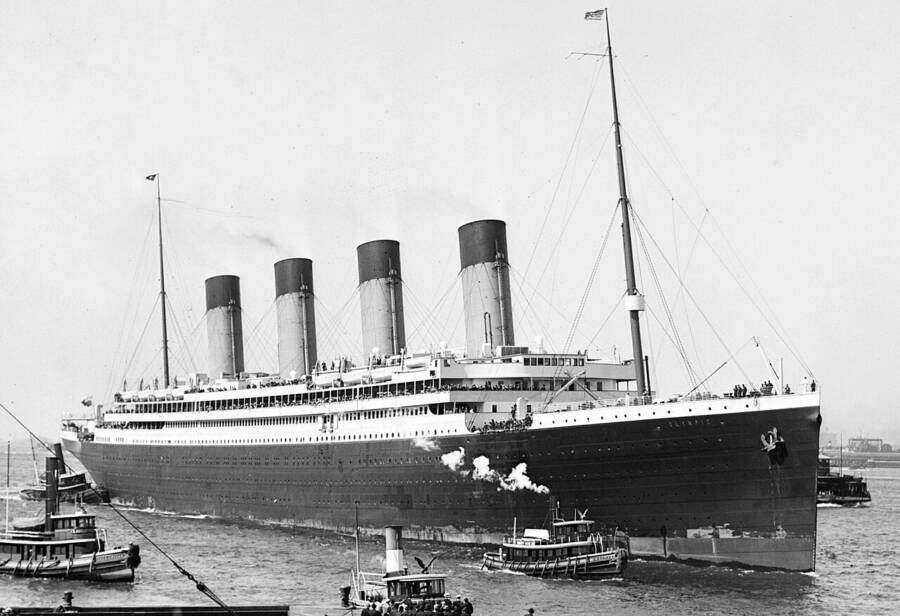
Library of CongressThe RMS Olympic, sister ship of the Titanic.
On September 20, 1911, while on the Olympic, Jessop's ship collided with a cruiser named HMS Hawke. The ship sustained heavy damage, but Captain Edward Smith — who would later lose his life as the captain of the Titanic — managed to return the Olympic to port.
It may have been a frightening event, but the collision left little mark on Jessop, and she didn't even mention it in her memories. Instead, Violet Jessop spent more of her time recounting the next disaster at sea: the sinking of the RMS Titanic.
How Violet Jessop Survived the Sinking of the Titanic
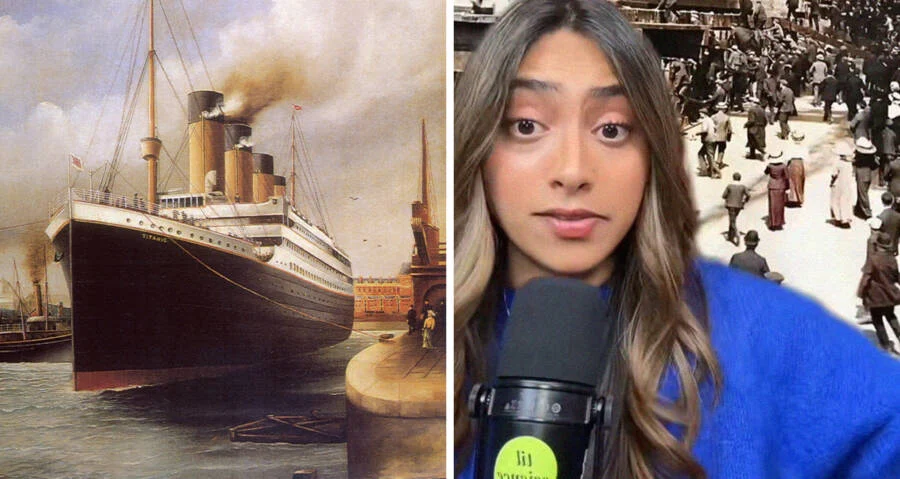
On April 10, 1912, the RMS Titanic set sail for its maiden voyage with great fanfare. Larger than the Olympic, the Titanic was filled with luxurious amenities such as swimming pools, a squash court, and even a gym, attracting both wealthy celebrities and immigrants hoping for a new beginning.
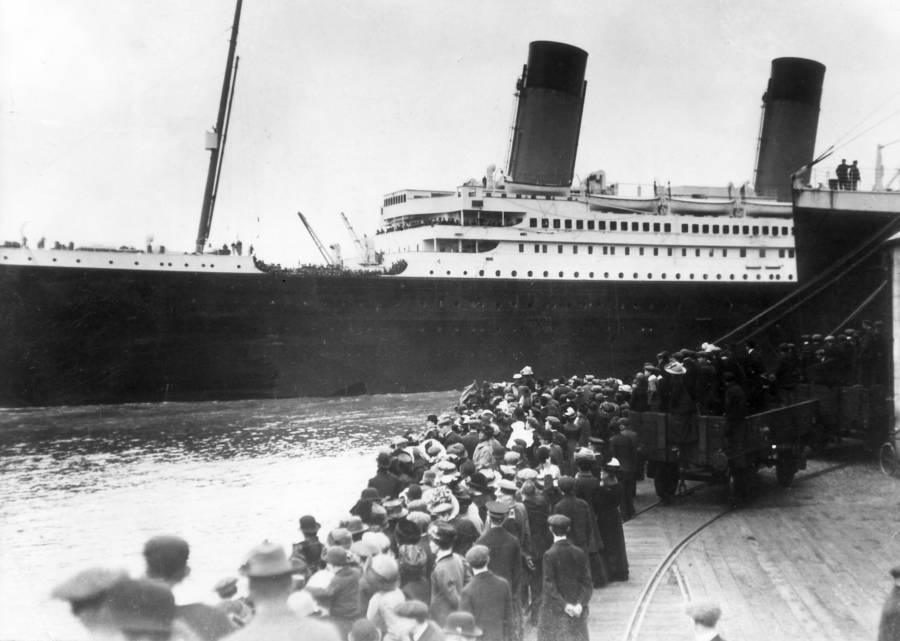
ullstein bild/ullstein bild via Getty ImagesThe Titanic in Southampton before its ill-fated maiden voyage.
One of the most famous passengers on board was John Jacob Astor IV, one of the world's richest men, who had recently caused a social scandal by marrying 18-year-old Madeleine Astor. Violet Jessop was not particularly impressed when she saw Madeleine.
“Instead of the glamorous woman I had imagined,” Jessop wrote in her memoirs, “a calm, pale, sad-faced, actually boring young woman came.”
However, Jessop had little time to observe the passengers. As a first-class stewardess, her responsibilities ranged from making beds to arranging flowers and running errands. The days could be long, and Jessop had developed a habit of ending the night with a breath of fresh air at sea.
But on the night of April 14, 1912, while Jessop was spending the night, the Titanic struck an iceberg and began to sink.
“With a terrible noise,” Jessop immediately got to work. When passengers were ordered to go to the lifeboats, she went from room to room assisting them in putting on life jackets and ensuring they took warm clothing. In the meantime, she thought, “Surely the Titanic couldn't sink! It was so perfect, so new.”
When taken to the deck, Jessop watched as the passengers panicked while moving around, with women clinging to their husbands and how they panicked when ordered to board the lifeboats. A crew member ordered Jessop and the other stewardesses to board a lifeboat and handed Jessop a baby.
Jessop and the others in lifeboat 16 watched as the Titanic broke apart “with the noise of explosions underwater” and disappeared beneath the waves.
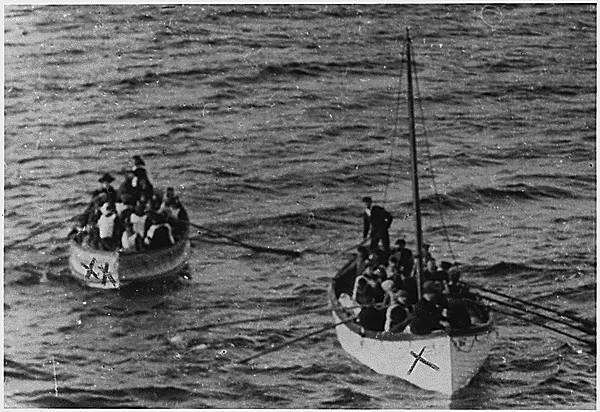
National ArchivesSome Titanic lifeboats.
The next morning, Jessop and the other Titanic survivors were rescued by RMS Carpathia. They were the lucky ones — 1,500 people had lost their lives.
What happened to the baby that the crew member gave to Jessop? Jessop writes that a woman ran up to her, grabbed the child, and “left without even saying thank you.”
Yet, despite witnessing the tragedy of the Titanic, Violet Jessop continued to work as a stewardess. And a few years later, she would survive another sinking.
The Sinking of the Britannic in 1916
During World War I, Violet Jessop worked as a stewardess alongside her nursing duties. She was assigned to HMHS Britannic, the sister ship of the Titanic; this ship had been converted from a luxury liner to a hospital ship.
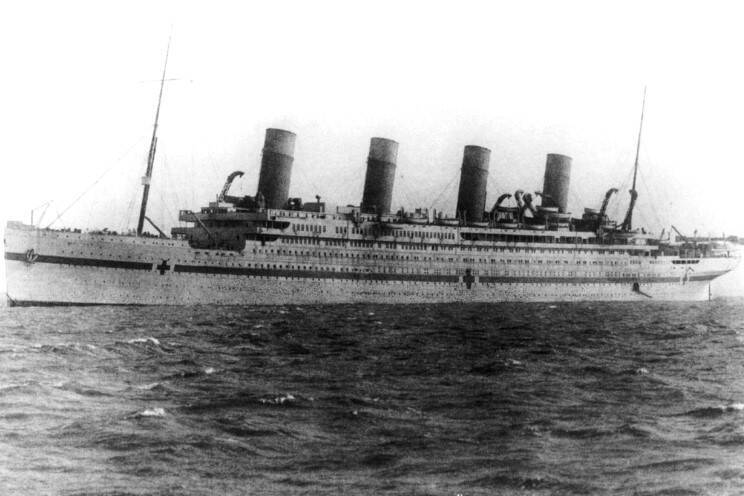
Public DomainThe Britannic was refitted as a hospital ship during World War I but sank after hitting a mine in 1916.
On November 19, 1916, the Britannic set sail towards the port of Mudros, Greece, to pick up patients. Onboard were approximately 1,000 people, including crew, doctors, and nurses. Two days later, the ship struck a German mine. The damaged Britannic began to sink rapidly.
Jessop managed to escape in a lifeboat, but she noticed that the lifeboat was being pulled towards the ship's still-rotating propellers. Thirty people lost their lives, but Jessop managed to jump into the water. She hit her head on the ship's keel but survived and managed to reach a nearby lifeboat.
Then, she watched as the Britannic sank.
“It tilted its head a little, then a bit more down and down,” Jessop wrote. “All the deck machinery fell into the sea like children's toys. Then it made a terrible dive, the stern lifted hundreds of feet into the air and with a final noise disappeared into the depths, the sound of its departure echoed with unimaginable violence in the water…”
Despite surviving three disasters at sea, Violet Jessop did not give up. She continued to work as a stewardess until 1950 and retired at the age of 63.
Violet Jessop spent the rest of her life on land, raising chickens, and passed away in 1971 at the age of 84.
This story illustrates how Violet Jessop survived three maritime disasters and lived the rest of her life as a strong woman.











Comments
(2 Comments)