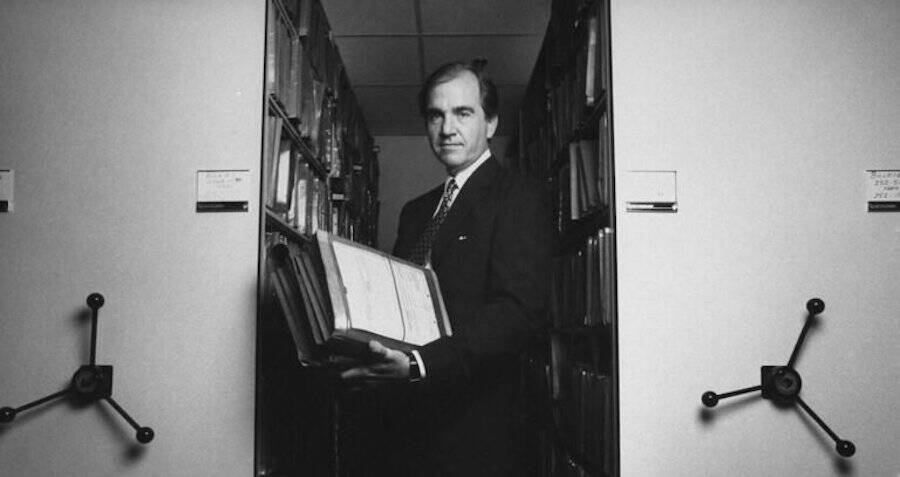
John Douglas is a pioneer of criminal profiling. The autobiographical book of the former FBI agent, Mindhunter — the critically acclaimed Netflix series of the same name — explains how he helped murder investigations by entering the minds of the world's worst serial killers.
During his career in the FBI's Behavioral Science Unit (BSU), Douglas interviewed names like Ted Bundy, Jeffrey Dahmer, and the BTK Killer. He helped catch some of America's worst predators while also trying to understand what motivated them.
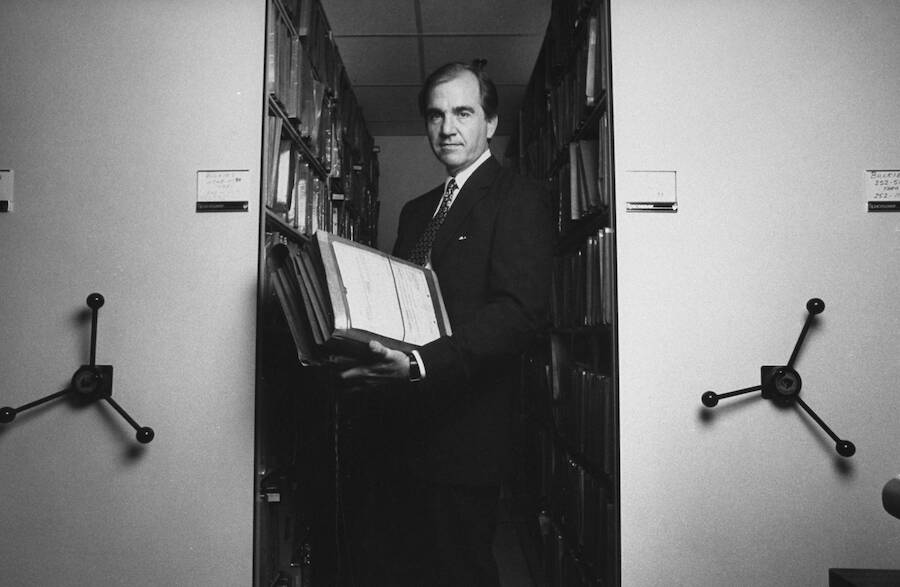
Getty ImagesJohn Douglas is a former FBI agent who profiled some of America's most dangerous criminals.
However, some people question whether his techniques really work. So, is it really possible to catch a mind — especially that of a serial killer?
Finding John Douglas's Calling
Four years after his military service, John Edward Douglas joined the FBI at the age of 25 in 1970. In his early years as an agent, he specialized in hostage negotiation while helping to solve violent crimes.
In 1976, Douglas transferred to the BSU at the FBI Academy in Quantico, Virginia. Here, he trained new agents in criminal psychology.
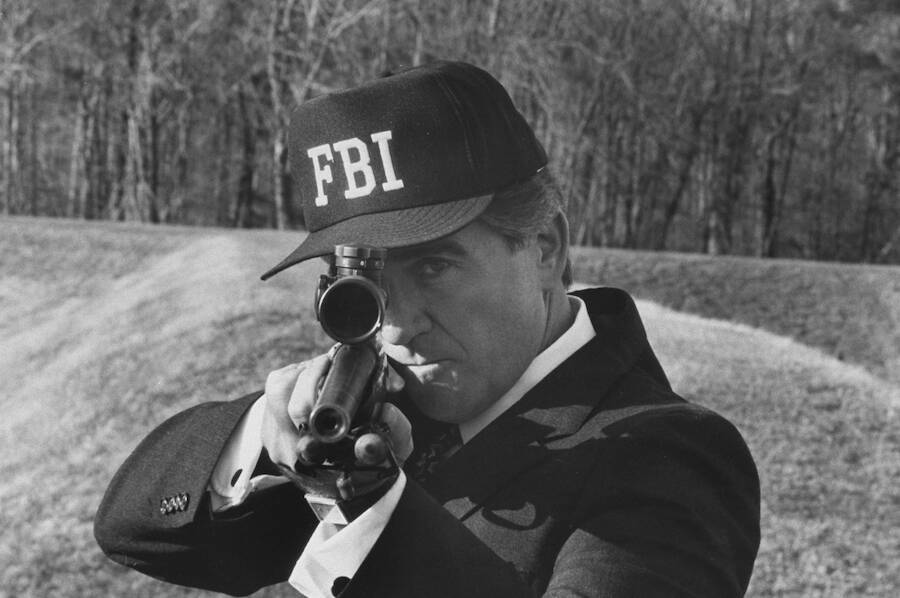
Getty ImagesJohn Douglas with a special sniper rifle used in hostage situations.
During his time in Quantico, Douglas felt that something important was missing from his classes. He decided that the way to fix this was to have face-to-face encounters with violent offenders.
In a May 2019 interview with Vulture, Douglas explained how the character Holden Ford, based on him in Mindhunter, began profiling criminals to enhance his credibility in the classroom.
Douglas met FBI agent Robert Ressler, who had been working at the BSU since its establishment in 1972. Ressler is known as the person who first coined the term "serial killer."
Like Douglas, he believed in the use of criminal profiling as a tool to catch violent offenders.
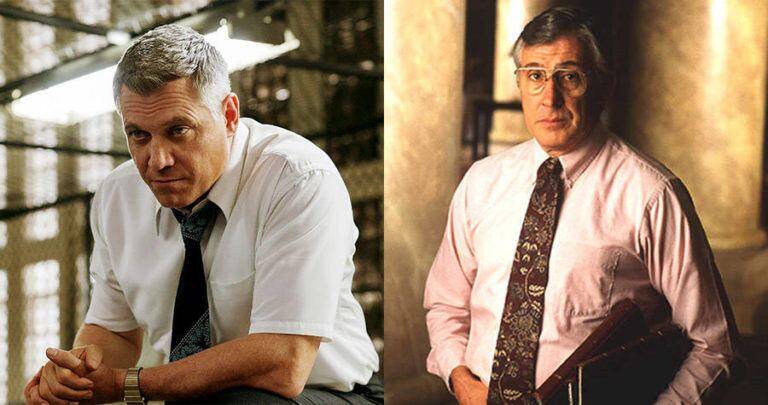
Netflix/Getty ImagesBill Tench in Mindhunter (left), portrayed by Holt Mccallany, and Robert Ressler (right), Douglas's partner in profiling.
During this time, John Douglas initiated the FBI's Criminal Profiling Program. Both Douglas and Ressler believed in the potential of profiling and began traveling nationwide to interview inmates who had committed horrific crimes.
Under the guidance of Dr. Ann Burgess (depicted as Dr. Wendy Carr in Mindhunter), a protocol was established for the interviews. This protocol identified the most important questions to ask in order to gain insight into the killer's mindset.
The questions focused on the motivation and preparation for the murders, the details of the crimes, and how the offenders disposed of evidence. By 1979, Douglas and Ressler had interviewed 36 convicted murderers, including names like Edmund Kemper, John Wayne Gacy, and Charles Manson.
Douglas later admitted that this work took a toll on him.
“You’re dealing with the victims of violent crimes, which is emotionally devastating, and you’re talking to people who really don’t care about their victims,” he told Vulture.
Douglas said, “And then you’re interviewing them as if there’s nothing wrong with the guy. You can even show that you empathize, but you really don’t feel it. But you have to play that game.”
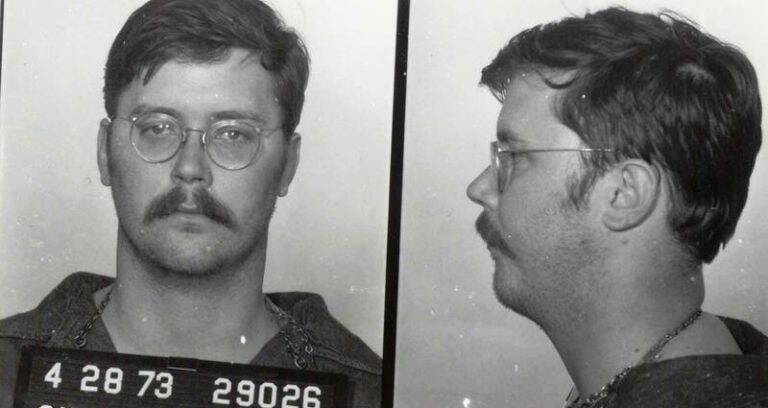
Wikimedia CommonsEdmund Kemper was just one of the serial killers interviewed by John Douglas.
In 1985, the FBI established the Violent Criminal Apprehension Program (ViCAP), which maintained "the largest research repository of major violent crime cases in the U.S." The data obtained from Douglas and Ressler's interviews later became central to the ViCAP database.
Testing Profiling
John Douglas's work on the Atlanta Child Murders case has been a defining event in his career. From 1979 to 1981, young black boys were being murdered at an alarming rate in Atlanta — and no one knew why.
By the time Douglas arrived in 1981, the city had reached a crisis point. Investigators in Atlanta believed the killer was white and likely a member of a white supremacist group like the KKK.
Douglas disagreed. He thought the perpetrators were black because the children were disappearing from predominantly black communities, where a white man being seen with a black child would attract attention.
When the media reported that fiber evidence was found on several victims, Douglas knew the perpetrator would likely start disposing of bodies in water to eliminate evidence.
Surveillance of major rivers was quickly organized. And indeed, on May 22, 1981, investigators heard a loud splash in the Chattahoochee River.
They stopped a 23-year-old African American man named Wayne Williams. When investigators obtained a search warrant, they found that carpet fibers and dog hairs taken from Williams's home matched those found on some of the victims.
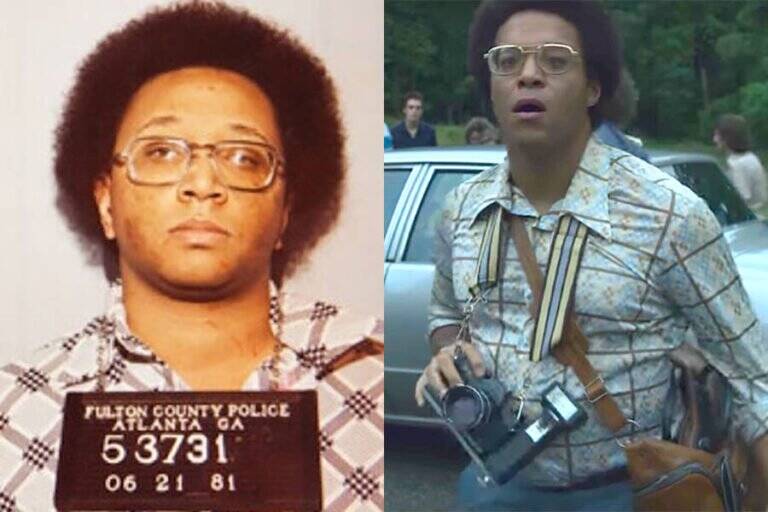
Wikimedia Commons/NetflixWayne Williams after his arrest (left), portrayed by Christopher Livingston in Mindhunter (right).
On June 21, 1981, Williams was arrested. Douglas advised prosecutors on cross-examination techniques: keep Williams on the stand as long as possible and question him on sensitive topics like his failures in life.
Indeed, Williams unraveled. He displayed hostility, alienated the jury, and convinced them of his capacity to commit murder.
On February 27, 1982, Williams was convicted of murdering two young men, Nathaniel Cater (27) and Jimmy Ray Payne (21). Atlanta police eventually linked 23 murders to Williams. However, John Douglas believes this number is actually lower, likely around 12.
Advancements in Profiling
In 1982, John E. Douglas created a profile of the Green River Killer, later identified as Gary Ridgway. Between 1982 and 1988, Ridgway terrorized the Seattle area, killing sex workers and teenage runaways.
Douglas's 1982 profile overlapped with Ridgway in many ways: he predicted the perpetrator would be someone familiar with the area, drive a modest vehicle, have an above-average intelligence level, be divorced, in good physical shape, white, and in the age range of mid-20s to early 30s.
When Douglas revised the profile in 1984, he noted that it was rare for the perpetrator to kill people of many different races. (Apparently, most serial killers prefer to stick to one race for their victims.)
Ridgway would not be caught until November 2001. He later confessed to committing 71 murders but was only convicted for 49.
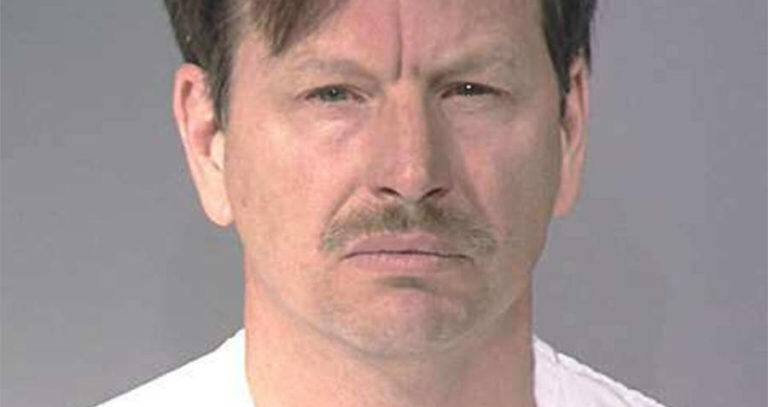
Wikimedia CommonsJohn Douglas's 1984 profile of the Green River Killer was accurate, but Gary Ridgway was not caught until 2001.
By that time, Douglas had already retired from the FBI. However, although he officially left the organization in 1996, his profiling work had not ended.
Ten years later, in 2007, Douglas went to West Memphis, Arkansas, to consult on the famous West Memphis Three case.
By this time, Damien Echols, Jessie Misskelley Jr., and Jason Baldwin had been imprisoned for the murders of three eight-year-old children in 1994. Prosecutors claimed that the three outcast teens had killed the children as part of a satanic ritual.
Douglas was absolutely convinced that Echols, Misskelley, and Baldwin — who were in their mid-30s at the time — were innocent. He believed that the victims were killed by a separate perpetrator who knew them. He also stated that these murders had no sexual motivation whatsoever.
According to Douglas, the real killer felt completely powerless in life and killed the children in a fit of rage when they disobeyed him (or her). Douglas's profile depicted the killer as someone who believed these murders were justified and could lie convincingly.
In 2011, the West Memphis Three were released from prison by entering Alford pleas. However, the case remains unresolved.
Profiling methods have not changed much over the years. However, profiling is increasingly being used to identify perpetrators of terrorist acts and “modern” criminal activities, such as cybercrime.
John Douglas's Legacy Today

Getty ImagesA pioneer in his field, John E. Douglas has played a vital role in establishing profiling as a tool for catching violent offenders.
After retiring from the FBI in 1996, John Douglas continued to be a leading figure in the field. He continues to speak at events and seminars and is a co-author of several books, including Mindhunter and The Killer Across The Table.
Douglas still consults independently on major cases, including the unsolved 1996 murder of child beauty pageant winner JonBenet Ramsey.
The tireless work John Douglas has done over the years has become the material for many pop culture depictions, especially with the rise in popularity of true crime and crime fiction.
For instance, it has been confirmed that the FBI profiler Jason Gideon in the CBS series Criminal Minds was inspired by Douglas, just like Holden Ford in Mindhunter.
Douglas also believes he was the inspiration for the main character Jack Crawford in The Silence of the Lambs and Hannibal, though this claim is disputed.
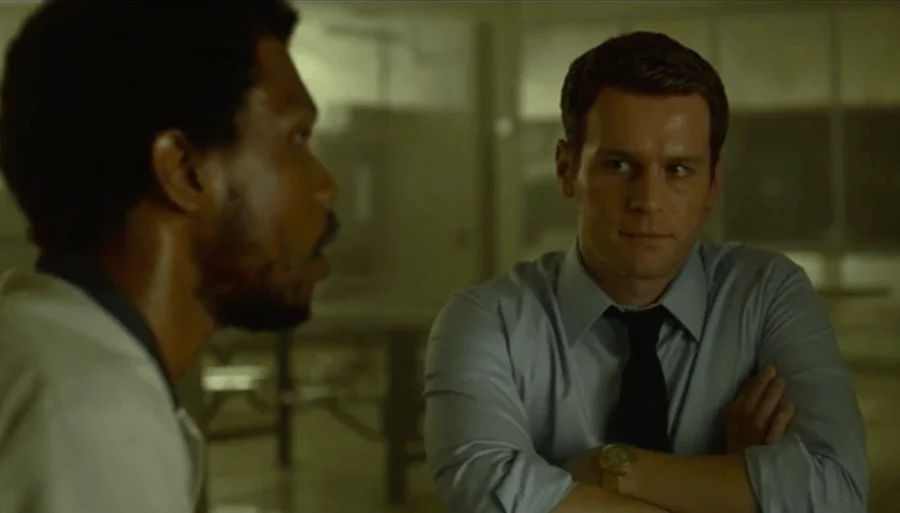
NetflixHolden Ford (inspired by John Douglas) interviews serial killer William Henry Hance in Mindhunter (portrayed by Corey Allen).
Douglas has criticized some pop culture portrayals of his work. In an interview with Vulture, he described Criminal Minds as “completely procedurally inaccurate.” He also claimed that many films and TV shows depict serial killers as “too evil and unrealistic.”
For example, Douglas insists that a killer like Hannibal does not actually exist. While he acknowledges that some of the serial killers he encountered had genius-level IQs, he states that their methods of committing crimes were not genius-like.
Perhaps this is part of the fact that most of them had only a limited time before being caught.
Does Profiling Really Work?
There are still doubts today about how useful profiling is. When John Douglas first started, his colleagues and other law enforcement agencies criticized and questioned profiling, viewing it as “witchcraft.”
Even today, there is not much solid evidence regarding whether profiling “works.” Profilers can be criticized for being too vague and not narrowing down the suspect pool sufficiently. They can also be criticized for narrowing the suspect pool too much due to being overly focused.
However, it is important to remember that profiling is not designed to solve cases on its own. When combined with solid detective work and forensic science, profiling has consistently been shown to be a valuable tool.
As modern criminal profiling expert Deborah Schurman-Kauflin states: “Behavior reflects personality; therefore, behavior at a crime scene (including a terrorist attack) can provide information about the perpetrator. The more distinct the behavior, the better the profile can be. And the better a criminal is profiled, the better the predictive value.”


Comments
(2 Comments)